

 Back
Back
Showing up at local government hearings to support a proposed wind, solar, or battery project could be the most effective climate action you ever take.
Last year, Coles County, Illinois, was debating whether to kill a proposed wind farm. Dorothy Macy wanted to speak up in support of the project — but she had serious self-doubts.
“‘There are people better than me, … people that can speak to county boards, and they’re good at it,’” Macy recalled thinking at the time. “But I care. I decided, ‘I can do this.’”
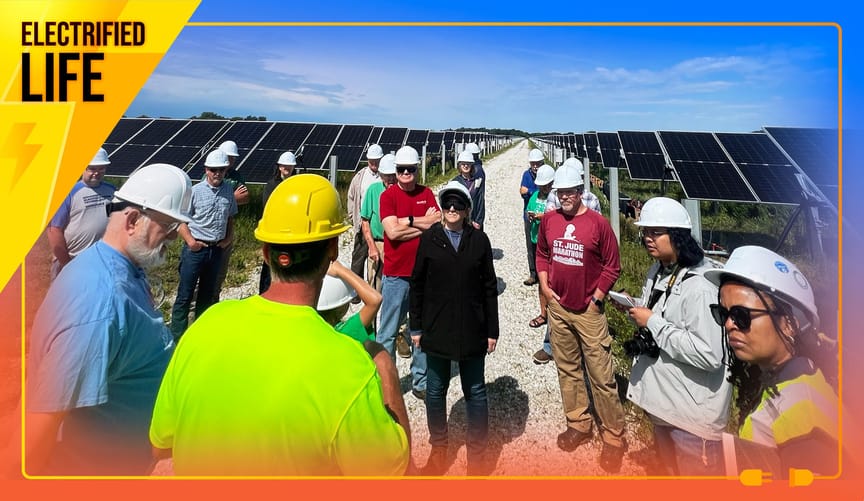
So Macy, a retired educator who has called the area home for 30 years, pushed aside her nerves and teamed up with about a dozen others to advocate for the roughly 300-megawatt development. Last July, at a public hearing, she asked the county board to approve the special permit for Coles Wind.
Macy reminded the officials as well as several community opponents in the audience that the wind farm would deliver a windfall. Over the project’s 30-year lifespan, developer Apex Clean Energy expects it to generate over $81 million in taxes, including more than $43 million for school districts.
“This is [a] new revenue source that will provide money for our Charleston public schools,” Macy, whose own children went through that school system, said in her testimony. “And it will keep my taxes down.”
Macy’s voice may have helped get Coles Wind across the finish line. Shortly after the public hearing, the county board voted 6–5 to approve the project permit.
A few months later, Macy showed up again before the county board to support the 210-MW Glacier Moraine Solar project. After initially shooting down the permit, the board made a U-turn in October. Both the wind and solar projects are now under construction.
Macy got out of her comfort zone to voice support for clean energy in her community. As opposition to solar, wind, and battery projects grows in pockets across the United States, that kind of determination matters more than ever.
Local permitting is the biggest bottleneck to reducing planet-heating emissions from the power sector, said Matt Traldi, founder and CEO of the nonprofit Greenlight America, which galvanizes grassroots support for clean energy projects. Nearly one in four counties in the U.S. restrict renewables development. And disinformation on how they impact farmland, human health, wildlife, and more spreads on social media, stoking fears in rural communities, where the majority of these projects get proposed.
Although carbon-free energy is necessary to avert the worst of the climate crisis, that motivation often isn’t what’s driving decision-makers. “Local governments are not deciding ‘Is climate change real?’ And they’re not even deciding ‘Is clean energy good?’” Traldi said. “They’re deciding ‘Should we build this thing here?’” And that calculus, he notes, is based on “What do our constituents want? And will I get reelected if I say yes to this?”
Roughly half of Americans support solar and wind projects in their area, according to an April survey by the Yale Program on Climate Change Communication. But opponents are typically the loudest voices in the room. And while the opposition knows it needs to organize if it wants to stop a project, Traldi said, supporters are often unaware that if they don’t show up, clean energy loses by forfeit.
Just a few individuals turning up at hearings can tip the scales in favor of renewables, Traldi noted: Five or 10 people can take a project from “political suicide” to something that could “sail through.”
Advocating for local renewables is also one of the biggest opportunities for climate action that an individual can take. Greenlight America calculated that a 270-MW solar project is the emissions equivalent of taking 44,000 gas-powered cars off the road.
“You might think one of the biggest decisions you can make is switching to an EV,” Traldi said. If you’re one of five people that tip the scales at a hearing, “it’s like you do that almost 10,000 times.”
Ready to boost renewables in your community? Here’s some expert advice.
You might hear about a clean energy proposal in the local newspaper, on the TV or radio, at the library, or on a city or county website. Or it may be all your neighbors can talk about, in person or online in local Facebook groups and Nextdoor posts. Especially important is to look for when there will be hearings where you can advocate for a project.
Macy in Coles County didn’t go it alone. She was already in touch with local organizer Cindy Shepherd, green team director at the environmental organization Faith in Place, who encouraged Macy to speak up for the wind and solar farm projects.

To find opportunities to support clean energy projects near you, you can fill out Greenlight America’s “Ask an organizer” online form. You could also connect with one (or more) of the environmental groups that partner with the nonprofit: League of Conservation Voters, The Climate Reality Project, Solar United Neighbors, and Third Act all have local and state chapters across the country.
When Larisa Mednis, advocacy coordinator at Pennsylvania nonprofit Clean Air Council, learns of a renewable energy project and wants to rally supporters, she calls and texts area members. She also contacts several partner grassroots organizations, such as the Environmental Integrity Project, the Beaver County Marcellus Awareness Coalition, and Veterans Power America, to organize local advocates. But “it’s amazing when people reach out proactively,” she said.
You don’t have to be exhaustive; you’ll just want to be able to communicate why you support the project. How big will it be? Where will it be sited? And, importantly, what are the expected benefits to the community? You can typically find this information on a website set up by the developer or by contacting a company representative directly, or by talking with landholders interested in hosting the infrastructure.
It’s easier than whipping up a sponge cake. Macy says these are the key ingredients:
Simple, right? For examples of prepared speeches, check out the ones Macy drafted (with Shepherd’s help) in support of her local wind and solar projects.
Mednis finds that the arguments that seem to resonate most with leaders and communities are the economic benefits of solar and wind projects, and personal property rights. “A lot of these projects are sited on private land,” she said. “Farmers who lease their land can get some steady income from that.”
For more tips, check out the nonpartisan Public Interest Network’s primer on public comments and Greenlight America’s DIY guide on boosting clean energy projects.
If someone is violently opposed to a project, you’re probably not going to change their mind. But others may have specific concerns that you can address.
“Listen before you talk,” said Jeff Risley, executive director of Renewable Energy Farmers of America, a nonprofit landowners association. “Ask [opponents] questions. Ask them what their real concerns are. … Empathize with them that you know this is a change.” Then you can start to provide information that will help them see your position, he said.
For myth-busting evidence, Columbia University’s Sabin Center for Climate Change has put together a handy list of rebuttals that cut through the most common false claims about clean energy.
The agency just gutted a Biden-era policy that would have slashed planet-warming pollution — but that doesn’t mean clean energy will slow down.
The Biden and Obama administrations built a raft of climate regulations that was supposed to carry America beyond coal power. The Trump administration has officially sunk it.
This week, the EPA gutted the 2024 Carbon Pollution Standards, a set of rules enacted under the Biden administration that would’ve required fossil fuel power plants to either significantly reduce or capture their emissions in the coming years, or shut down. The rollback completes the agency’s erasure of the most consequential climate policies of the past two administrations.
That sounds pretty bad for climate action. And, well, it is. But it’s worth noting that power-sector emissions have fallen substantially even without the enforcement of federal regulations.
A quick history lesson: In 2015, then-President Barack Obama introduced his Clean Power Plan, which aimed to reduce the electricity sector’s greenhouse gas emissions 32% by 2030 compared to 2005 levels. Lawsuits and a Supreme Court decision kept the rules from actually going into effect, and then in 2017, the first Trump administration repealed them.
Nevertheless, the U.S. hit the plan’s decarbonization target a full decade early. The reason? The country has retired dirty old coal plants and replaced them with natural gas and renewables.
That’s happening in large part because it just makes economic sense to shift off coal power — even if President Donald Trump claims otherwise. Federal orders to keep aging coal plants open have racked up millions of dollars in additional costs to utility customers over the past year, while renewables remain America’s lowest-cost power option.
This is not to say the U.S. can rely on market logic alone to eliminate fossil fuels.
Yes, with or without power-plant emissions regulations, clean energy is going to continue to displace fossil fuels — especially coal — because the economics just make sense. The question, then, is not whether a transition will happen sans regulations but how fast it will move. That is no small consideration: Climate change is made worse and more dangerous with every additional ton of CO2 that’s emitted into the atmosphere.
The transition would almost certainly happen faster with emissions regulations in place. For now, however, that’s off the table in America.
Unpacking Newsom’s clean-energy legacy
As California Gov. Gavin Newsom’s time in office comes to a close, Canary Media’s Jeff St. John is weighing whether the Democrat’s action on climate change should be celebrated or critiqued. Sure, under Newsom’s watch, California has built tons of new clean energy, added millions of EVs to the roads, and committed to ending sales of gas-powered cars by 2035. But analysts and experts say Newsom has fallen short on some of his environmental justice promises, and hasn’t gone far enough to take on utility and corporate powers in the name of lowering residential energy costs.
Newsom still has time to shore up his clean-energy legacy and tackle sky-high prices with a handful of bills sitting on his desk. As Jeff spells out in the first edition of his new weekly newsletter, California Wire, the state Legislature has passed measures that could cut into utility profits and boost virtual power plants. All they need now is Newsom’s signature.
Democrats chart a path on climate policy
House Democrats have a bold and broad new climate plan. Just don’t call it a climate plan.
This week, a group of Congress members rolled out the Thriving Economy Project — a title that, much like the Inflation Reduction Act, hides just how far the blueprint would go to tackle climate change. Restoring federal tax credits for residential clean energy and efficiency, tackling data center power demand, and unlocking lost-cost financing for renewables projects are all among its priorities.
These wide-ranging proposals have a long road ahead before they become legislation, project leader Rep. Kathy Castor (D-Fla.) tells Heatmap. First, the authors want to figure out which of their ideas could actually gather bipartisan support — something that’s easier said than done as long as President Trump remains in office.
Congress tackles data centers: The U.S. House approves a bill to require state regulators to consider making data centers pay for the power and transmission upgrades made to serve them. (Associated Press)
Rethinking a renewables ban: Bannock County, Idaho, is rethinking its ban on clean energy development as leaders and residents suggest solar and wind, along with nuclear, power could bring much-needed economic benefits to farmers struggling amid years of drought. (Canary Media)
Gutting wildlife protections: The Trump administration moves to strip another core protection from the Endangered Species Act — a decision that could have massive implications for energy development. (New York Times)
RGGI revamp: As the Northeast’s cap-and-trade program approaches 20 years in action, industry leaders and other observers question if it’s still doing its job. (Canary Media)
Shaking the deep freeze: Power generators in the U.S. experienced fewer outages during extreme cold snaps this past winter than they did back in 2021 and 2022, finds an analysis from FERC and the North American Electric Reliability Corp. (Utility Dive)
Despite Trump’s attacks, Revolution Wind is nearing completion off the coast of Rhode Island. The 704-MW project is set to be fully operational this year.
Another offshore wind project just wrapped up turbine construction in the U.S., despite the Trump administration issuing not one but two stop-work orders against the installation.
The $6.2 billion Revolution Wind farm has installed its 65th and final turbine. The project has been producing carbon-free power for Rhode Island and Connecticut since March, but at partial output. It will be able to deliver up to its full 704-megawatt capacity “later this year,” per one of its developers, the beleaguered Danish energy giant Ørsted.
“The completion of Revolution Wind is an important milestone for Rhode Island, Connecticut, and the broader New England region,” said Hillary Bright, executive director of offshore wind advocacy group Turn Forward in a Thursday statement. “As electricity demand continues to grow, the region needs more generation that can strengthen reliability, diversify the power supply, and provide greater certainty for consumers.”
Offshore wind was once meant to anchor Northeast decarbonization plans. But, at least for now, the Trump administration has dashed those hopes. President Donald Trump has pursued a relentless line of attack against the sector and managed to essentially halt new development.
When Trump was elected in November 2024, research firm BloombergNEF expected the U.S. to build 39 gigawatts of offshore wind by 2035. By the end of 2025, it had slashed that figure to just 6 GW — an amount that assumed only the five offshore wind projects already underway would get built.
Trump tried to stop these in-progress projects, too. The Interior Department issued a stop-work order to Revolution Wind in August 2025 due to unspecified national security threats. That order was thrown out by a federal judge one month later. The agency had issued — and then revoked — a similar order to the Empire Wind project in New York months earlier.
In late December, the Trump administration threw a Hail Mary pass and issued new stop-work orders to all five projects underway. Project developers and state attorneys general challenged each one in court, and beginning in January, judges struck down the orders, one by one.
The Trump administration has since shifted from trying to stop these projects to offering refunds to energy developers who are willing to forfeit the offshore wind leases they had previously purchased. So far, the administration has agreed to hand out nearly $4 billion in taxpayer funds via these deals — moves that serve only to, as one analyst put it, “shoot a corpse.”
Along with Revolution Wind, two other large-scale offshore wind projects are fully complete in the U.S.: the South Fork Wind project near New York and Vineyard Wind 1 off the coast of Martha’s Vineyard. The Coastal Virginia Offshore Wind installation — a whopping 2.6-GW project — began delivering power to the grid in March and should wrap up construction next year. Two others, Empire Wind and Sunrise Wind, are both expected to be fully operational in 2027.
Revolution Wind will help bolster New England’s constrained grid.
During the historic Winter Storm Fern earlier this year, Vineyard Wind 1 showed up big for the region even before the project was fully operational. The South Fork Wind farm performed well for New York during the same frigid stretch. No surprise there: Offshore wind is known for its strong winter performance.
Then offshore wind came through again when record-setting heat descended on New England this summer. During the July heat wave, carbon-free electricity from Vineyard Wind 1 and Revolution Wind allowed utilities to rely less on dirty, expensive oil-burning peaker plants.
As President Trump continues to try and thwart the industry’s prospects in the U.S., Revolution Wind and the other projects that make it across the finish line will keep proving their worth: They provide clean electricity that states, particularly in the Northeast, desperately need.
Surging oil and gas prices are boosting coal demand. But the conflict has also spurred cleantech adoption — and fossil-fuel emissions may still drop as a result.
The war in Iran has pushed the world toward clean energy. It has also pushed the world toward coal.
The International Energy Agency has reversed its projection that global coal demand would decline this year. It now expects coal consumption to rise 1.2% from 2025 to a new record high.
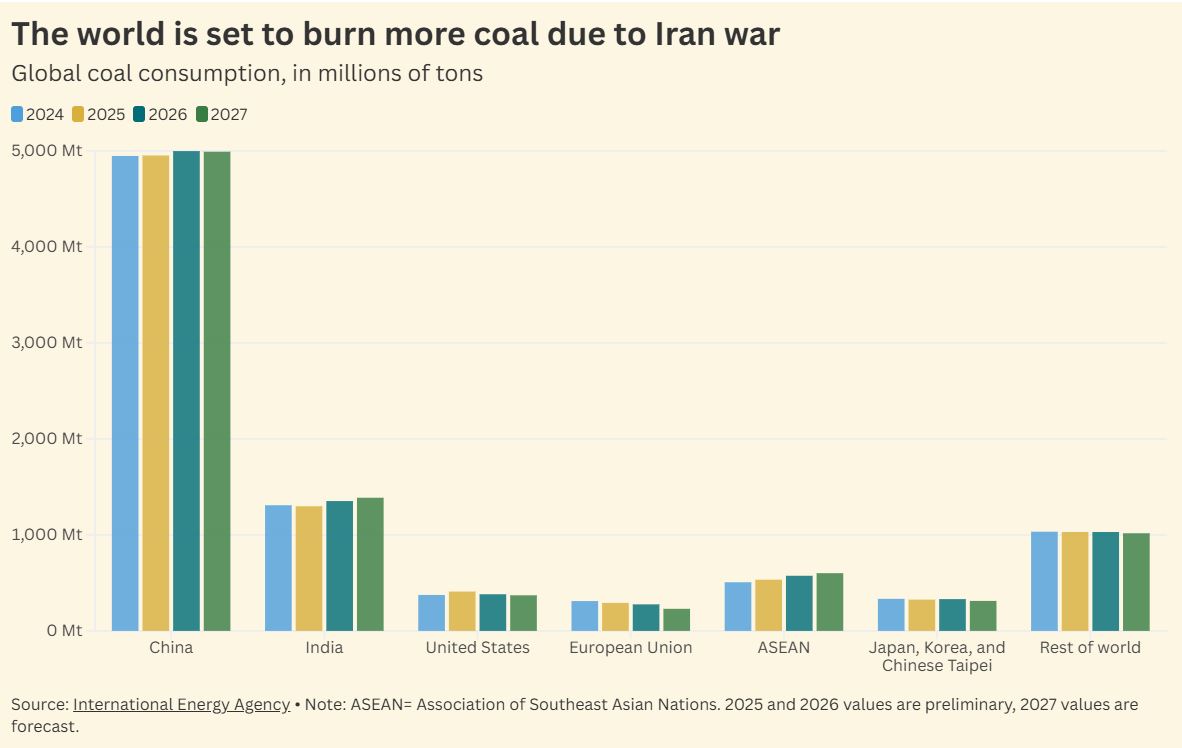
When the U.S. and Israel attacked Iran in late February, the global trade of oil and liquefied natural gas through the Strait of Hormuz ground nearly to a halt. Prices for the fossil fuels spiked as a result — particularly in Europe and Asia — and set off a clamor for cheaper alternatives.
Consumers and businesses flocked to electric vehicles and clean energy. Governments warmed to nuclear energy. And some countries burned more coal.
The bump in coal consumption is not a pleasant development. Coal is the single biggest source of the planet-warming greenhouse gas emissions that have propelled the world past multiple new temperature records this year alone. Dealing with climate change means quitting coal.
But here’s the good news: The sprint toward carbon-free technologies might be happening fast enough to offset the effect of that extra coal use. Global fossil-fuel emissions are set to decline ever so slightly this year, per a new Carbon Brief analysis — mainly because soaring oil prices are putting a damper on consumption of the fuel.
China provides the clearest example of this dynamic. Even as the nation’s coal use ticked up, its overall emissions fell by 1% in the second quarter compared to a year prior, as its use of oil for transportation plummeted 16% and EV adoption reached record levels. Most new cars sold in China last month were EVs or plug-in hybrids.
Other countries hit new EV adoption records, too, from Australia to Indonesia to several European nations. The IEA now expects oil demand to remain more or less flat next year, despite having forecast a substantial rise as recently as June.
The question is whether these two trends — the simultaneous embrace of coal and of clean technologies — have equivalent staying power.
That’s unlikely to be the case. The return to coal is a story of countries using the infrastructure they already have to mute the effects of an acute energy emergency. The rise of renewables and EVs is a story about building new things in response to a crisis: consumers buying new clean cars and companies or people installing new solar and storage. The crisis will eventually fade — and thus the impetus for burning more coal — but that new cleantech will remain.
The startup hit a milestone last year when it drilled the world’s hottest next-gen geothermal well. Now it’s working to prove its tech can scale commercially.
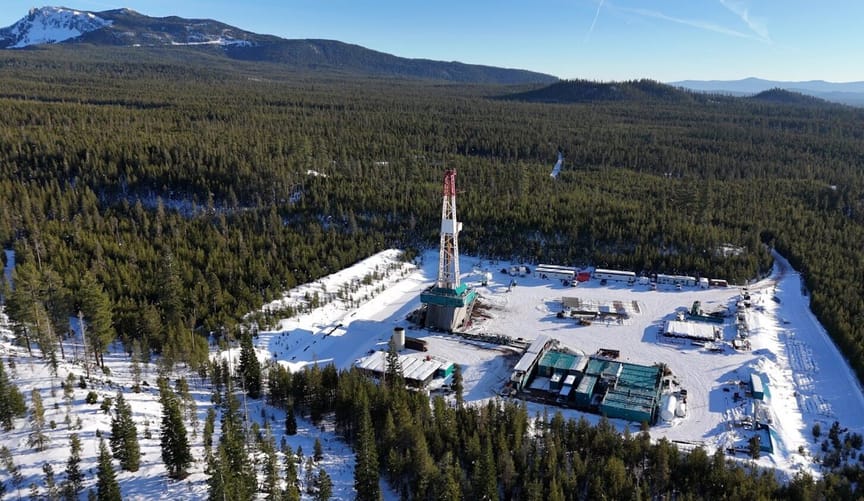
The startup Mazama Energy just nabbed $135 million to accelerate its next-generation geothermal activities near Oregon’s Newberry Volcano.
Mazama is seeking to generate clean electricity from superhot rocks — an emerging and largely unproven approach that could have an enormous payoff for the power sector. That’s because the hotter the geothermal resource, the fewer expensive wells companies have to drill to build powerful and efficient systems.
“Superhot rock is almost essential for geothermal to become cost-competitive with fossil fuels,” Sriram Vasantharajan, Mazama’s CEO, told Canary Media ahead of Thursday’s announcement.
The Frisco, Texas–based company said its new funding includes an oversubscribed Series B led by the billionaire John Arnold’s Centaurus Capital and Doerr Capital. Oil and gas giants ConocoPhillips and Shell Ventures also participated, as did existing investors Khosla Ventures and Gates Frontier.
“Superhot geothermal offers the promise of firm, carbon-free power with a relatively small footprint, but realizing that promise requires significant technical innovation,” Arnold said in a news release. “Mazama has made impressive progress, and I am excited to support its next phase of development.”
Mazama’s announcement follows a flurry of activity within the next-gen geothermal sector. The startup Fervo Energy went public earlier this year, then its Utah project landed a huge power-purchase deal with Google. Sage Geosystems recently started producing power from its first pilot system in Texas. And Quaise Energy — which is also drilling a geothermal well near Newberry Volcano — closed a $180 million funding round last month.
All these geothermal companies are trying to break the constraints that have held back traditional projects in the U.S. and globally.
Conventional plants rely on natural pockets of hot water to heat fluids and drive turbines. Newer firms and old-school geothermal giants alike are developing technologies to harness heat from hot, dry rocks that could potentially unlock hundreds of gigawatts of around-the-clock power in the western U.S. Enhanced geothermal systems in particular involve drilling several miles into the earth and fracturing rocks to create artificial reservoirs.
Mazama, like many of its competitors, has its roots in the fossil fuel industry.
Vasantharajan is a chemical engineer who previously worked on complex oil and gas wells, including in deep-water and heavy petroleum reservoirs. In 2023, Mazama launched with the goal of developing innovative drilling tools and techniques to extract heat from harsh, superhot environments.
The startup hit its first major milestone last October: Mazama said it built the world’s hottest enhanced geothermal system — reaching 331 degrees Celsius (629 degrees Fahrenheit) — at its pilot site near the Newberry Volcano. The project, which received a U.S. Department of Energy grant, earned praise at the time from industry experts.
“This proof of concept opens the door to deeper and hotter opportunities at Newberry and beyond,” said John McLennan of Utah Forge, a federally funded geothermal laboratory in Beaver County, Utah.
Mazama reached a depth of 10,350 feet for its first well. For its second, the company hit the same depth about 80% faster this year — a key improvement when rigs can cost over $100,000 per day to operate. Mazama continues to drill down thousands more feet as it seeks to hit 400℃, a temperature at which such a project could deliver up to 10 times more power than a conventional 200℃ well, according to Mazama.
The new financing will fund Mazama’s next initiative: Project Ceres, which is supported by the Department of Energy. It involves drilling horizontally to demonstrate the potential for 15 megawatts of clean electricity capacity from each well. Vasantharajan said the startup plans to start drilling wells later this year and start testing the system early next year.
“Ceres becomes our blueprint for our scalable, commercial pathway for deployment of superhot rock,” he said.
The tech giant intends to buy certificates from Stegra’s hydrogen-fueled steel mill to support the scale-up of cleaner construction materials for data centers.
Google is backing the buildout of a novel green-steel mill in Sweden as the tech giant grapples with rising greenhouse gas emissions from its AI expansion.
On Thursday, the company said it is partnering with Stegra to help bring the Swedish firm’s flagship facility online. Unlike traditional coal-fueled mills, Stegra’s project will use green hydrogen — made from renewable electricity and water — to produce what it calls “near-zero emission” steel.
The agreement helps address some of the thorny challenges facing green steel companies and data center developers.
Metal-makers need wealthy, early customers like Google to help stoke investor interest in their novel manufacturing plants. Meanwhile, tech companies need cleaner construction materials to curb their growing environmental impact. Google recently reported an 18% rise in its annual emissions from 2024 to 2025, owing to its increased use of steel, concrete, computing hardware, and other materials for data centers.
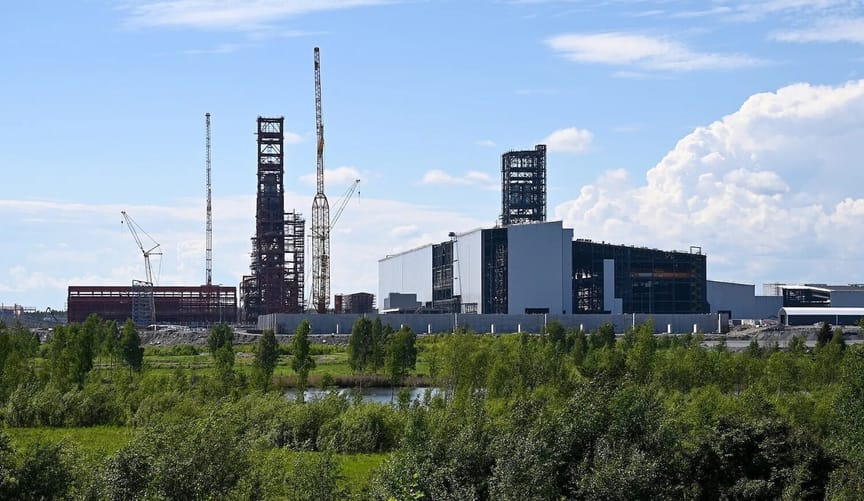
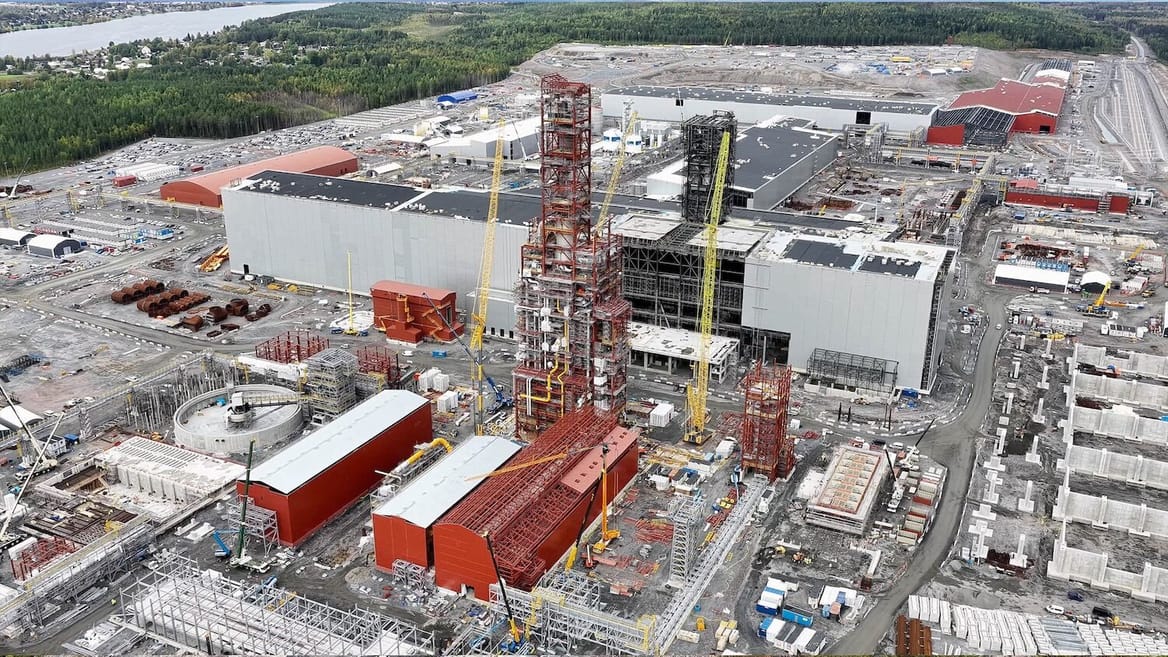
The Alphabet subsidiary is not slated to buy any metal from Stegra’s multibillion-dollar plant, which is under construction in Boden, just south of the Arctic Circle.
Instead, Google will procure “environmental attribute certificates,” which allow the company to count emissions reductions associated with a ton of Stegra’s steel toward Google’s own sustainability targets. In exchange, Google helps defray the extra costs involved with hydrogen-based steelmaking. Stegra then sells its metal into the European market as a standard product — without labeling it as lower-carbon steel.
“By supporting early-stage technologies like Stegra’s green steel, we are helping to create a market for materials that are essential to reducing emissions,” a spokesperson for Google said by email.
Thursday’s agreement is the second of its kind for Stockholm-based Stegra, formerly H2 Green Steel. Last year, the firm struck a two-part deal to sell the certificates to Microsoft and also physical steel to Microsoft’s equipment suppliers for European data centers. Neither Microsoft nor Google provided details about the financial value of their arrangements with Stegra.
The Swedish facility is one of a handful of projects advancing globally that aim to dramatically reduce emissions from iron and steel production, which accounts for roughly 9% of human-caused carbon dioxide emissions every year. The vast majority of that pollution comes from using coal in giant, dirty ironmaking furnaces.
Stegra says its operation will slash carbon emissions from steelmaking by up to 95%, compared with traditional methods. The facility taps the abundant hydropower and wind resources in northern Sweden to produce hydrogen gas — fuel that’s used to convert iron ore into iron. That iron is then transformed into steel using electric arc furnaces, also powered by renewables.
Under the new deal, Google will receive certificates from a portion — up to 91,000 metric tons — of the steel made in Stegra’s first year of production. It’s not clear exactly when operations will start. Stegra, which has weathered a series of financial woes over the last year, said its project timeline is still under review.
The facility is expected to produce 2.5 million metric tons of steel in its first phase, before ramping up to make 5 million metric tons at full tilt.
Google’s deal “contributes to generating increased cash flow to Stegra’s early years of operations and the ramp-up of production,” the company’s spokesperson said.
Environmental attribute certificates can play a crucial role in helping build out the world’s next generation of iron and steel facilities, experts say. Efforts to develop hydrogen-based steelmaking and other cutting-edge technologies have in recent years faced significant hurdles to scaling up, owing to their high costs and technical complexities — as well as the difficulty of competing with cheaper coal-based steel products.
The instruments are “a great mechanism to overcome different market barriers in industries where we need to see increased investment,” said Claire Dougherty, an industrial decarbonization program manager at RMI. The clean-energy think tank has spearheaded much of the industry’s emerging work around low-carbon iron and steel certificates.
“A hydrogen [steel] facility can cost billions of dollars, and that can be very difficult to get funding for, particularly without a guarantee that someone’s going to buy your decarbonized product at a premium,” she said. At the same time, the companies that are most willing to pay a premium — like data center developers — aren’t typically in the business of buying steel, or their operations aren’t close enough to green steel mills to justify sourcing the metal directly.
Certificates “can help to expand the demand pool and help those suppliers achieve bankable offtake,” Dougherty said.
Proponents are hoping to grow this model beyond pilot agreements like Google’s by creating a formal market, known as a “book and claim” system, for buying and selling iron and steel certificates.
Earlier this month, Stegra and the cleantech startups Electra and Charm Industrial, along with the nonprofit Roundtable on Sustainable Biomaterials, said they were working toward that goal by developing shared standards and metrics for how emissions reductions are counted, and for ensuring environmental claims are independently verified and traceable. The initiative builds on a comprehensive framework that RMI is set to unveil next week that lays out rules for operating a credible book-and-claim system.
“We view this as a really important next step, in terms of scaling the [certificate] market for low-carbon iron and steel producers,” said Maressa Brennan, Electra’s senior director of regulatory policy and markets.
Colorado-based Electra is developing a novel approach to ironmaking that avoids the need for a scorching furnace. Instead, the company produces iron with electrochemical devices, which are powered by renewables and can run at the same temperature as a fresh cup of coffee.
Last year, the startup announced a deal to provide environmental attribute certificates to Meta. Electra is set to start operations later this year at a demonstration plant in Jefferson County, Colorado, which will initially produce up to 500 metric tons of high-purity iron per year. The company is also assessing a few global sites for its first commercial facility, which could come online in the early 2030s, Brennan said.
“Our agreement with Meta was an early example to indicate that there’s a market interest in … these types of technologies,” she said. “The work we’re doing now is to more formally establish a marketplace that helps these approaches scale.”
A correction was made on Sept. 17, 2026: This article originally included a quote from a Google spokesperson that inaccurately represented how the company’s procurement will contribute to Stegra’s green steel project. This quote has been exchanged to clarify that the tech firm’s procurement will help boost Stegra’s cash flow in the project’s early years.
It’s the only state that makes big utilities offer lower seasonal rates for heat pump owners, in an effort to boost adoption and create a fairer system.
Winter savings are in store for more than 65,000 Massachusetts households as two electric utilities slash their rates for heat pump owners below last year’s already discounted prices.
Last winter, Massachusetts became the first state to require major utilities to offer a lower seasonal rate for all the electricity used by households with heat pumps, highly efficient systems that can both heat and cool spaces and are essential to weaning buildings off fossil-fueled furnaces. The reduced rates saved these residents more than $37 million in total.
Now, state public utility regulators have approved National Grid’s and Unitil’s proposals for even lower winter prices, to go into effect on Nov. 1. The move, supporters say, makes using a heat pump more affordable and more accurately reflects how these homes contribute to grid-maintenance costs.
“Heat pump rates are important for customer fairness, but they’re also really important to unlock the full greenhouse-gas reduction opportunities from heat pumps,” said Alex Lopez, senior manager for regulatory policy at electrification nonprofit Rewiring America.
Accelerating heat pump adoption is a major element of Massachusetts’ plan to reach net-zero emissions by 2050. Their cost, however, has been a persistent barrier. Rebates and low-interest loans exist to help pay for the equipment up front, but the cost of operating an electric heat source as power prices soar has kept many homeowners from making the switch. Heat pump rates address this obstacle.
Massachusetts remains the only state to require major utilities to offer heat pump rates, but utilities across the country are adopting or investigating the approach. Xcel Energy has established an electric heating rate in Minnesota, and Central Maine Power recently concluded a pilot. Climate think tank Switchbox is advocating for the idea in New York and Rhode Island.
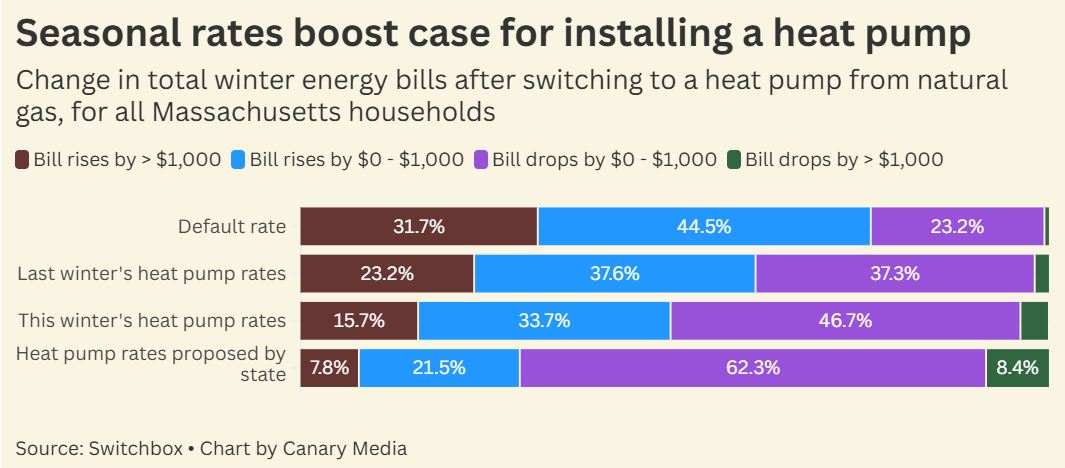
With these latest rate changes, more than half of Massachusetts households would save money by switching from natural gas heat to a heat pump, according to analysis by Switchbox. National Grid and Unitil customers who have already made the change stand to save an additional $9.8 million this winter compared to last year, Switchbox calculates.
This season’s lower prices are the result of a regulatory order telling National Grid and Unitil to change the way they calculate their heat pump rates.
For last year’s seasonal heat pump rates, National Grid and Unitil applied discounts to the distribution portion of customers’ bills, which pays for the poles and wires that carry power to consumers. The state’s third major electric utility, Eversource, did the same but also cut transmission rates, which pay to carry high-voltage power over long distances. Think of distribution and transmission as the backroads and freeways of the power system.
In the spring, regulators decided Eversource had the right idea and ordered the other two utilities to follow suit. National Grid responded with a plan to drop transmission charges from $0.055 per kilowatt-hour to $0.02 per kWh. Unitil proposed lowering its transmission rate from $0.042 per kWh to $0.015 per kWh. The state Department of Public Utilities approved the rates in July.
At these rates, a household using 600 kWh of power a month can expect their bills to drop between $16 and $21 per month in addition to the savings created by the existing discounts.
A proposal from the Massachusetts Department of Energy Resources would have also had utilities reduce some of the surcharges and fees on electric bills, but regulators did not approve the request.
Supporters emphasize that these rates aren’t a handout for heat pump owners but are actually grounded in basic grid economics. Transmission and distribution rates — together, the delivery portion of the bill — are based on the cost of building and maintaining the grid.
However, this infrastructure is built big enough to handle all the power needed when demand is highest, typically on the hottest days of summer. In the winter, demand is much lower, so there’s plenty of room for the grid to handle the additional electron traffic created by heat pumps without added expense. So heat pump customers use more electricity and pay more in delivery charges, even though they’re not adding to utilities’ expenses.
Lowering the rate for heat pump users addresses this disparity, advocates say.
“Well over 140,000 customers were using heat pumps based on an outdated rate framework,” said Elizabeth Mahony, commissioner of the state’s Department of Energy Resources.
Heat pump rates are not a permanent solution for matching energy prices to grid demand. The logic behind them holds only as long as the grid’s peak demand days are in the summer. Grid operator Independent System Operator New England predicts the region will shift to winter peaks within the next 10 years.
Policymakers and utilities are already preparing for the change. Utilities have started rolling out advanced meters, which will allow consumers to access detailed data about their power usage. And regulators are considering a proposal to implement time-of-use rates that would be lower during times of decreased demand.
“It’s really about trying to maximize our thinking on when and how to use electricity,” Mahony said.
The governor has blocked efforts to harness distributed energy to rein in rising utility rates. Bills on his desk could reverse that trend — if he signs them.
I’m launching this newsletter at an intriguing moment in California politics. Democratic Gov. Gavin Newsom — who everyone knows is eyeing a run for the White House — has one last chance to show his true colors on energy and climate change. Rising electricity costs are a major issue in California, and Newsom must decide by the end of this month whether to sign a host of bills that could help cut utility rates while also advancing the state’s clean energy transition. What message does he want to send to Californians and the rest of the country?
Earlier this week, I published an assessment of Newsom’s legacy on climate and clean energy so far. Long story short: While he can legitimately brag about some things, he hasn’t been willing to take on utility interests or to challenge the status quo. That’s especially apparent in how he’s sidelined virtual power plants, vetoing and defunding efforts to harness them to rein in skyrocketing electricity rates for customers of the state’s three major utilities.
But a few bills on his desk now could at least start the long slog of reforms that experts say will help make power more affordable.
Most notable is Senate Bill 905. This year’s big affordability reform package from state Sen. Josh Becker (D) would curb utilities’ profits on wildfire-prevention investments and other spending that reduces their risk exposure. It would also expand on provisions from Becker’s reform bill passed last year that require utilities to finance more grid costs through borrowing, which also helps contain the profits they get to collect from customers.
In addition, SB 905 would encourage utilities to measure how efficiently they’re using their existing grids — a precursor to setting up regulations that could steer them toward prioritizing lower-cost solutions over expensive grid upgrades.
One such solution is tapping into virtual power plants — the customer-owned batteries, EV chargers, smart thermostats, and other devices that can provide hundreds of megawatts of power to the grid. Becker’s SB 913 would create new pathways for VPPs to help lessen reliance on aging fossil-gas-fired peaker plants.
But California’s politically powerful investor-owned utilities have vigorously opposed policies that could reduce their regulated profits. That may be why the Newsom administration has largely taken an alternative tack to save money: slashing public services paid for through utility rates. For example, Newsom backed a 2024 bill that would have cut hundreds of millions of dollars in energy-efficiency and solar programs to instead give customers a small one-time rebate.
That bill didn’t pass, but the administration’s nickel-and-diming approach has continued. In final budget negotiations this year, it successfully pushed to claw back nearly $200 million for a program that helps schools retrofit air conditioning, ventilation, and plumbing. The money will now go back to utilities, which could use it to shave pennies off their customers’ bills — or just pocket it, as pointed out by Leah Stokes, a professor of environmental politics at the University of California, Santa Barbara. As Stokes said in a last-minute social media appeal to Newsom, “Do you really want your legacy to be taking money away from schoolkids during heat waves?”
Let’s not forget that Newsom has had to manage a number of crises beyond his control, from the bankruptcy of Pacific Gas & Electric in 2019 to rolling blackouts in 2020 and 2022 to the current threat of refineries pulling out of the state. His final months in office may well be consumed in negotiating with lawmakers over how to deal with yet another looming utility wildfire-liability crisis. But these emergencies don’t absolve him from taking bold action in the areas where he does have control — like requiring utilities to enlist the state’s nation-leading fleet of distributed solar, batteries, and electric vehicles as cost-cutting tools. He’s got one last opportunity to do that. Let’s hope he takes it.
Meanwhile, I’m tracking a few other climate bills awaiting Newsom’s signature or veto:
Speaking of pipelines and stranded assets: Environmental groups are suing to stop the Los Angeles Department of Water and Power from converting its Scattergood fossil-gas power plant to also burn hydrogen, saying the municipal utility has failed to consider the air pollution harms that project could cause. But also, where’s it supposed to get the hydrogen? State regulators have rejected SoCalGas’s Angeles Link project, a pie-in-the-sky plan to pipe hydrogen made from solar in the desert to the LA Basin. And the Trump administration has pulled the plug on California’s clean hydrogen hub. If you don’t have hydrogen, you don’t have a hydrogen-burning power plant — no matter how well it might fit into some hypothetical decarbonization roadmap.
As a new report from a who’s who of California energy experts makes clear, there’s no silver bullet to solving an affordability crisis that has been decades in the making and has pulled California’s energy costs so far out of whack with the U.S. average.
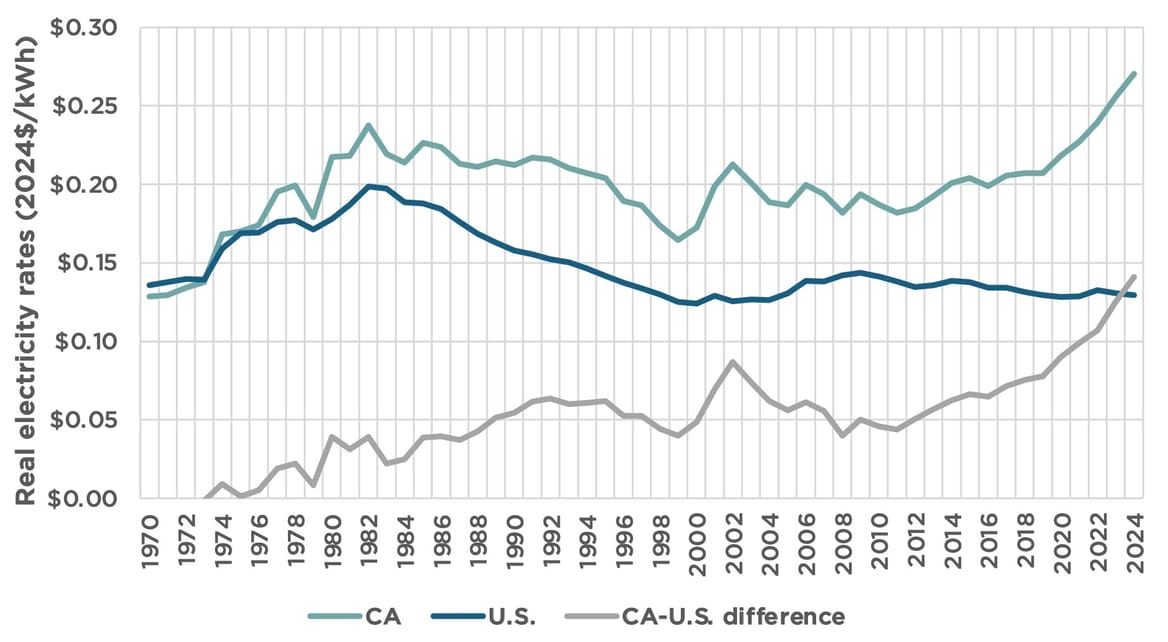
Take a look at how the rates charged by California’s big three investor-owned utilities, already higher than the national average since the late 1970s, have really taken off in recent years. (The main cause of this latest spike is wildfire risk, of course — but that’s a problem from hell that’s better dealt with at book length.)
California and U.S. average real electricity rates and California-U.S. differences, 1970–2024
Speaking of pipelines and stranded assets: Environmental groups are suing to stop the Los Angeles Department of Water and Power from converting its Scattergood fossil-gas power plant to also burn hydrogen, saying the municipal utility has failed to consider the air pollution harms that project could cause. But also, where’s it supposed to get the hydrogen? State regulators have rejected SoCalGas’s Angeles Link project, a pie-in-the-sky plan to pipe hydrogen made from solar in the desert to the LA Basin. And the Trump administration has pulled the plug on California’s clean hydrogen hub. If you don’t have hydrogen, you don’t have a hydrogen-burning power plant — no matter how well it might fit into some hypothetical decarbonization roadmap.
As a new report from a who’s who of California energy experts makes clear, there’s no silver bullet to solving an affordability crisis that has been decades in the making and has pulled California’s energy costs so far out of whack with the U.S. average.
Take a look at how the rates charged by California’s big three investor-owned utilities, already higher than the national average since the late 1970s, have really taken off in recent years. (The main cause of this latest spike is wildfire risk, of course — but that’s a problem from hell that’s better dealt with at book length.)
California and U.S. average real electricity rates and California-U.S. differences, 1970–2024
It’s not all doom and gloom around here! My wife and I — and of course our constant companion, Lily the corgi — had a lovely Labor Day weekend up in the Sierra foothills. Check out this sunset! (I couldn’t help taking a photo with power lines in the background ;-)

State-funded hubs will focus on skills that can transfer to other sectors, like data centers. That may help workers as Trump policies threaten to upend job markets.
Illinois has spent the last few years training hundreds of people for clean energy jobs. Now, it’s upgrading its keystone program to better respond to new workforce realities.
In 2023, Illinois rolled out about a dozen state-funded hubs that paid individuals to learn basic job-hunting skills and clean energy trades, with priority given to those from marginalized communities or areas impacted by fossil-fuel pollution or fossil-fuel job losses.
The initiative prepared participants for a range of roles, from manufacturing EV components to auditing buildings for energy efficiency. An especially heavy focus was put on training solar installers as state and federal incentives bolstered Illinois’ rapidly growing solar industry.
State law requires updates to the curriculum every three years, and in August, Illinois unveiled a new version that stakeholders hope will be more responsive to shifting economic and political winds. The idea is to ensure that the training for clean energy jobs can be easily transferred to other sectors, such as housing development and the data center industry.
Advocates and experts involved with the curriculum revamp say it comes at an opportune time, as the Trump administration’s anti-renewable energy policies threaten to impact job markets.
“Workers who are interested in working with clean energy and learning about these new technologies … don’t need to limit themselves to only working in clean energy,” said Peter Fugiel, senior research specialist at the University of Illinois’ Climate Jobs Institute, which was created by state law to study the economic and workforce impacts of clean energy programs. “Learning a broader trade or set of technologies might give them more opportunities to work and apply their skills even when there are policy shifts.”
The new curriculum is largely informed by research from Fugiel and his colleagues that is cataloged in a clean jobs inventory released in August. That report urged the state to consider adopting a “career cluster” approach that trains workers in broader subject areas, rather than focusing on individual occupations, like solar installation, as the previous curriculum did.
The state took that advice, and the new framework offers five career clusters for students to choose from: construction; manufacturing; utilities; professional services; and installation, maintenance, and repair. It also puts a heavier emphasis on apprenticeships and developing “transferable competencies,” like understanding logistics and supply chains in manufacturing.
For example, the construction cluster could prepare workers not only to build wind or solar farms, Fugiel explained, but also to construct data centers, install geothermal heating and cooling systems, and build new schools.
The new curriculum is “more generalized, less specialized, so it can be more resilient when big swings happen in the market,” said Mary Kuhn, policy program specialist for the Chicago Jobs Council, a nonprofit that supports workforce development programs in the state.
Trump administration policies could drive such swings. Take Illinois’ solar sector, for example. It has seen rapid and steady employment growth since 2020, according to federal data cited in the clean jobs inventory.
While some of that growth is due to robust state support for solar, it is also thanks to federal clean energy tax credits created by the Biden administration. But last year, the Trump administration and Republicans in Congress abruptly tightened deadlines for those incentives, while tariffs and stringent rules around foreign supply chains are also expected to drive up the price of solar.
Although solar job postings in Illinois remained strong in 2025, according to the inventory’s analysis of data from global analytics firm Lightcast, those changes could eventually dampen construction and thus employment opportunities in the state
While some of that growth is due to robust state support for solar, it is also thanks to federal clean energy tax credits created by the Biden administration. But last year, the Trump administration and Republicans in Congress abruptly tightened deadlines for those incentives, while tariffs and stringent rules around foreign supply chains are also expected to drive up the price of solar.
Although solar job postings in Illinois remained strong in 2025, according to the inventory’s analysis of data from global analytics firm Lightcast, those changes could eventually dampen construction and thus employment opportunities in the state.

Regarding clean energy jobs more broadly, “it’s hard to say what will happen within the next few years as markets hopefully stabilize,” said Linda Larsen, who is associate director of research for the Climate Jobs Institute and collaborated on Illinois’ new curriculum. “I would expect to see more vulnerability in sectors that really rely on federal subsidies,” such as electric vehicles.
The clean jobs inventory found that occupations “with the brightest outlook” in Illinois in coming years include construction laborers, power line installers, electricians, and heating, ventilation and air conditioning technicians.
Such jobs will likely grow in part because of data center construction and the expansion of building electrification and energy efficiency, the Climate Jobs Institute researchers said in interviews. Kuhn noted the state’s mandates for utilities to invest in getting buildings off fossil fuels and helping them use less energy. Meanwhile, spiking power prices and energy demand from data centers may further encourage utilities and residents to invest in efficiency, since it can lower energy bills and reduce strain on the grid.
Larsen said that the energy storage sector may ramp up hiring in years to come as well, given the state passed a law last fall that creates incentives for the technology. Batteries have also been mostly spared from the Trump administration’s crusade against clean energy, though they could be affected by supply chain rules and tariffs.
Fugiel is hopeful Illinois’ new approach will set workers up for success regardless of which opportunities end up being most abundant.
“I think of it like a garden. A good gardener wouldn’t want to plant just one type of crop,” he said. “We can have our fast-growing annual crops such as solar — or in the past, wind — and also these larger more established sectors that are like the hardy perennials that every year create thousands of jobs, like energy efficiency, the manufacturing of components, HVAC installation.”
Holcim will deploy two batteries from the startup Electrified Thermal Solutions to cut down on fossil fuels, which often supply the intense heat in cement-making.
Making the cement that holds together our buildings and streets is a highly carbon-intensive process — one that involves burning lots of fossil fuels to blast materials with searing heat. But startups are developing technologies that could use clean electricity to produce cement instead, and a Boston-based firm is about to put its system to the test.
Electrified Thermal Solutions said on Tuesday that it will deploy two of its heat batteries at a facility run by global cement giant Holcim. The units will provide heat to a high-temperature chamber inside the plant, marking the first time a thermal-energy storage system has been used in such a way, said Daniel Stack, Electrified Thermal’s CEO and co-founder.
If the project goes as planned, it will be “a step change in what’s been done to actually electrify cement and concrete production,” Stack said.
The companies didn’t say which of Holcim’s many global facilities will house the heat batteries, which are set to come online early next year. Stack also declined to say how much the project would cost to develop, though he said the heat batteries have a “very compelling cost profile” when operating in the European markets and in areas where electricity costs less than natural gas.
Electrified Thermal’s announcement comes nearly nine months after the MIT spin-out unveiled its first commercial-scale thermal battery at the Southwest Research Institute in San Antonio. The system has logged more than 1,000 hours of operation, providing the proof points needed to move ahead with the Holcim project.
Cement is responsible for about 8% of all global carbon dioxide emissions. About 60% of that planet-warming pollution comes from the chemical reactions of the raw materials that go into cement kilns — namely, limestone, which breaks down into its constituent parts of calcium oxide and carbon dioxide when baked.
The industry’s remaining emissions result from burning natural gas or coal to heat kilns and other furnaces. That’s where Electrified Thermal’s technology will come into play for Holcim.
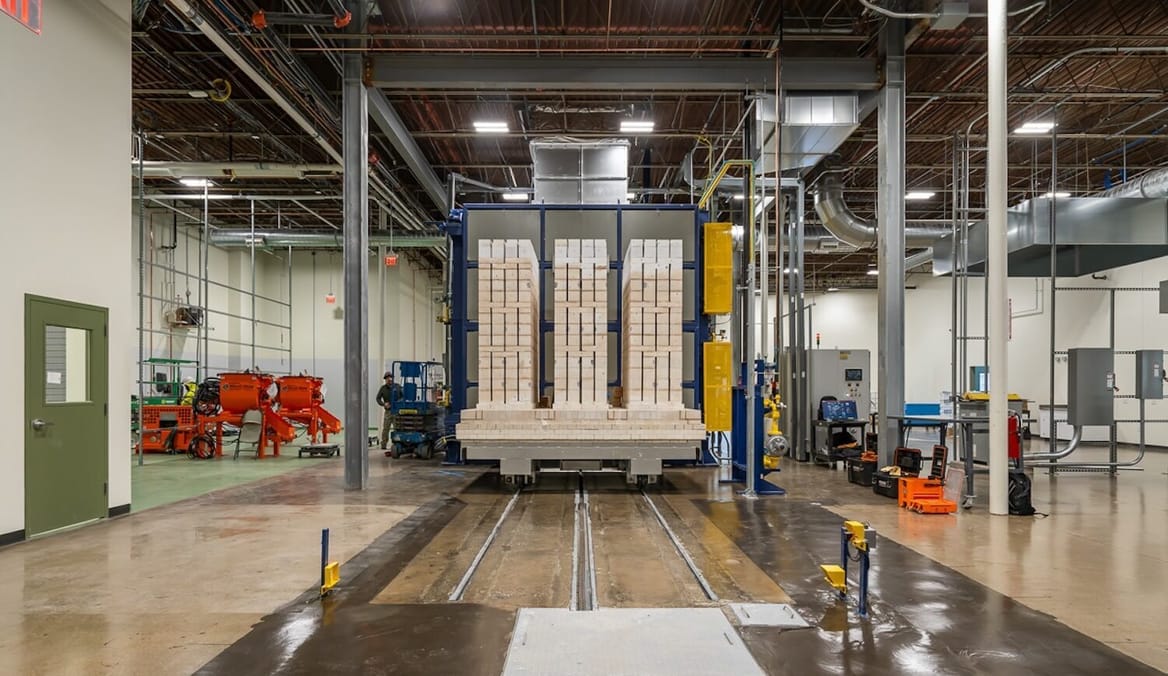
The startup’s battery runs electricity through insulated stacks of metal-oxide firebricks, which heats them up. The system taps the grid during the cheaper off-peak hours — when wind, solar, and other carbon-free sources are often most abundant. The company can discharge that stored-up heat by flowing air over the firebricks, then piping the resulting hot gas directly into the industrial equipment.
In San Antonio, Electrified Thermal’s battery can store 20 megawatt-hours of heat at temperatures of up to 1,800 degrees Celsius (3,270 degrees Fahrenheit). At the Holcim plant, the units will have the same capabilities for providing heat during the calcination process, which typically requires temperatures of between 900℃ and 1,500℃, Stack said.
“Electrifying high-temperature industrial heat is one of the advanced technologies we are incorporating in our decarbonization strategy, and this deployment allows us to evaluate its potential,” Ram Muthu, Holcim’s head of operational excellence, said in a statement.
Holcim, which is one of Electrified Thermal’s investors, is also backing a handful of other clean-cement startups, including Sublime Systems, another MIT spin-out. Sublime is working to replace cement kilns altogether through an electrochemical process that avoids the need for scorching heat.
When it comes to thermal storage, Electrified Thermal is among around two dozen startups developing systems that can supply clean industrial heat, or store and discharge electricity back to the grid. California-based Antora Energy raised a whopping $550 million in July to build and deploy more of its toaster-like heat batteries. Six other firms raised at least $53.7 million combined in venture capital and equity funding so far this year, according to the consultancy Cleantech Group.
The heat-battery developer Rondo Energy is also working to decarbonize cement production. Last November, the California-based company began operating a 33-megawatt-hour unit at a cement plant in Thailand that charges up from the grid and a nearby floating solar farm. Rather than directly supplying heat, the system produces superhot steam to drive a turbine, which then generates electricity.
Zainab Gilani, an energy and power research associate at Cleantech Group, said that many criteria can determine how well a thermal-energy storage project will fare in a given market, including natural gas prices, local decarbonization policies, the availability of renewable energy, and electricity costs.
“These factors, in addition to the specific demand for power and heat by industrial customers, all contribute to how successful projects will be,” Gilani said.
Electrified Thermal said the project with Holcim marks its third industrial partnership. The startup is teaming up with another one of its investors, ArcelorMittal, to test the heat battery at the steelmaker’s R&D facility in Spain. Stack didn’t name his firm’s third partner, though Electrified Thermal is also backed by the Brazilian iron-ore producer Vale.
“We see the road map for how we can electrify every portion of the cement industry,” Stack said. “We’re looking forward to walking that path with Holcim and with our partners in the other major industrial verticals that have so far been unachievable with electric heat.”


.svg)
