

 Back
Back
The new solar project is less than half the size of a gas plant planned for Meta’s El Paso data center.
Apex Clean Energy and Meta have entered into a power purchase agreement that allows the technology company to financially benefit from energy generated from a solar project in Gonzales County, Texas.
The 144-megawatt project wouldn’t have been built without Meta’s backing, the energy developer said. But the partnership comes after the parent company of Facebook quietly exited a corporate renewable energy initiative following a decade of membership earlier this year, raising questions about the company’s commitment to renewable energy as Meta builds an expansive portfolio of energy-hungry data centers, totaling 28 sites in the United States as of April.
Meta plans to power a new data center in El Paso with a 366-megawatt gas-fired plant.
In a statement to Inside Climate News, Meta said natural gas options are part of its data center expansion plans for artificial intelligence but added that the decision to exit Climate Group’s RE100 renewable-energy initiative holds no bearing on its commitment to clean energy. The company said it has contributed more than 30 gigawatts of new clean energy to grids across the country to date and has retained its goal to match its electricity use with 100 percent “clean and renewable energy.”
As part of the new project, called Starling Solar, Meta will get to claim “all environmental attributes” from the energy production. That allows the company to offset some of the gas-fired energy powering its data centers when it tallies up its electricity use, but the gas power plants will have climate and local air-pollution impacts all the same.
Dennis Wamsted, energy analyst at the Institute for Energy Economics and Financial Analysis, said artificial intelligence development doesn’t have to come at the cost of renewable energy.
“I applaud Meta for trying. They have been very active in the past in building out or paying for the build-out of renewable energy across the United States,” he said.
But Wamsted sees problems with the speed of Meta’s AI build-out and its reliance on natural gas to do so.
“I think in some regards they’re taking what could be called the easy way out,” he said. “While I am positive about their past impact on renewables, I am increasingly critical about their current approach, which is to build anything they can get their hands on as fast as they possibly can, and I don’t think that we need AI quite that quickly.”
He added, “I think you can build wind and certainly solar very quickly and it can be used to power AI data servers and centers all across the country.”
Solar power has become an increasingly valuable resource in Texas. Apex expects the Starling Solar project to help bolster the state’s grid, which has encountered record-high demand this month that surpassed the record set in 2023. The state is grappling with high temperatures and an influx of data centers. Meta has three locations in Texas.
In August, Gov. Greg Abbott instructed utility regulators and the Texas grid operator to oversee an audit of every data center waiting to connect to the grid in ERCOT’s interconnection process, including their water consumption practices, local water supply sources, and whether they use water-efficient technologies. Data centers that fail to comply with the audit will be denied interconnection.
Renewables made up about a third of Texas’ in-state electricity last year. That’s meant money for landowners, particularly farmers and ranchers, through lease payments for thousands of transactions like Meta’s power purchase agreement, Wamsted said.
Meta and Apex expect Starling to generate tax revenue of $27 million over the life of the project, $26.3 million in landowner payments and an estimated 400 to 450 jobs during the construction phase.
Starling is scheduled to begin operations next year.
SB 1213 will force truck manufacturers to disclose data to curb price gouging — and open new state financing options to help fleets switch to cleaner vehicles.
Hello, everyone! We’re back today to talk about trucks — the big and dirty ones — and what to do about them. California has around 1.8 million commercial trucks on its roads, almost all of them running on diesel fuel. They’re responsible for a lot of the state’s carbon emissions, and also harmful air pollution, particularly near the ports of Long Beach and L.A. and the warehouses of the “Inland Empire” of San Bernardino and Riverside counties.
To solve these problems, California has committed billions of dollars in incentives to encourage freight companies and independent truckers to switch to electric big rigs. About 2,000 zero-emission heavy trucks now travel on California roads, far more than in any other state.
But electric trucks still cost two to three times as much upfront as their diesel-fueled counterparts. To meet its aggressive clean-freight goals, the state needs to drive down that price.
Last week, Gov. Gavin Newsom (D) signed into law a bill that will help with that. Senate Bill 1213 uses both regulatory sticks and financing carrots to bring “greater transparency and accountability to the clean truck market,” said state Sen. Eloise Gómez Reyes (D), who represents nearly a million Inland Empire residents and authored the bill.
Such transparency is necessary because, it turns out, major truck manufacturers have been charging more in California than in other markets.
In a 2024 report, the California Air Resources Board revealed that the average price of a zero-emission Class 8 truck in California was $436,000 — about $87,000 more than the average price in Europe. Research from the nonprofit International Council on Clean Transportation also found big gaps between U.S. and European pricing.
Commercial trucks don’t have sticker prices like cars do, said Ray Minjares, the council’s heavy-duty vehicles program director. Instead, they’re sold via “business-to-business transactions” between manufacturers, dealers, and customers that “do not operate under a high degree of pricing transparency,” he said.
Under SB 1213, starting in 2027, manufacturers will need to share that pricing data with state agencies for trucks to be eligible for incentive programs including CARB’s Hybrid and Zero-Emission Truck and Bus Voucher Incentive Project and California Clean Fuel Reward rebate program and the California Energy Commission’s Clean Transportation Program.
That data will be anonymized to protect competitive confidentiality, emphasized Guillermo Ortiz, senior clean vehicles advocate at the Natural Resources Defense Council, which sponsored the bill. After all, major truck manufacturers still need to recover costs and earn a reasonable profit, even as upstarts like Tesla challenge them on price and performance.
But more data can also open the door to more fine-tuned incentives and other forms of state-backed financing, Ortiz said. SB 1213 instructs state agencies to explore options like residual-value guarantees to provide banks and other lenders with information on what used EV trucks are worth. Right now, such data is missing from the market, making it hard for banks to underwrite loans and leases, which account for about 90% of U.S. truck purchases.
Financing is particularly important for smaller operators, who make up most of the state’s trucking industry. “Zero-emissions trucks can’t just be luxury goods for corporate fleets,” Ortiz said. Loan-loss reserves to help backstop EV truck financing could also draw more lenders into the market.
California needs all the tools it can get now that its power to limit vehicle emissions and mandate clean truck fleets has been gutted by the Trump administration and congressional Republicans. At the same time, states can’t afford to pay half or more of the cost of every electric truck forever. The sooner California can encourage private-sector lenders to do their part, the better. After all, don’t truck manufacturers want to capture a share of the country’s top market for the freight-hauling technology of the future?
It’s Sept. 30, which means Newsom has until midnight tonight to veto the bills remaining on his desk from this legislative session or pass them into law. I’ll be tracking the fate of these bills in upcoming Canary Media stories.
Meanwhile, in an under-the-radar move, Newsom last week vetoed a bill having to do with community choice aggregators, the city- and county-based entities that serve the energy needs of an increasing share of the customers of California’s big three investor-owned utilities.
Assembly Bill 1761 would have forced utilities to disclose data that goes into calculating the Power Charge Indifference Adjustment. That’s a fee that CCAs pay utilities to make up for revenues utilities will no longer get from lost customers to cover the costs of paying down legacy investments like decades-old power plants.
CCAs have argued for years that the California Public Utilities Commission has taken the side of utilities in disputes over a fair way to true up those cost calculations. That includes a big decision last year that let utilities retroactively shift as much as $1 billion in costs onto CCAs, according to the California Community Choice Association.
AB 1761 was meant to make utilities cough up underlying data to prove out these calculations. Newsom’s veto statement says the bill could lead to “improper dissemination of market-sensitive information.” But Beth Vaughan, the California Community Choice Association’s CEO, said in a press statement that the veto blocks a simple step to “bring greater transparency and accountability to a charge that affects millions of California electricity customers.”
California sued the Department of the Interior earlier this month, calling foul on its deal to return $120 million in offshore lease payments to Golden State Wind in exchange for the developer’s promise to invest the same amount of money in U.S. liquified natural gas facilities and other fossil-fuel projects. But the state isn’t fighting its climate battles alone. Last week, New York and seven other East Coast states filed their latest round of lawsuits challenging the Trump administration’s deals to pay back billions of dollars in offshore wind development lease payments.
California has the highest diesel prices in the country right now. The looming threat of a Trump administration U.S. diesel export ban could drive those prices up even higher, according to California energy experts interviewed by Politico. That could make switching to electric trucks even more attractive to fleet owners. Remember, electric trucks cost more to buy but less to operate and maintain in the long run. One of the biggest variables in those total-cost-of-ownership calculations is the price of fuel.
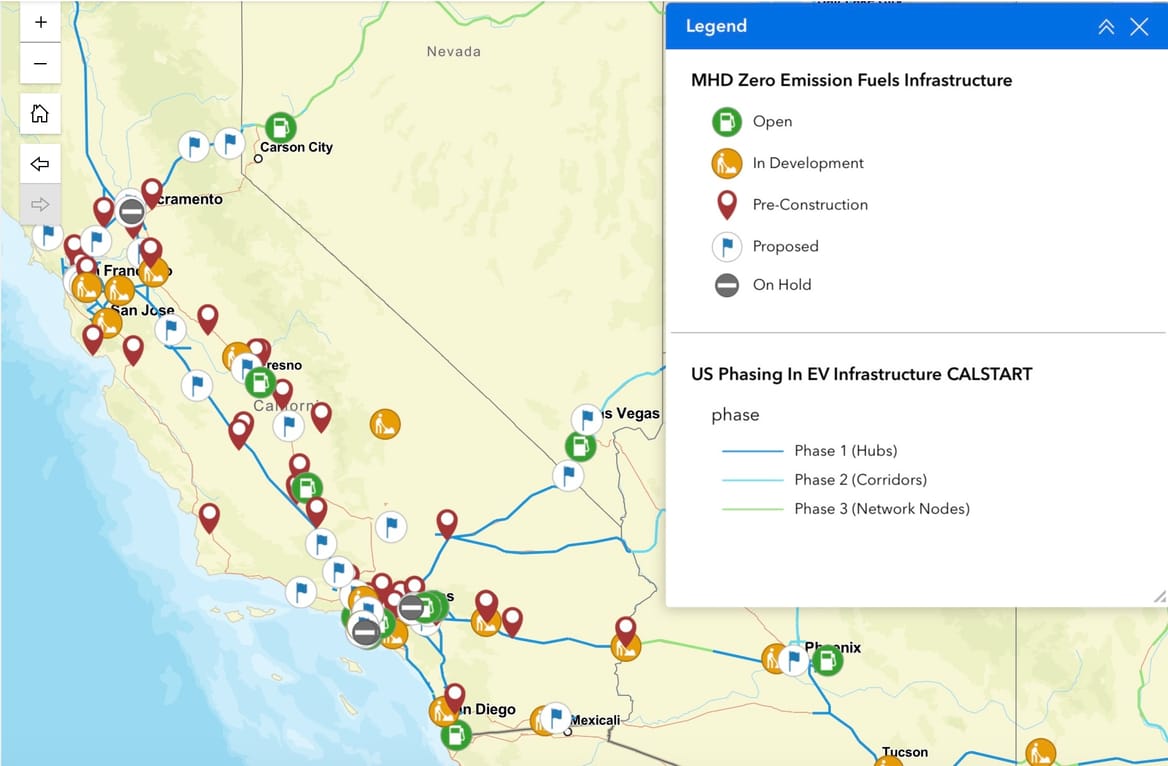
A final note on electric trucks: They need places to charge. And, hey, a lot more charging stations have been popping up lately. A map from Catalyst Mobility covers the entire U.S. and is updated regularly to show which sites have opened, which are being constructed, and which are on the drawing board.
The screenshot below shows the density of the charging network from the Southern California ports through the Inland Empire corridor. But charging stations are also being built in the Central Valley and in neighboring Nevada and Arizona — signs that the electric trucking industry is extending its range.
The number of charging sites has more than doubled, to over 200 stations, since Catalyst Mobility started tracking the data in 2024, said Jacob Richard, a technical project manager at the nonprofit. “Having that public infrastructure is vital to getting fleets to adopt the technology,” he said.

Last Sunday was Temescal Giveaway Day in our old neighborhood in Oakland, and my wife and I went to find some cool free stuff — a lot of books, some succulent clippings, a lovely woven basket — and grab a pistachio croissant at Forma Bakery. Lily the corgi came along, and we think she was glad to smell all the old neighborhood smells — and to check out the street art inspired by one of her relatives.
The Nuclear Regulatory Commission has been busy responding to Trump’s executive order. But will the many siting and permitting changes accelerate nuclear deployment?
The top U.S. nuclear regulator wants to make it easier to build and operate nuclear power plants in this country — without compromising public health or safety.
That’s the TL;DR of a proposed rule that would reduce reporting requirements for nonemergency events, eliminate the expiration date for standard design approvals for reactors, increase staffing flexibility in reactor control rooms, and modify seismic risk requirements, among other changes to the U.S. Nuclear Regulatory Commission’s voluminous regulatory code.
The 339-page tome is the newest of several dozen NRC rulemakings initiated since last May, when President Donald Trump signed an executive order directing the commission to implement sweeping regulatory reforms by the end of 2026. The order, which also made it official U.S. government policy to quadruple the country’s commercial nuclear reactor fleet by 2050, kicked off what one expert told Canary Media is likely the busiest period for the NRC since the early days of the nuclear power industry.
“This is a wholesale revision of NRC rules and guidance,” said Patrick White, a Massachusetts Institute of Technology–trained nuclear scientist who is group lead in the Clean Air Task Force’s nuclear energy practice.
The NRC is “trying to look top to bottom and say, ‘What changes do we need to make to the regulatory system if we want to accelerate deployment of nuclear?’ You’re seeing everything done at once,” White added.
The Trump administration’s push for NRC reforms comes amid broad agreement that the U.S. needs more electricity generation, and as the administration continues to throw up obstacles to renewables and batteries, which are the cheapest, fastest, and cleanest resources available to deploy right now. Though only a handful of nuclear reactors are under construction in the U.S. today, and experts expect few if any to come online before 2030, Trump’s support for nuclear marks a rare point of alignment with decarbonization advocates — and a potential lifeline for the country’s clean energy transition.
Earlier this year, the NRC wrapped up previously authorized work on a new licensing pathway for advanced nuclear reactors and jump-started the development of a second pathway for “low-consequence microreactors.” It has also initiated several significant rulemakings under Trump’s executive order. Each package runs hundreds of pages and contains multiple proposals for new or updated nuclear regulations.
Of these, a comprehensive update to existing licensing regulations is one of the most potentially beneficial proposed changes for companies looking to build new nuclear reactors, said Lara Nichols, a former Duke Energy executive who’s now a partner with the law firm Troutman Pepper Locke.
For example, one proposed change would increase reactor developers’ flexibility to make design changes during construction without having to ask the NRC for permission. That could avoid the sort of situation Westinghouse and its partners found themselves in while building the United States’ first two AP-1000 reactors in Georgia during the 2010s and early 2020s. Lengthy NRC design modification reviews helped push those reactors’ delivery dates nearly a decade beyond original estimates.
Other regulation updates would expand the type of site work that license applicants can do before receiving full approval from the NRC to begin reactor construction, and also revise emergency preparedness requirements to accommodate the wider range of reactor technologies expected to reach commercial operation in the coming years.
Newer reactors, including the AP-1000, generally have “passive safety systems” that lower the risk of catastrophic accidents, reducing the need for the sorts of safeguards required of reactors designed in the 20th century.
Another set of proposed changes would make it easier for existing nuclear power plants to address physical security and earthquake mitigation requirements, which could help decrease plants’ operating costs if they can find a way to meet the modified standards with fewer staff, Nichols said in an email.
A separate revision to the NRC’s nearly 40-year-old “backfitting” rule would reduce nuclear plants’ compliance burdens when the agency issues new or revised regulations. On paper, that could be “one of the most potentially beneficial proposed changes” for existing nuclear power plants, though a lot rides on how NRC employees interpret the revised rule, Nichols said.
“The realized benefits will depend on how these changes, if approved, are implemented in the field by NRC inspectors,” she said.
One particularly controversial change would replace the NRC’s long-standing “as low as reasonably achievable” standards for radiation protection with “clearer, more objective requirements” that the agency says would be “set well below levels associated with known health effects.”
The incumbent standard, known as ALARA, has been an enduring target for industry groups like the Nuclear Energy Institute. It asks license holders to make “every reasonable effort” to keep public and employee exposure to X-rays and other forms of high-energy radiation as far below its annual dose limits as practically possible.
In a far-reaching paper last year pushing for comprehensive NRC reforms, the Nuclear Energy Institute said updating the “overly restrictive” and inconsistently applied standard would improve “efficiency, flexibility, clarity, and … deployment of modern nuclear technologies while maintaining safety.”
The NRC said much the same in its July 1 proposal to replace ALARA with a “graded approach” to radiation safety.
Among other changes, the new approach would allow nuclear power plant employees to exceed the annual dose limit as long as their average annual exposure remains below the threshold over a five-year period. That would give workers and plant operators more flexibility during plant maintenance cycles, when radiation exposure tends to increase, according to an American Nuclear Society brief on the proposed rule.
Some industry analysts say, however, that eliminating the ALARA standard won’t on its own enable new reactor construction. The move would save the nuclear industry about $9.53 million annually, according to NRC estimates — peanuts next to the multibillion-dollar cost to build even a modest-size nuclear power plant. The NRC estimates its latest, lower-profile package of proposed reforms would reduce costs industrywide by $15.1 million to $22.2 million per year.
Neither ALARA nor the latest proposed reforms would be a game changer, said Andrew Kleiman, an energy transition research analyst with the global energy consultancy Wood Mackenzie.
“Impacts of the proposed rule on costs are marginal. … [The] level of savings across the entire industry is not likely enough to move the needle for any single project,” Kleiman said in an email.
The Clean Air Task Force’s White said eliminating the ALARA standard would neither reset reactor economics to developers’ benefit nor materially affect operational safety for current and future reactors. But it could still be a big deal for the industry, and not necessarily for the better, he said.
“It is potentially very impactful — not because it’s going to significantly reduce the cost of nuclear energy or significantly change operations, but because it becomes a major signaling issue,” White said.
In other words, in appearing to relax its commitment to radiological safety, the NRC could feed public unease about its independence in the Trump era. So could another regulatory reform project that the nuclear industry has long pushed for: simplifying environmental reviews for new reactors.
In last year’s paper, the Nuclear Energy Institute said streamlining environmental reviews, simplifying public hearings, and “modernizing oversight” would allow regulators to focus more on issues with direct bearing on nuclear safety. Andrew Mauer, the group’s senior director of regulatory affairs, echoed that sentiment in an email to Canary Media this month.
“NEI supports efforts to enhance regulatory efficiency by retaining safety-significant requirements, reducing inefficient administrative burdens, and aligning NRC regulations with current practices and Executive Orders,” Mauer said.
Another significant change would narrow the scope of the NRC’s environmental reviews for new reactors. Until now, those reviews have been lengthy, far-reaching processes that involve evaluating not just the physical safety of a facility itself but also the ecological impact, construction dust and noise, and water and air quality effects not related to the radioactive material on-site.
In July, the NRC proposed dispensing with those aspects and focusing its environmental reviews largely on radiation-related health, safety, and security issues, according to an analysis by the law firm Holland & Knight that described the changes as “potentially transformative.”
The proposed rule would also allow applicants seeking to renew existing reactors’ operating licenses or obtain fresh construction permits or early site permits — wherein the NRC deems a particular site suitable for new reactor construction without granting permission to move dirt — to apply for “categorical exclusions” to National Environmental Policy Act review, further reducing the environmental review burden, according to Holland & Knight’s analysis.
Narrowing the scope of NRC environmental reviews could significantly reduce license applicants’ paperwork burden and their risk of being sued later, Holland & Knight attorneys Andy Kriha, Jason Hill, and Elizabeth Leoty Craddock wrote in July.
White agreed that the proposal would streamline NRC assessments of new reactors’ environmental impacts. What’s less clear is whether an NRC perceived to be more deferential to reactor developers could increase public skepticism of an industry that currently enjoys bipartisan support.
“There is a concern that it could become counterproductive if it starts to increase public concern around siting and permitting of nuclear power plants,” he said, referring to the proposed environmental review changes. “Is that going to affect public confidence in these projects?”
And if the public begins to sour on the NRC and the nuclear industry writ large, the agency’s newfound nimbleness could work against it, White added.
“The NRC can be forced to change very, very quickly, but does that mean future administrations could change it in the other direction very quickly?” White asked, rhetorically. “What happens if you start an application now, only to have a shift in policy under a new administration in 2028?”
The U.S. transmission grid isn’t growing fast enough to meet surging electricity demand. Fast-tracking transmission upgrades could change that.
The U.S. Senate energy permitting bill unveiled Wednesday could streamline the buildout of high-voltage power lines across the country, potentially delivering billions of dollars in electricity cost savings and dramatically improving the power system’s reliability over the coming decade — if Congress manages to pass it into law.
So say grid experts digging into the transmission grid policy directives contained in the text of the long-awaited bipartisan reform package. The bill would order the country’s regional grid operators and utilities to streamline how power lines are planned and permitted. It would require the use of advanced transmission technologies that can expand the capacity of new and existing grids.
It would give state and federal regulators tighter oversight over less efficient local transmission planning. And it would require grid operators and utilities to coordinate grid buildouts to enable more new power plants, solar and wind farms, batteries, and other resources to serve growing demand for electricity.
“If Congress wanted to expand and de-congest the nation’s transmission grid, these are the policy changes that can get that done,” said Rob Gramlich, president of consultancy Grid Strategies and a longtime proponent of transmission grid reform. “It is very likely that this bill, if passed, would reduce consumer utility bills over time as the transmission system expands and access to low-cost generation improves.”
That view is backed up by analysis commissioned by the Center for Climate and Energy Solutions, a nonprofit research organization, which studied the impact of the bill’s reforms on four major grid regions — from the mid-Atlantic coast to the California border — that provide electricity to more than half the country.
The analysis found that by 2035, the reforms in the bill could enable a grid buildout that would reduce the cost of delivering electricity by roughly $7 billion, compared with a business-as-usual scenario — a net savings after accounting for $1.9 billion in new transmission investment. That, in turn, could reduce residential electricity bills by about $1.1 billion.
“Really simply, we need to build more energy infrastructure in this country,” Nathaniel Keohane, the group’s president, said in a Wednesday press conference. “We need to do that faster, and these reforms will help.”
Many of the transmission provisions in the new legislation were previously proposed under a 2024 bill, Keohane said. And other parts of the bill would essentially strengthen previously mandated grid interconnection and transmission planning reforms.
But the new bill also adds reforms that will “make it more predictable, easier for new energy generation to connect to the grid,” he said. “That’s really important.” Across the country, transmission bottlenecks are preventing hundreds of gigawatts of solar, wind, and battery projects from being connected to the grid.
Ashna Aggarwal, director of analysis at Greenline Insights, which conducted the study for C2ES, said the modeling her group used indicated the reforms in the bill could enable almost 100 gigawatts more wind, solar, and battery storage, as well as nearly 40 GW of increased interregional transmission capacity that can carry power to far-off regions suffering from extreme weather events.
It’s unclear how the Senate package will fare in the House of Representatives, which has been adjourned by House Speaker Mike Johnson (R) until after the November midterm elections. Republicans and Democrats have squabbled over proposed reforms to environmental regulations, with Republicans pushing for changes that favor the fossil fuel industry, and Democrats demanding the Trump administration halt its attacks on clean energy.
Some environmental groups oppose reforms that would limit the time and scope of challenges to energy projects under federal environmental regulations, saying that such streamlining will unleash a harmful expansion of fossil fuel infrastructure.
But clean energy groups including Advanced Energy United, the American Clean Power Association, and the Solar Energy Industries Association are backing the bill. The reforms, the groups say, are vital to unblocking bottlenecks that are preventing all but a fraction of the country’s potential clean energy from being built to serve fast-growing demand for power from data centers, electric vehicles, and broader economic growth.
“Across categories, this tries to rein in delays and uncertainties that add time and cost to building new infrastructure in this country,” Caitlin Marquis, Advanced Energy United’s managing director, said in a Wednesday interview.
To be clear, the reforms in the Senate bill will also ease permitting and interconnection for the massive amounts of new fossil gas power plants being proposed across the country. “This is not a world in which natural gas disappears completely,” Aggarwal said. “It does remain the largest source of electricity generation in 2035.”
The Electric Power Supply Association, a trade group representing power plant operators with a preponderance of fossil-gas power plants in their portfolios, expressed support for the Senate bill. “Demand for electricity is rising, and the energy infrastructure, including power plants, transmission lines, and natural gas pipelines, required to supply that demand needs a more efficient and predictable path for investment,” the association’s CEO Todd Snitchler said in a Wednesday statement.
But clean energy groups argue that solar, batteries, and wind power are cheaper and faster to build than fossil-fuel power plants, giving them an advantage if the grid can accommodate new additions.
Conversely, if the grid can’t grow quickly enough, data centers may press on with plans to build tens of gigawatts of “behind-the-meter” gas-fired power plants, despite the costs and the climate and environmental harms, Keohane said.
“We all see the enormous booming energy demand that’s happening right now. That demand is going to be met,” he said. “Whether it’s met with clean energy that can compete on the economics on a level playing field, or whether it’s met behind the meter with all sorts of other kinds of technologies that don’t serve the communities they’re in, that’s really what’s at issue.”
The Minnesota mining firm will forgo traditional coal-based steelmaking at the facility — a step toward cleaning up production to compete on a global market.
The company behind America’s first new iron ore mine in 50 years has unveiled plans for a massive, $15 billion steel plant in southeast Iowa, bringing the firm closer to realizing its ambitious vision for low-carbon steelmaking.
Mesabi Metallics, which is owned by India’s Essar Group, announced the project on Monday at the White House alongside President Donald Trump, senior cabinet members, and a handful of top Republican officials from Iowa.
Trump touted the steel plant at a moment when Republicans face difficult midterm prospects. The president cited the promise of high-paying jobs for Iowa, a state that could help the GOP maintain control of the U.S. Senate in November. He also credited his administration’s 50% tariffs on imported steel for driving investment in a facility that, if built as planned, would be among the world’s largest.
Mesabi didn’t specify why it chose Iowa for the proposed facility, which is slated to receive iron-ore pellets from the company’s vast new operation in Minnesota’s Iron Range and ultimately churn out around 10 million tons of steel a year. Iowa’s Republican Gov. Kim Reynolds said on Monday that “tough negotiations took place” between the state and Mesabi, but didn’t elaborate further.
Mesabi’s Iowa mill “will be one of the most efficient and environmentally friendly facilities in the world,” the company said in a press release. The mill will use natural gas to turn pellets into direct reduced iron, or DRI, that will then be fed into an electric arc furnace, or EAF, likely powered by Iowa’s wind-dominated grid.
The facility could be made far cleaner if the company replaced that gas with green hydrogen — made from renewable energy and water — during the ironmaking process, though Mesabi didn’t mention plans to use the fuel, which is currently expensive and in short supply.
Along with the $15 billion earmarked for the steel mill, Mesabi is investing nearly $3 billion to complete its iron ore mine in northern Minnesota. The company has long envisioned creating a network that begins on the Iron Range and ends with shiny steel coils for producing U.S. cars, ships, appliances, and energy infrastructure.
“With the new steel complex in Iowa, we will complete the fully integrated American supply chain, from mine to mill,” Rewant Ruia, chair of Mesabi, said from the Oval Office.
He added that the new facility “will use the latest technology, and will compete head-to-head with any steel plant in the world on size, quality, and on cost.”
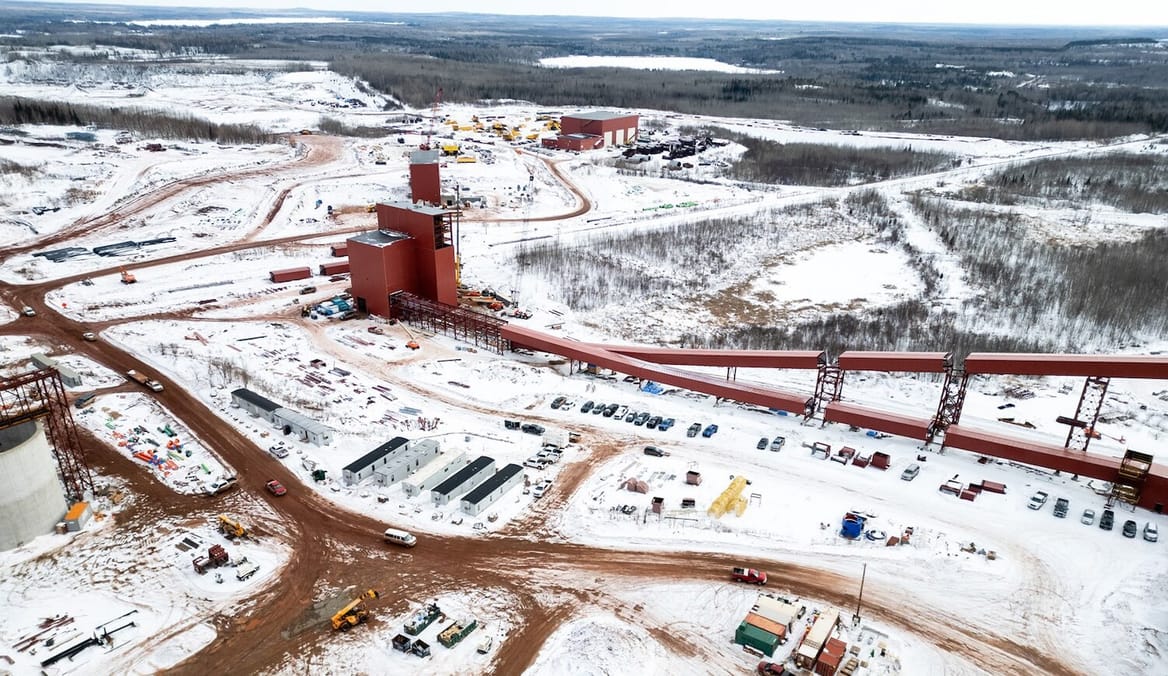
In a stark departure from more than a century of vertically integrated steelmaking in the United States, Mesabi’s new complex will not use coal-fired furnaces.
The older steel mills operated by America’s legacy steelmakers, U.S. Steel and Cleveland-Cliffs, still rely on blast furnaces to melt and purify iron ore. The lavalike mixture is then fed into basic oxygen furnaces that remove most of the remaining impurities to produce crude steel. The process is a significant source of global greenhouse gas emissions and toxic air pollution.
Mesabi’s plan represents “an important, and predictable, investment in the future of iron and steelmaking in the U.S.,” said Hilary Lewis, steel director at the decarbonization-advocacy group Industrious Labs. It’s a sign for other “outdated, polluting” steel mills to clean up their act, she added.
“The writing is on the wall for the few coal-based furnaces left in the U.S.: Modernize, or lose out,” Lewis said by email. “This is a wake-up call for industry decision makers, elected leaders, and communities across the Midwest — if they want to keep the steel industry that helped build our buildings, bridges, cars and the modern middle class, they need to invest in cleaner, modern iron and steel technology today.”
But Ohio-based Cleveland-Cliffs remains committed to the older technology in at least one of its mills. Last month, it said it would use a $500 million federal loan to extend the life of the blast furnace at its Middletown complex by 15 to 20 years. It was a sharp turnaround for Cliffs, which only two years earlier said it would use the loan to replace the Middletown blast furnace with a direct reduction plant like the one Mesabi is planning in Iowa — and the one Cliffs already owns and operates in Toledo, Ohio.
The Toledo facility remains the only DRI complex in the Great Lakes region, which has for decades leaked steelmaking capacity to Gulf Coast markets with easier access to cheaper imported ores. In Louisiana, the Korean industrial giant Hyundai recently broke ground on a nearly $6 billion steel mill that will also use the DRI-to-EAF pathway.
The White House said Mesabi’s Iowa mill will begin production in 2030, and Trump said its steel would be cost-competitive in a global market increasingly dominated by lower-cost Asian producers.
But important questions remain. Most traditional, integrated steel mills are on or near the Great Lakes and can receive ore by water, a more efficient pathway than rail. Though Mesabi’s Iowa mill will be located on or near the Mississippi River, the locks on the ship canal between the Mississippi and Great Lakes watersheds are generally too small for hulking ore carriers to traverse.
The mill may instead take delivery by rail direct from northern Minnesota, like U.S. Steel’s Granite City Works near St. Louis. At the White House, Ruia referenced “American ore carried on American railroads” when outlining his mine-to-mill vision.
Earlier this month, Mesabi CEO Joe Broking suggested the company may yet add DRI capacity closer to its Iron Range mine. Broking, who was also in attendance at the White House, teased the idea of Minnesota DRI at a little-noticed county board meeting on Sept. 15, according to a report by KAXE/KBXE. He told Itasca County commissioners that Mesabi was prepared to spend $5 billion on an expansion that would more than double the mine’s annual production capacity and build a DRI plant nearby.
Elizabeth Boatman, the Minnesota-based industrial decarbonization lead for consultancy 5 Lakes Energy, told Canary Media in February that the prospect of lower shipping costs strengthens the case for a DRI-based steel mill in northern Minnesota, possibly at the long-cleared site of an integrated mill U.S. Steel ran last century in Duluth.
“One of the push points to moving [purified] iron production here is that around one-third of the pellet is not iron. Why would you want to pay for fuel and time to ship non-iron when you could just ship the iron itself?” Boatman said.
Broking said the expansion hinged on state environmental permitting reforms and on the outcome of a dispute between Mesabi and Cliffs over mineral leases for 2,600 acres near Mesabi’s mine. Mesabi once controlled those leases, but the state of Minnesota revoked them earlier this decade after Mesabi ran into financial trouble. It later handed them over to Cliffs.
As for the Iowa plant, the message from Mesabi leaders and Trump administration officials on Monday was unambiguous: It’s happening, even if details remain sparse.
“I think this deal’s done,” Commerce Secretary Howard Lutnick told reporters. “They’ve already worked it all out. That’s why we’re all together with the president. The president doesn’t bring people together unless it’s a done deal.”
Fervo Energy is producing clean power at Cape Station in Utah. It’s a big milestone, but the industry must tackle high costs and other barriers in order to scale.
The geothermal startup Fervo Energy is now selling power to the grid from its Cape Station project in Utah — marking the first time a utility-scale, next-generation geothermal facility has achieved such a feat worldwide.
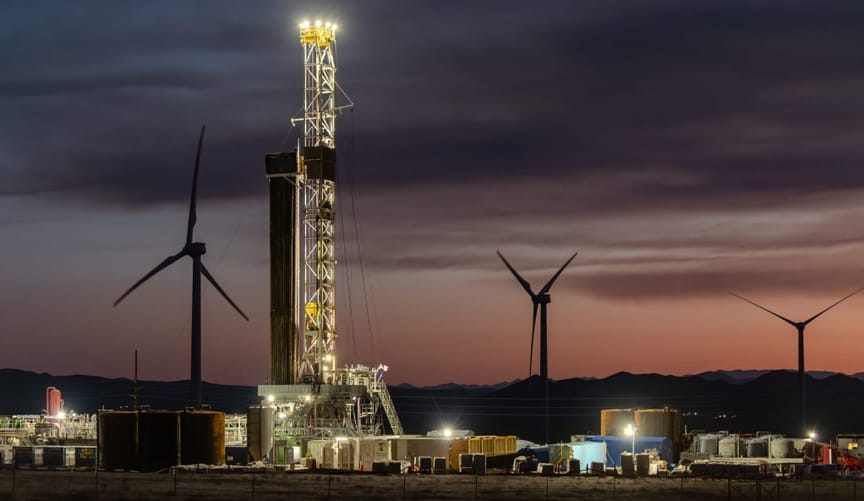
The Houston-based firm turned on an initial 33-megawatt unit late last week and has been testing and ramping up output since then. On Thursday, Fervo will officially begin commercial operations, supplying carbon-free electricity to Shell Energy, a retail power provider in California.
Cape Station, a $2 billion project that will eventually be 500 MW, is unique among the world’s commercial geothermal plants. While other facilities draw on naturally occurring hot water and steam, Fervo has engineered its own geothermal resource deep underground. The startup uses drilling techniques from the oil and gas industry to create reservoirs in hot, dry rocks that generate steam to produce electricity.
“Traditional geothermal would have never been done in southern Utah,” said Dawn Owens, Fervo’s senior vice president and head of development and commercial markets.
With the first unit online, Fervo said it is working to commission two more 33-MW power blocks by Jan. 1, 2027. The project’s remaining 400 MW — which is supported by a new agreement with Google — is under construction and slated to come online in 2028.
Fervo already operates a 3.5-MW commercial pilot plant in Nevada, which went online in late 2023. Owens said the pilot, called Project Red, was important for demonstrating the technology itself. But firing up Cape Station proves that Fervo’s approach can achieve utility scale and export power to wider markets.
“This is massive for both Fervo and the geothermal industry at large,” she said.
Fervo, which went public in May, is leading the fast-growing movement to develop clean, always-on geothermal power to meet soaring demand from data centers and balance growing supplies of intermittent solar and wind energy. Next-generation geothermal firms have raised billions of dollars in private capital in recent years to develop and deploy technologies that can harness energy in harsh, deep environments.
Today, geothermal represents just 0.4% of total U.S. electricity generation every year. Expanding geothermal’s share of the mix will require not just building more projects like Cape Station but also tackling high upfront drilling costs and other economic and regulatory barriers — all while working to limit potential impacts on communities and the environment, experts say.
“Fervo’s first power achievement shows investors the size and scale of the opportunity to fuel many more such milestones across developers and sites in the future,” said Mitchell Smith, who serves as grid lead for the Mountain West Geothermal Consortium. The bipartisan initiative is calling for increased public and private financing “to help bring more projects online responsibly and at the speed of demand,” he added.
Fervo has declined to disclose the terms of its power purchase agreements for in-progress and future development, which together represent about 1,000 MW, or enough to power roughly 1 million U.S. homes every year. Phase 1 of Cape Station is set to deliver power at $7,000 per kilowatt, while Phase 2 should come at $5,500 per kW, the company previously told Canary Media. (By comparison, the average cost to build a natural gas–fired power plant was $2,157 per kW in 2025.)
Along with slashing drilling costs, enhanced geothermal projects could improve their economics by delivering power when it’s most valuable to utilities, according to researchers. While geothermal plants traditionally provide around-the-clock, baseload power, next-generation facilities might operate flexibly during certain periods — like in the evening, when solar output declines — to reduce overall grid costs. Geothermal plants could also operate “behind the meter” to directly power data centers, so that the costs of adding new electricity capacity aren’t passed on to utility customers, Owens said.
“We’ve been saying all along that our technology makes geothermal more scalable and affordable in more places,” she said. On Cape Station’s powering-up, she added, “That’s just something no next-generation geothermal company has ever been able to do before.”
A bipartisan group of senators has a plan to speed up energy permits to meet rising demand, but data center backlash and environmental rollbacks are sticking points.
Senators are looking toward the Capitol doors as they prepare to head home and campaign for the midterms. Meanwhile, a group of them has been scrambling to reach a deal that some analysts believe is critical to meet the country’s energy needs.
A bipartisan group of senators says it has come closer than ever before to reaching a long-desired permitting reform bill, which would make it easier to build new energy projects. Many consider the issue urgent as electricity demand surges across the country, partly because of the tech industry’s massive buildout of data centers.
“America’s energy demand is surging due to advanced technology and manufacturing, but our outdated federal permitting process remains a massive barrier to building the infrastructure we need to stay competitive,” said Marsha Blackburn, a Republican senator from Tennessee, in an August press release.
But the bill’s reception among the public is uncertain due in part to a PR problem: Data centers are a “toxic” subject for voters, according to Alex Lundry, president of D.C.-based public opinion research firm Redbud Consulting. In recent polls, Democrats, Republicans, and independents strongly oppose data centers being built in their communities.
“If you phrase permitting reform as serving data centers, the polling results get way worse,” Lundry said. This is putting legislators, many of whom are up for reelection in November, in a bind: They want to make it easier to build more electrical infrastructure, which facilitates the data center boom, but don’t want voters to think it’s about data centers.
The potential bill represents one of the few points of agreement for Republicans and Democrats in Washington, which is that energy permitting is broken.
Complicated studies on project impacts, lengthy reviews by different federal agencies, and legal battles from environmental groups and project opponents constantly delay all kinds of energy projects, industry leaders say.
Lawmakers have tried for years to reform the permitting process, most recently with the failed Energy Permitting Reform Act of 2024, which made it out of committee but never got a full Senate vote. Now, lawmakers from both parties say growing power demand has given the new attempt more momentum than any previous effort. The highest-ranking members of both parties in the Senate’s two energy-related committees are negotiating the bill’s language.
President Donald Trump has signaled he would stop blocking renewable energy projects in order to entice Democrats toward a deal on the bill. Democrats have worried that even if they make it easier to build renewables in law, the White House could continue making it impossible in practice, with some Democrats indicating that these worries have stalled the bill’s progress.
“I appreciate very much what the Trump administration has done to move in this direction, but in order to brief colleagues on what this really means, we need just a bit more clarity on exactly what return to regular order for wind and solar projects looks like,” Senator Sheldon Whitehouse, the top Democrat on the Senate Environment and Public Works Committee, told reporters this week. “So that’s still to be done, but that I think can happen in fairly short order.”
Politico reported that the senators intend to finish hammering out the bill after the midterm elections, when it could compete with other legislation for attention, especially if Republicans lose control of Congress.
The draft bill’s contents are not public, but stakeholders expect it would make building energy projects easier by reducing the potential environmental and social effects of a project that government agencies must consider when issuing a permit; loosening Clean Water Act and Endangered Species Act requirements that slow down transmission line and pipeline permits; and making successfully obtained permits less vulnerable to lawsuits after they’re issued.
Such a bill would ease the path to construction for renewable and fossil fuel projects alike — especially solar and natural gas, the power sources with the most momentum. Solar power and batteries account for almost 80 percent of the new power generation expected to be built in the United States in 2026, while natural gas was the largest single source of electricity used in 2025, with projections for continued growth. Natural gas in particular has become a go-to power source for data centers, which are projected to use a lot of it in the next decade.
Unsurprisingly, both the solar and the gas industries support permitting reform. Tim Pawlenty, president of the Solar Energy Industry Association, has said the country would be “constipated” without it.
A colossal surge in electricity demand has long been expected in the United States, even before Big Tech started its data center buildout. Americans are “electrifying” their lives with heat pumps, electrical appliances, and electric vehicles, all important for reducing emissions. The country has also squeezed most of the benefits out of energy-saving light bulbs and other fixtures, which had kept electricity use flat by reducing power needs as they spread during the 2010s. Added to all that, the United States aims to draw more manufacturing to its shores, which requires electricity if successful. But data centers are accelerating and intensifying the power-demand spike, and straining grids and supply chains. Data center developers like Google have helped lobby for permitting reform.
Environmental groups like the Natural Resources Defense Council want to speed up renewable energy development without weakening bedrock environmental laws; NRDC executives have called for land-use plans that make it easier to site renewable energy projects while protecting local ecosystems. But Democratic legislators are considering compromising on environmental protections to support renewable energy and keep grids reliable. Meanwhile, Republicans, many of whom deny the severity of climate change, want to power new economic growth.
There is another reason legislators in both parties are keen to build, build, build: Many are anxious that hobbling data centers, and the AI systems they enable, will allow China to become economically and militarily stronger than the United States. Trump administration officials, legislators from both parties, and energy industry leaders speaking at the Clean Energy Week conference in Washington, D.C., in mid-September called on America to be “competitive” and “dominant” through energy buildout.
“While Communist China cuts corners to get ahead, a mountain of red tape has America fighting the energy war with one hand tied behind our backs,” said Senator Rick Scott, a Republican, in a statement last month.
But Lundry, the pollster, warned that these sentiments are losing popularity among voters. “Being competitive with China used to be an effective message, but it isn’t anymore,” Lundry said.
Instead, Lundry recommended framing permitting reform as a boost for clean power. Lundry’s firm, Redbud, found in a September poll that 71 percent of respondents agreed that “making renewable energy a bigger part of the country’s energy supply is the right move.” Bringing down energy costs is also likely a big win with voters, the survey showed, with 70 percent of respondents saying their energy bills have gone up in the last year.
Action in the other house of Congress makes it clear that lawmakers are well aware of the public’s antipathy toward data centers and fear about rising energy costs. A few days before senators said they were nearly finished with their permitting draft, the House of Representatives passed a bill calling on states (but not requiring them) to force data centers to pay for their own electricity generation. The bill is meant to help shield regular people from rising bills as data centers gobble up power. That bill is now stalled in the Senate, where some Democrats say it’s too soft-handed.
Longtime EV pioneer James Worden turns his vision to the water, with sun-and-battery-powered vessels customizable for ferry routes, tourist cruises, and water taxis.
The TruSolar20, all straight lines and right angles, was not the sleekest vessel on the Charles River when I visited at the end of August. Once I climbed aboard with inventor James Worden and we pulled away from the Massachusetts Institute of Technology’s sailing pavilion, it quickly became clear that the boat’s shape isn’t its only distinction.
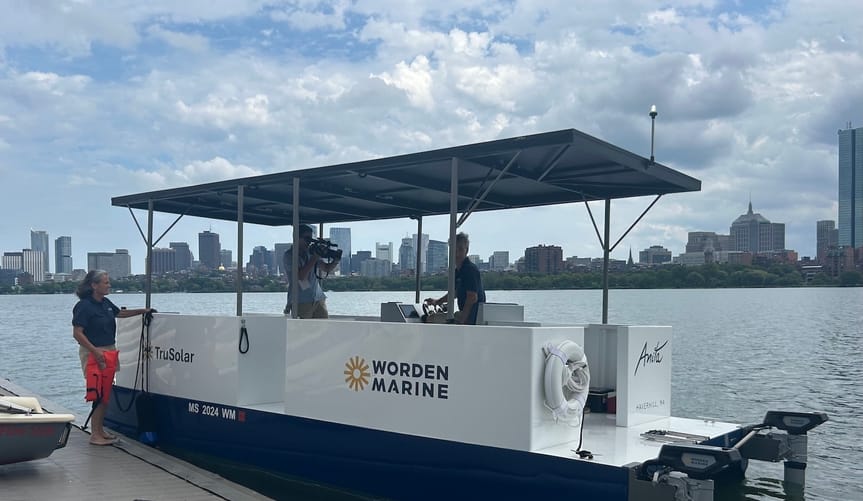
There was no exhaust pricking our lungs as we sped up, and the only noises were the breeze and the strains of the “Pirates of the Caribbean” soundtrack, a favorite of Worden’s, coming from the onboard speakers. Most notable, perhaps, was the canopy over our heads, composed of six 425-watt solar panels that provided all the power the 20-foot-long boat needed to cruise along at about five miles per hour, even on a mostly cloudy day.
In sunnier weather, the boat reaches eight miles per hour on sun power alone and can run indefinitely at that rate. If it taps into the power stored in its battery, it can get close to 14 miles per hour. After sunset, a full battery keeps the vessel moving at a slower speed all night.
“We are sure that when people experience this, they’ll be really excited about it,” Worden said, steering the boat back toward MIT, his alma mater.
He’s banking on it, in fact. The TruSolar20 is the first design by Worden’s solar boat startup, Worden Marine. The prototype, named Anita in honor of Worden’s wife and partner in innovation, who died in 2023, first hit the water in 2024. A second model, the TruSolar40, is twice as long, half again as wide, and topped with 12 solar panels. This larger version will be enclosed, unlike its younger sibling, and the ends have been made more streamlined, reducing the boxiness of the original. Both boats can be built customized for ferry routes, river tours, and other recreational or small commercial uses.
Worden is an innovator and entrepreneur with a long history in solar-powered vehicles, dating to the mid-1980s, when he won the Massachusetts state science fair by building a wood-and-cardboard solar-powered go-kart. A few years later, at MIT, he helped start the school’s Solar Electric Vehicle Team, then went on to found solar EV company Solectria with Anita. Later, the pair spun out Solectria Renewables, a company specializing in photovoltaic inverters.
The company was acquired in 2014, and Worden stayed on as co-CEO until 2017. Soon afterward, he began mulling the possibilities of sun-powered boating and started planning in earnest about four years ago, he said. His priority was always to design a zero-emissions boat from the ground up, rather than adapting existing vessels to work with solar power.
“That’s when I went down into the basement and really started sketching and researching,” he said.
Environmental impact is not an afterthought for Worden. He still drives a 1994 Solectria electric car, and Worden Marine is headquartered in a net-positive, geothermally heated renovated barn in North Andover, Massachusetts.

To maximize the emissions impact of his latest invention, however, he needs people to buy his boats. So his other major focus is building a sustainable business to get his climate-friendly technology out on the water. Worden Marine hasn’t closed any sales yet, but is talking with several possible customers, Worden said.
“It has to be a business or it’s not going to last very long,” he said. “First and foremost, it’s the experience, the technology, the environment. The business will follow.”
To keep the boats affordable, he turned to commercially available solar panels that cost about 20 cents per watt of capacity. The hull was engineered using carbon fiber and Kevlar to make sure it is both lightweight and strong. The larger TruSolar40, fully fitted out, will weigh just 9,000 pounds, so light for a vessel this size that when Worden went to buy a trailer for it, the vendor was initially confused by the number.
Buyers will be able to configure the final product to their needs. Seats can be organized to hold up to 16 passengers for ferry service. The TruSolar40 will not be the first solar-driven commercial vessel on the water — in 2018, the first Coast Guard–approved sun-powered boat started carrying passengers along the Hudson River — but they remain rarities.
Early on in the development process, Worden had the luck of meeting a retired U.S. Coast Guard captain who familiarized him with the standards a boat must comply with to be certified for commercial operations. So before the final designs were even drafted, Worden was working with the Coast Guard to ensure his vessel would meet the requirements.
Radar will be an option for navigating through misty conditions. There will be enough room to add a bar or a small bathroom, Worden said. A deck could be built off the back to allow for swimming, and there’s even enough space for a small grill.
“Our real technology is what’s above our head and under our feet,” Worden said. “You can put whatever you want in between. We’ll make it fun, too.”
A shift away from coal has slashed pollution from the U.S. power sector in recent decades, but some states still have dirtier power generation than others.
Have you ever gazed up at power lines and wondered how clean the electrons passing along them are? The answer is very different depending on where you are.
Just look at the spectrum of blues in the map above. It charts the carbon intensity of power generated in each state in 2024, according to federal data compiled by U.S. Energy Data, a new project from the think tank Institute for Progress. Carbon intensity is the amount of planet-warming carbon pollution emitted per megawatt-hour of electricity generated.
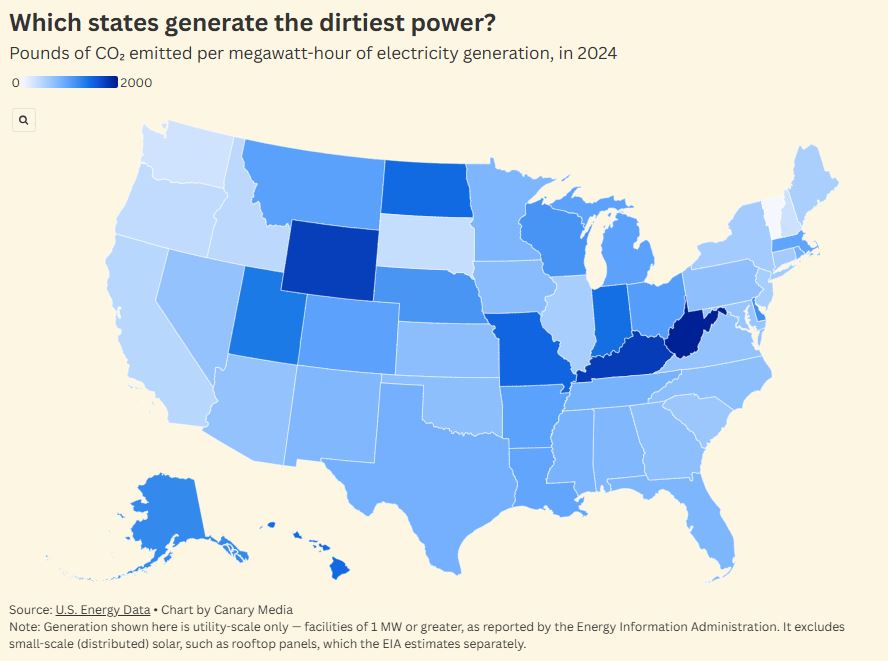
The states with the highest carbon intensity burn a lot of fossil fuels, especially the really dirty kinds like coal and petroleum. In the three states with the dirtiest electricity generation — West Virginia, Kentucky, and Wyoming — most power is created by burning coal, which makes sense considering they are among the top coal-producing states.
States with the lowest carbon intensity, of course, are home to a larger share of clean energy, ranging from wind and solar farms to hydroelectric facilities to nuclear plants. Vermont has the cleanest in-state generation, with essentially 100% of the power it creates coming from renewables — largely hydropower — since 2015.
It’s important to note that the above map represents the power generated in a state — not necessarily the power consumed there. Wyoming, for example, generates about 12 times more power than it consumes. Electricity flows all over the place via sweeping interregional transmission lines — so even a state with a high share of clean power generation could have a dirtier grid than meets the eye.
The good news is that America’s grid as a whole has been getting cleaner over the last two decades. Greenhouse gas emissions from the U.S. power sector fell about 40% between 2005 and 2024 as old coal plants shuttered and were replaced with cheaper natural gas–fired facilities and renewable energy. Generation in all states except Idaho and Vermont got less carbon-intensive over that period of time.
Lots of states want to continue the progress, and many are going so far as to aim for completely clean grids by midcentury. It won’t be easy, as data centers’ energy demand drives a gas power boom and the Trump administration attacks renewables while propping up the coal industry. With the White House stripping the federal climate policies put in place by previous administrations, the onus is increasingly shifting onto states to keep up the pace of the clean energy transition.
Agricultural communities don’t always welcome clean energy developments. But projects can provide significant economic opportunities.
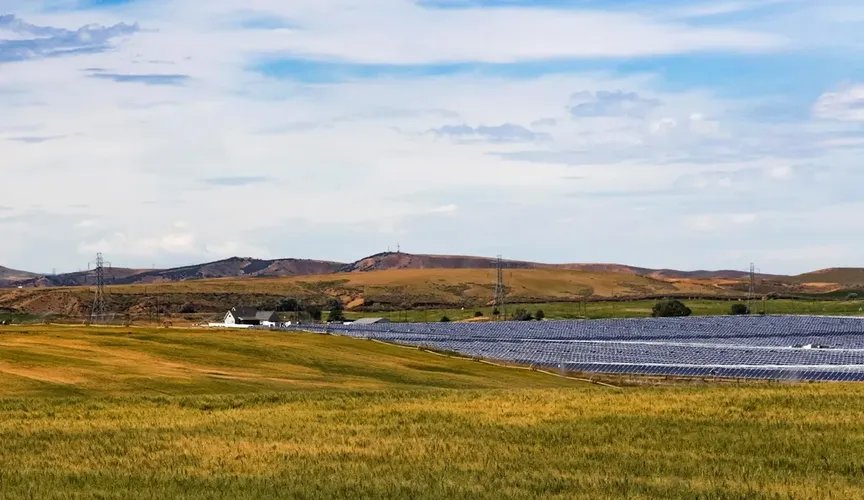
The U.S. energy transition runs through rural America: As of last year, 87% of U.S. clean energy generation happened in areas far outside the country’s urban centers, per a Rural Climate Partnership analysis. That makes sense — wind, solar, and battery installations need a lot of open land.
But not everyone is welcoming new clean energy development with open arms. The number of counties with some kind of ban, moratorium, or barrier on renewable energy projects is growing nationwide. More than 60% of the counties that have such restrictions are rural, according to a Daily Yonder and Canary Media analysis of data from USA Today and the Sabin Center for Climate Change Law at Columbia University.
Meanwhile, at the federal level, rural clean energy development is under attack. The Trump administration has gutted the Rural Energy for America Program, which for more than a decade helped farmers pay for solar panels that slashed their power bills. U.S. Agriculture Secretary Brooke Rollins has crusaded against “subsidizing solar projects on prime farmland,” and Interior Secretary Doug Burgum has painted wind and solar as “environmentally damaging” and an inefficient use of land.
In reality, despite being by far the fastest-growing energy source in America, utility-scale solar takes up just 0.07% of the country’s farmland. The footprint of golf courses is almost three times bigger.
And these opponents miss — or ignore — an even more important point. Clean energy projects present a massive opportunity for rural America. By bringing in new tax dollars, they can be an economic lifeline for struggling rural communities as well as for farmers, who can earn a profit leasing their land to counter soaring operating costs and the impacts of climate change.
Many people in rural communities know this. Half of all Americans support solar and wind projects in their area, according to an April survey by the Yale Program on Climate Change Communication. Jeff Hough, a Republican county commissioner in Idaho, is one of them. He’s organizing to overturn a ban on solar and wind that he helped put into place a few short years ago. Dorothy Macy, a resident of Coles County, Illinois, is another. She spoke out in favor of a 300-megawatt wind development in her area that’s expected to generate $81 million in taxes over its 30-year lifetime.
The benefits of clean energy development bridge ideological divides. That’s a point Republican Tim Pawlenty made onstage at Canary Media’s Climate Week NYC summit on the energy transition in rural America.
A former two-term governor of Minnesota and now head of the Solar Energy Industry Association, Pawlenty is committed to building enduring bipartisan support for clean energy policies. In particular, he believes the solar industry can position itself as a defender of private property rights, advocating for letting farmers develop their own land as they see fit.
“I’m from a farm state — I’ve spent a lot of time in farm areas and with farmers,” he said. “From a conservative standpoint, land rights are pretty important.”
A federal windfall for advanced grid technology
For more than a year and a half now, the Trump administration has been systemically dismantling as many Biden-era energy policies as it can (and a bunch that it can’t, at least not legally). Jeff St. John reports, however, that Thursday brought us a rare moment of alignment between the two administrations with the announcement that the U.S. Department of Energy is awarding $1.9 billion in grants to support deployment of advanced transmission technologies in 26 states.
Why advanced transmission technologies? Because building new grid infrastructure is difficult, rife with financial, regulatory, and logistical challenges. Advanced transmission technologies mitigate this problem with devices, strategies, software solutions, and materials that can help squeeze more out of the existing overburdened grid.
The grant-winning projects, for example, include plans to replace transmission cables with higher-conductivity versions that can carry more energy, as well as to add devices and software that can route power more intelligently around the grid.
Fighting for the future of offshore wind
Last week, we reported that Revolution Wind, off the Rhode Island coast, completed installation of all 65 of its turbines, and will soon join South Fork Wind and Vineyard Wind in commercial operations. Empire Wind and Sunrise Wind are both in progress off New York.
This week, Maria Gallucci tells us, nine states took steps to preserve the momentum. A coalition of eight eastern states filed a lawsuit attempting to block two deals in which the U.S. Department of the Interior agreed to pay out almost $4 billion to developers who gave up their offshore wind leases. California is pushing its own suit. These legal challenges come on top of cases filed earlier this year against what California Attorney General Rob Bonta called the “blatantly unlawful” buyout plans.
Meanwhile, the case for offshore remains strong. It showed up big during winter storms, helped stave off power outages during a New England heat wave this summer, and could have important national security implications.
Solar for All reinstated: A Trump-appointed judge rules that the administration acted illegally when it terminated the $7 billion Solar for All program meant to support solar projects serving lower-income communities. (Canary Media)
Electric school buses hit NYC: Fifty new plug-in electric school buses in New York City are slated to transport students and store energy to share with the grid. (Canary Media)
New York’s big battery battle: New York utility Con Edison and battery developers are locked in conflict over how community-scale storage projects should be managed and who should reap the financial benefits. (Canary Media)
Cleaner cooking: Induction-stove startup Copper partners with appliance giant Miele to produce a more versatile and powerful version of its superefficient, fume-free range. (Canary Media)
Solar set free: After years of delay, Ohio regulators green-light a project that will be the state’s largest solar and battery installation — and provide grazing land for some 1,000 sheep. (Canary Media)
Dirtier than ever: Many major U.S. utilities are making less progress cleaning up their power supply than in past years, with several taking steps backward, the Sierra Club’s annual report finds. (Canary Media)
Gas plant sidelined: North Carolina regulators reject plans for a gas-fired power plant, saying the risk to consumers is too great when it’s unclear if data center demand will actually surge in coming years. (Canary Media)


.svg)
