

 Back
The use of green hydrogen in oil refining is an emerging trend aimed at reducing carbon emissions. Green hydrogen is produced by splitting water into hydrogen and oxygen using electricity generated from renewable or nuclear sources. This method of production ensures that green hydrogen is free of greenhouse gas emissions, which is crucial for its role in decarbonizing industries like oil refining.
Hydrogen plays a pivotal role in oil refining, primarily in the processes of hydrotreating and hydrocracking. These two processes are critical in refining because they are responsible for consuming over 90% of the hydrogen used in the sector. Hydrotreating is essential for reducing sulfur content in finished petroleum products. Sulfur compounds, if not removed, can lead to harmful emissions when the fuel is burned and can also corrode engines and other machinery. By removing sulfur, hydrotreating ensures that the fuels meet environmental standards and are safer for use in vehicles and machinery.
Hydrocracking, on the other hand, is a process that breaks down heavier fractions of petroleum into lighter, more valuable products like gasoline and jet fuel. This process is particularly important for maximizing the yield of high-value products from crude oil. Hydrocracking involves breaking down larger hydrocarbon molecules into smaller ones, a reaction that requires hydrogen. The process increases the amount of usable fuel derived from crude oil, making it a key step in maximizing the efficiency and profitability of oil refining.
Currently, the majority of the hydrogen used in these processes is sourced as a by-product from other refinery operations, such as catalytic reforming and ethylene cracking. Catalytic reforming involves the conversion of heavy naphthas into high-octane gasoline components, while ethylene cracking is primarily concerned with the production of ethylene, a building block for various petrochemicals. Both of these processes generate hydrogen as a by-product, which is then used in hydrotreating and hydrocracking.
However, there is a growing trend towards replacing this hydrogen with low-carbon alternatives, particularly green hydrogen. This shift is driven by the increasing stringency of environmental regulations and the global commitment to reducing carbon emissions. Green hydrogen, produced through the electrolysis of water using renewable energy sources, offers a much lower carbon footprint compared to conventional hydrogen production methods. The integration of green hydrogen into oil refining can significantly reduce the carbon emissions associated with these processes.
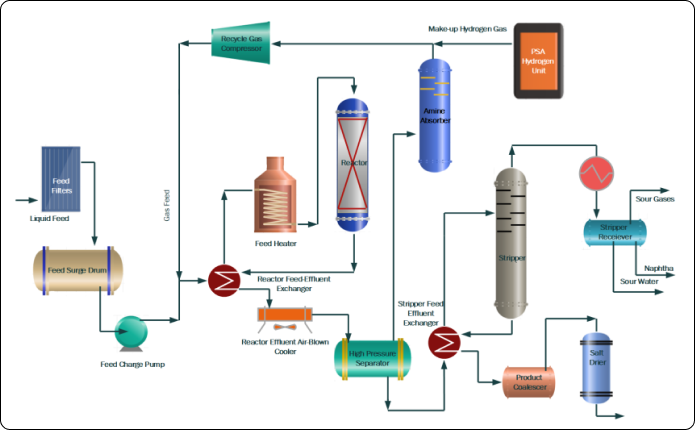

Despite its environmental benefits, green hydrogen production is more expensive than traditional methods due to higher electricity costs and the limited availability of zero-carbon power. This means that for green hydrogen to be more widely adopted in oil refining, there needs to be a decrease in power costs and an increase in the efficiency and availability of zero-carbon power sources.
There are ongoing efforts and projects aimed at integrating green hydrogen into refinery processes. For instance, the REFHYNE project in Germany is working on installing and operating a large electrolyser at a refinery to provide bulk quantities of green hydrogen. This project is a part of a broader move towards decarbonizing the refining process and reducing emissions, a trend that is expected to continue and expand in the 2020s.
The potential market for low-carbon hydrogen in oil refining is significant. By 2050, the demand for low-carbon hydrogen in the global refining sector could reach 50 million tonnes per annum. This transition to green hydrogen could play a crucial role in reducing up to 35% of refining carbon emissions.
In an era where environmental concerns are paramount, the food and beverage industry is experiencing a paradigm shift. Historically reliant on fossil fuels, the industry is now embracing hydrogen as a pivotal element in reducing greenhouse gas emissions and promoting sustainability.
Green hydrogen is increasingly being explored for its potential in various industrial processes, including the hydrogenation of unsaturated fatty acids in animal and vegetable oils. This process is a key step in producing solid fats from liquid oils, which are then used in food products like margarine and other spreads.
Hydrogenation involves the conversion of unsaturated fatty acids to saturated fatty acids through a chemical reaction that adds hydrogen to these acids. This process alters the molecular structure of the fatty acids, converting carbon-carbon double bonds into single bonds. Unsaturated fats, which are generally liquid at room temperature due to their molecular structure, become saturated through hydrogenation and thus solidify. This is because the straighter chain of saturated fats allows them to pack more closely together, resulting in a solid form at room temperature.
Vegetable oils, for instance, are typically polyunsaturated and are transformed into semi-solid or solid fats through hydrogenation. This process is crucial in the food industry as it allows the conversion of inexpensive and abundant vegetable oils into more solid forms like margarine, cooking fats, and spreads. During the hydrogenation of vegetable oils, the number of double bonds that are hydrogenated is carefully controlled to produce fats with the desired consistency, such as soft and pliable margarine.
Furthermore, hydrogenation also affects the stability and melting characteristics of the resultant fats. The selectivity of the hydrogenation process, such as the preference for hydrogenating polyunsaturated fatty acids over monounsaturated ones, and the production of trans-isomers, are important factors that influence the final properties of the hydrogenated fat. This process is not only a method to alter the physical properties of the fats but also serves as a means to increase their shelf life and stability, as saturated fats are less prone to oxidation and rancidity compared to unsaturated fats.
In the context of green hydrogen, its usage in such industrial processes represents a move towards more environmentally sustainable practices. Green hydrogen, produced through the electrolysis of water using renewable energy sources, offers a cleaner alternative to traditional hydrogen production methods, which often rely on fossil fuels.

The transition to hydrogen has become a catalyst for innovative food processing technologies.
Pioneering this change, researchers at West Virginia University (WVU) are developing hydrogen-based technologies tailored for the food and beverage sector. A standout innovation is a flexible fuel furnace that efficiently utilizes hydrogen to generate the essential hot water and steam for product processing. Boasting an impressive 98% energy utilization efficiency and minimal nitrogen oxide emissions, this furnace exemplifies the environmental and operational benefits of hydrogen. It's adaptable too, capable of running on natural gas or hydrogen blends, thus easing the transition from fossil fuels.
WVU's collaboration with local industry partners, such as Mountaintop Beverage and Morgantown’s Neighborhood Kombuchery, is pivotal. These partnerships focus on refining production processes to curb energy consumption and emissions, while maintaining product safety and quality through rigorous microbial testing and sensory analysis.
The shift to green hydrogen technology is gaining momentum among major food corporations. Quorn, Unilever, and Nestle, for example, are actively exploring green hydrogen for their production facilities to meet ambitious climate goals. These moves towards green hydrogen, generated from renewable energy sources, are major steps towards a carbon-neutral operation, offering sustainable solutions for processing liquid oils, energy storage, and transportation challenges in the industry.
Hydrogen technology is more than an alternative energy source; it's a driver for a more sustainable and environmentally friendly future in the food and beverage industry. With ongoing research, development, and collaboration, hydrogen stands poised to revolutionize manufacturing processes, steering the sector towards a greener horizon.
As the world increasingly turns its focus towards sustainable and environmentally friendly practices, the glass and ceramics industries are undergoing a significant transformation. Central to this change is the integration of hydrogen, especially green hydrogen, as a key energy source. This shift not only represents an adaptation to global decarbonization efforts but also a proactive move towards innovative industrial practices.
In the production of float glass, the integration of hydrogen, particularly green hydrogen, has been explored as an alternative to fossil fuels to provide heat and prevent oxidation.
Float glass furnaces have been traditionally powered by natural gas. Companies like SCHOTT are at the forefront of using hydrogen as an alternative to traditional fossil fuels in glass production. Their experiments with 100% hydrogen demonstrate a shift towards more climate-friendly manufacturing processes. At 100% hydrogen usage, the flames become less luminous and almost invisible, which is a notable characteristic due to the lower soot concentration in hydrogen flames compared to natural gas or oil flames.
Saint-Gobain has successfully experimented with using over 30% hydrogen in manufacturing flat glass, significantly reducing CO2 emissions.
There are ongoing research efforts to decarbonize the glass industry to align with the Paris Climate Agreement goals. One approach being considered is the use of hybrid furnaces that can utilize green hydrogen as a fuel source, alongside electric melting furnaces. However, questions remain about the supply, availability, and economic viability of green hydrogen for this purpose. The transition to these technologies is a part of a long-term roadmap with milestones set for the upcoming decades, including the complete replacement of natural gas-fired melting furnaces by 2045.
The ceramics industry is actively exploring the use of green hydrogen as a sustainable and efficient energy source, driven by the global shift towards decarbonization and the need to meet environmental targets.
Here are some key developments and projects in this field:
The Iris Ceramica Group has embarked on a groundbreaking project to create the world’s first ceramics factory powered by green hydrogen. This initiative, a collaboration with Snam, involves the development of a production site in Castellarano, Italy, designed to use green hydrogen generated from solar energy. This innovative approach is expected to significantly reduce CO2 emissions and marks a major step towards sustainable ceramic manufacturing. The project aims for a blend of green hydrogen and natural gas, eventually transitioning to 100% hydrogen use for zero-emissions production.
Another significant project is the GreenH2ker initiative, a collaboration between Iberdrola and Porcelanosa. This project focuses on using green hydrogen and heat pump technology to power the heat-intensive processes in ceramic production. The goal is to replace a significant portion of the natural gas used in these processes with green hydrogen, thereby reducing CO2 emissions. The project also includes the installation of an on-site electrolyzer powered by a solar photovoltaic plant, emphasizing the synergy between renewable energy sources and hydrogen production.
These initiatives are part of a broader movement in the ceramics industry to adopt more sustainable practices. The integration of green hydrogen in ceramic production aligns with the European Union's decarbonization targets and represents a significant shift towards cleaner, more sustainable industrial processes. As these projects progress, they are expected to offer valuable insights and pave the way for wider adoption of green hydrogen in high-temperature industrial processes, not only in ceramics but also in other sectors like glass and metal industries
The glass and ceramics industries are on a transformative journey with hydrogen at the forefront. By embracing this clean energy source, these industries are not only reducing their carbon footprint but are also paving the way for innovative practices and sustainable growth. The ongoing projects and research in these fields are vital in achieving global climate goals and creating a more sustainable industrial landscape.
In the realm of pharmaceutical manufacturing, a quiet revolution is underway, one that promises to reshape how essential medicines and vitamins are produced. At the heart of this transformation is hydrogen, a simple yet powerful element that is redefining the industry's approach to sustainability and efficiency.
Let’s delve into the increasingly pivotal role of hydrogen in pharmaceutical processes, exploring innovative methodologies and their profound implications. From the precision of hydrogenation in vitamin synthesis to the groundbreaking integration of hydrogen with electricity for drug production, we uncover how this element is not just a part of the industry but is becoming instrumental in driving its future.
Hydrogen plays a pivotal role in the production of vitamins and pharmaceuticals, particularly through hydrogenation. This chemical reaction, often utilizing catalysts like platinum or nickel, is instrumental in the synthesis of various essential compounds.
Hydrogenation is vital in chiral chemistry, crucial for complex pharmaceuticals, and is notably significant in producing (+)-biotin, involving the stereoselective hydrogenation of a trisubstituted olefinic bond.
Incorporating hydrogenation in pharmaceutical manufacturing presents economic advantages. The process's efficiency and environmental friendliness translate to cost savings and compliance with increasingly stringent environmental regulations.
A groundbreaking approach, emerging from the collaborative efforts of researchers at the University of Wisconsin–Madison and industry leaders at Merck & Co., is set to redefine pharmaceutical manufacturing. This innovative technique ingeniously combines hydrogen with electricity, a concept inspired by the principles of hydrogen fuel cell technology, which is primarily known for its application in clean energy generation.
This new method is a departure from traditional pharmaceutical manufacturing techniques, which often rely heavily on metals like zinc. By integrating hydrogen and electricity, the process dramatically reduces the reliance on such metals, thereby addressing key environmental concerns associated with metal mining and disposal. This reduction in metal usage also translates to significant economic benefits, as it curtails both the material costs and environmental remediation expenses associated with metal waste.
At the core of this method is the utilization of quinone, an organic compound, to extract electrons from hydrogen. This aspect of the process is particularly innovative, as it enhances the efficiency and sustainability of drug production. Quinones, being versatile in their redox properties, enable a more controlled and precise electron transfer process, which is essential in the complex chemical reactions involved in drug manufacturing. The ability to conduct reactions without water is another notable advantage of this method. In many pharmaceutical processes, the presence of water can interfere with the desired chemical reactions, so a water-free approach opens up new avenues for the synthesis of more complex and sensitive drugs.
The successful industrial application of this technique could be a game-changer, marking a significant stride towards a more sustainable and efficient pharmaceutical industry. It also signals a potential shift in the broader chemical manufacturing sector, where the principles of green chemistry can be further embraced.
In conclusion, the evolving role of hydrogen in pharmaceutical manufacturing marks a significant leap towards a greener and more efficient future. The innovative techniques of hydrogenation and the integration of hydrogen with electricity not only underscore the industry's commitment to sustainable practices but also pave the way for cost-effective and environmentally friendly drug production. This revolution, rooted in cutting-edge research and collaboration, positions hydrogen as a key driver in reshaping pharmaceutical manufacturing, holding great promise for both the industry and global health.
More than 95% of hydrogen used in the chemical industry is currently produced through methods like steam methane reforming, a process with significant environmental impacts. The shift towards green hydrogen production is essential for sustainability.
Green hydrogen is increasingly being adopted in various industries, including the production of fertilizers, explosives, and other chemicals. It's not only a critical element in creating various chemicals but also a key enabler for the industry's shift towards sustainability.
Countries like Australia, Canada, Chile, China, and India are investing in green hydrogen projects. For example, Australia is developing a large renewable energy export facility and a hydrogen valley in New South Wales. Canada's Project Nujio'qonik aims to be the country's first commercial green hydrogen/ammonia producer. In Chile, significant investments are being made to finance green hydrogen projects as part of their clean energy goals. Meanwhile, China, a global leader in hydrogen production, is increasing its green hydrogen output, and Germany has invested heavily in electrolyzer capacity to boost green hydrogen production.
Green hydrogen is set to transform the fertilizer industry significantly. It can be used to produce green ammonia, which is essential for nitrogen fertilizers. Countries with access to cheap renewable energy sources, like Saudi Arabia and Australia, could become significant producers of green hydrogen and green ammonia. This shift is driven by the need to decouple fertilizer production from fossil fuels and reduce carbon emissions. However, the transition to green ammonia will require technology upgrades and significant investment. The cost of green ammonia is currently higher than that produced from fossil fuels, but this is expected to change by 2030 with technological advancements and increased access to renewable power sources.
Green hydrogen also needs to be used in the production of explosives and various chemicals. The production process for many chemicals requires hydrogen, and traditionally, this has been sourced from fossil fuels. Transitioning to green hydrogen in these processes can significantly reduce the carbon footprint of these industries. However, the use of green hydrogen in these sectors is still developing, with more research and investment needed to fully realize its potential.
The transition to green hydrogen faces several challenges, including the need for technology upgrades, policy support to make the transition economically viable, and reducing higher production costs compared to grey hydrogen (hydrogen produced from fossil fuels and releasing about 5 tons of greenhouse gasses into the atmosphere for each ton of hydrogen produced). However, the potential benefits, such as reduced carbon emissions and less dependence on fossil fuels, make green hydrogen a promising option for the future of these industries.
Hydrogen's multifunctionality in the chemical industry is undeniable. As the industry moves towards a more sustainable and circular economy, hydrogen, especially in its green form, stands out as both a challenge and an opportunity. This transition will not only aid in achieving net-zero targets but also open up new product’s sustainable revenue streams for chemical companies.
Hydrogen has long been a fundamental component in space exploration, serving as a critical fuel for rockets. Its role has been pivotal in missions that have expanded our understanding of the universe, from the historic Apollo moon missions to the latest space endeavors.
Hydrogen's efficiency and thrust capabilities make it an ideal rocket fuel. Its role extends beyond propulsion to powering hydrogen fuel cells that provide electricity and water for astronauts. The environmental benefits of hydrogen, which burns to produce only water vapor, are significant, particularly in comparison to other rocket fuels like methane.
Hydrogen's clean-burning nature underscores its sustainability as a fuel choice. The ongoing development of hydrogen technology not only supports environmental objectives but also drives advancements that benefit other industries. This cross-sectoral impact is evident in projects like MagnaSteyr's collaboration with BMW, which resulted in the BMW Hydrogen 7, a production car powered by hydrogen.
Since the 1950s, NASA has utilized liquid hydrogen as a rocket fuel, capitalizing on its high energy content and efficiency. Notably, the Space Launch System (SLS), designed to carry humans to the Moon and beyond, exemplifies the continued reliance on liquid hydrogen. The SLS's core and in-space stages require approximately 730,000 gallons of liquid hydrogen and oxygen, highlighting the fuel's importance in deep space missions.
Handling liquid hydrogen poses challenges due to its low temperatures and high volatility. NASA's efforts in developing zero boil-off technology are crucial in addressing these issues.
NASA's Kennedy Space Center has made significant progress in this area, constructing the world's largest liquid hydrogen storage tank to support the SLS rocket. This tank, capable of holding 1.4 million gallons, demonstrates a substantial advancement from the storage technologies used during the Apollo and Space Shuttle programs. The innovative design aims to enhance efficiency and reduce the time between multiple launch attempts.
Moreover, advancements in hydrogen storage and handling, as seen in the aerospace industry, have applications beyond space exploration, potentially revolutionizing sectors like automotive. For instance, Austrian manufacturer MagnaSteyr has adapted technology from the Ariane rocket program to build clean-burning hydrogen cars.
Liquid hydrogen continues to play a vital role in space exploration, with ongoing technological advancements enhancing its efficiency and sustainability. As we look toward future space missions, hydrogen's importance in achieving deeper space exploration and its broader environmental and technological impacts cannot be overstated.
The concrete industry, a significant contributor to global CO2 emissions, is at the forefront of a green transformation. The shift towards hydrogen, as highlighted in recent research and industry practices, is a necessary step in reducing the environmental impact of concrete production.
Traditional cement production relies on fossil fuels such as coal and natural gas, leading to substantial CO2 emissions. Recent studies suggest that substituting these instead with hydrogen, which combusts to form only water vapor, can substantially reduce emissions. This innovative approach involves replacing traditional energy sources with hydrogen in cement kilns, promising a significant reduction in carbon footprint while enhancing the energy efficiency of the production cycle.
Developments, such as the VDZ's roadmap in Germany, integrating up to 10% hydrogen into the fuel mix, and by 2050 targeting a net-zero CO2 cement production. This initiative highlights the industry's commitment to sustainability and the pivotal role of hydrogen in achieving these goals.
A groundbreaking example is the Fuel Switching Project at Hanson's Ribblesdale plant in the UK, funded by the British Department for Business, Energy & Industrial Strategy. This project explored the use of 100% net-zero fuels, including hydrogen, maintaining the clinker and cement quality. These trials proved the technical viability of hydrogen in large volumes without significant changes to the production process, marking a significant step towards sustainable cement manufacturing.
The production of clinker, a key ingredient in cement, is a major source of emissions. Introducing hydrogen as a reducing agent in the clinker formulation can cut down the clinker requirement by half, thereby curbing CO2 emissions considerably. Research into alternative cements and the role of hydrogen in enhancing their production is ongoing.
A groundbreaking application of hydrogen in cement production involves its use in capturing and repurposing CO2 emissions. This method converts the captured carbon into valuable commodities like alternative building materials or synthetic fuels.

Producing green hydrogen, derived from renewable sources, is initially more expensive than traditional methods. However, as renewable energy becomes more affordable, green hydrogen’s feasibility improves, offering a sustainable solution for the cement industry.
The integration of hydrogen into concrete production is in its early stages, with ongoing pilot projects and studies. Key challenges include the expense and availability of green hydrogen and the need to modestly update existing infrastructure to adapt to hydrogen-based technology.
Expanding hydrogen production, storage, and transportation infrastructure is crucial for its large-scale application in the cement industry. This requires substantial infrastructure investment and development.
The concrete industry is on the cusp of a sustainable revolution, with hydrogen poised to be a key player in reducing its environmental impact. Continued research and investment in this field are crucial for harnessing hydrogen’s full potential in creating eco-friendlier construction materials.
The transportation sector, a major contributor to global CO2 emissions, is witnessing a transformative shift with hydrogen emerging as a promising alternative fuel. Hydrogen fuel cell vehicles (FCVs) mark a pivotal advancement towards sustainable and emission-free transportation. By harnessing hydrogen to generate electricity using fuel cells, these vehicles power electric drive systems and emit only water vapor, positioning them as an eco-friendly alternative to conventional internal combustion engines and a viable complement to battery electric vehicles (EVs).
Hydrogen FCVs are like battery electric cars, but they make their own electricity using hydrogen instead of only using battery storage. Models like the Toyota Mirai and Hyundai Nexo are showing us how this can work. You fill them up with hydrogen gas, and off you go – without harming the environment.
Hydrogen-powered FCVs excel in scenarios where extended range and rapid refueling are paramount, such as in long-haul, heavy-duty transportation where battery efficiency may falter. They offer significant benefits over traditional vehicles, including extended driving ranges, quick refueling times akin to conventional vehicles, and superior payload capacities - essential for larger transport applications.
The proliferation of hydrogen FCVs hinges on establishing a comprehensive hydrogen infrastructure. Efforts like the U.S. Department of Energy's $7 billion initiative to create clean hydrogen hubs are pivotal. These initiatives, along with significant backing from legislation such as the Infrastructure Investment and Jobs Act and the Inflation Reduction Act, are crucial in promoting hydrogen fuel cell technology and supporting infrastructure development.
However, challenges remain, particularly in constructing an extensive hydrogen refueling network critical for FCVs' widespread adoption. This is being addressed globally, with countries like Germany and Japan actively enhancing their hydrogen refueling infrastructure. Recent initiatives in the United States are starting to create hydrogen refueling corridors for heavy vehicles along selected national highways. These corridors provide access to any location within 200 miles or more on either side of the national highway.

To fully leverage hydrogen FCVs' potential, several key challenges must be addressed:
Expansion of the hydrogen pipeline network is imperative to facilitate efficient hydrogen delivery from production sites to consumers. Developing safe and efficient transport methods and connective infrastructure is essential.
To compete with current transportation fuels, hydrogen fuel cell technologies must achieve cost-effectiveness, enhanced durability, and improved performance. Innovations in liquid hydrogen storage and fueling technologies are critical, especially for medium- and heavy-duty transport.
Clear regulatory guidelines are needed to oversee the infrastructure for hydrogen production, transport, and storage. Establishing the roles of regulatory bodies like the Federal Energy Regulatory Commission in overseeing hydrogen-related infrastructure is crucial. The state of California has implemented and in operation several examples of hydrogen infrastructure regulation and promotion.
With ongoing investments and research, hydrogen fuel cell vehicles are poised to significantly contribute to emission reduction in transportation. Advancements in hydrogen utilization components and systems, combined with supportive policies and international collaboration, are key to harnessing hydrogen's full potential in this sector.
The prospect of hydrogen as a vehicle fuel is increasingly optimistic. Advancements in hydrogen production, storage, and distribution, coupled with conducive policies, indicate that FCVs increasingly common in California could soon be a familiar sight on major highways nationally. This transition not only aids in reducing greenhouse gas emissions but also diversifies our transportation energy sources.
Insights from the International Energy Agency's Global Hydrogen Review and analyses by Reuters highlight the current state and future potential of hydrogen in vehicle fuel production. These reports stress the importance of targeted efforts to expand hydrogen supply and demand, leveraging existing industries and infrastructure. As the hydrogen sector evolves, it's poised to play a crucial role in clean energy transitions, addressing key energy challenges.
The landscape of electricity generation is evolving. Utilizing hydrogen in fuel cells and power plants, especially gas turbines, represents a significant shift towards cleaner energy solutions.
Fuel cells, leveraging the reaction between hydrogen and oxygen, produce electricity with water as the sole byproduct, exemplifying a truly zero-emission technology. The hydrogen used is increasingly sourced from green production methods like electrolysis, powered by renewable sources such as solar and wind energy, marking a critical step in reducing the environmental impact.
Hydrogen's role in power generation showcases its versatility and potential as a key player in the transition to clean energy. Its application in gas turbines and fuel cells is particularly noteworthy. These technologies leverage hydrogen's high energy content to produce electricity while emitting only water vapor, making them environmentally friendly options. Globally, several initiatives, such as Japan's pioneering gas turbine project, exemplify the practical implementation of hydrogen in power generation. These projects demonstrate not only the feasibility but also the growing reliability of hydrogen as a clean energy source.
Looking to the future, hydrogen's prospects in electricity generation are indeed promising. One of the most significant advantages of hydrogen in this context is its ability to provide effective solutions for grid stability and the storage of renewable energy. This is particularly important for managing the intermittency of renewable sources like wind and solar power. By acting as a storage medium, hydrogen can accumulate excess energy generated during peak production times and release it when demand is high, ensuring a consistent and reliable energy supply.
However, the widespread adoption of hydrogen in the energy sector faces several challenges. One of the main hurdles is the transportation and storage of hydrogen, primarily due to its low energy density compared to traditional fossil fuels. This challenge has spurred innovative solutions, such as the use of ammonia as a hydrogen carrier. Ammonia, with its higher energy density, offers a more efficient way to transport and store hydrogen. Additionally, the conversion process from ammonia back to hydrogen is relatively straightforward, making it a viable option for electricity generation.
In recent years, technological advancements have further improved the viability of ammonia as a hydrogen carrier. For instance, the development of advanced catalytic processes has made the conversion of ammonia back to hydrogen more efficient and environmentally friendly. Moreover, research into novel materials for hydrogen storage, like metal hydrides or advanced composite materials, is paving the way for more compact and safer hydrogen storage solutions.
The integration of hydrogen into existing energy infrastructures is another area of ongoing research. Efforts are being made to adapt existing gas pipelines for hydrogen transportation, which could significantly reduce the costs and environmental impacts associated with building new infrastructure. Additionally, blending hydrogen with natural gas in existing power plants is being explored as a transitional strategy towards a more hydrogen-dominated energy sector.
In summary, hydrogen, particularly green hydrogen produced from renewable energy sources, holds significant promise for transforming the energy landscape. Its ability to provide clean, reliable power, coupled with developments in technology and infrastructure, positions hydrogen as a key contributor to achieving global carbon neutrality goals. The ongoing research and innovations in this field are vital for overcoming the existing challenges and unlocking the full potential of hydrogen in the energy sector.

The potential of hydrogen in electricity generation is immense. With advancing technologies and reducing costs, hydrogen stands as a pivotal element in a clean, secure, and affordable energy landscape. The ongoing development and scaling of hydrogen technologies are vital for harnessing this potential, significantly contributing to global energy sustainability and climate goals.
Methanol, a widely used simple alcohol, finds its applications across a range of industries, from manufacturing plastics to pharmaceuticals. Traditionally, methanol is produced through steam reforming of natural gas, a process that generates syngas, which is then converted into methanol. This method, though effective, is significantly carbon-intensive, contributing to CO2 emissions. However, a transformative shift towards sustainability in methanol production is underway, focusing on the integration of green hydrogen.
It's crucial to differentiate between grey, blue, and green methanol. Grey methanol is produced from natural gas or coal, blue methanol includes carbon capture in its production process, and green methanol is created using only renewable energy sources.
Grey methanol is the most commonly produced type. It is made via a synthesis reaction from methane, which is primarily obtained from natural gas or, in some cases like in China, from coal. This production process is not renewable and is linked to significant greenhouse gas emissions, particularly CO2. The reliance on fossil fuels makes it the least environmentally friendly type of methanol.
Blue methanol is also derived from natural gas, similar to grey methanol. However, the key distinction is that the production process of blue methanol includes carbon capture and storage (CCS). The CCS technology captures the larger portion of the CO2 emissions generated during methanol production and stores them, typically underground. This process reduces the carbon footprint of methanol production, making blue methanol less polluting than grey methanol. However, it's important to note that it does not eliminate emissions entirely and still relies on fossil fuels.
Green methanol is produced using only renewable energy sources, ensuring no harmful gases are emitted into the atmosphere during its production.
There are two primary types of green methanol:
Biomethanol is produced from the gasification of sustainable biomass sources, such as agricultural, livestock, forestry residues, and municipal waste. Gasification involves combustion at high temperatures (between 700 and 1,500 ºC), transforming the combustion gases from these materials together with green hydrogen into green methanol.
”eMethanol” is produced from hydrogen generated from renewable electricity (green hydrogen) and captured carbon dioxide. The process of creating green hydrogen involves electrolysis, where electric current is used to separate hydrogen from oxygen in water. When this electricity is sourced from renewables like wind or solar farms, it results in a clean energy process.
The transition to blue and particularly green methanol is pivotal in decarbonization efforts and aligns with global sustainability goals, significantly reducing the chemical industry's carbon footprint.

The incorporation of green hydrogen, produced via water electrolysis powered by renewable energy sources, is revolutionizing methanol production. This innovative approach, known as green methanol (eMethanol) production, drastically cuts the carbon footprint associated with methanol manufacturing, aligning with global climate change mitigation efforts.
Innovative projects in countries like Denmark are exploring green methanol production from biogas. This process involves splitting biogas into CO and H2 using an electrically driven catalytic converter, supplemented with additional hydrogen from electrolysis, to create eMethanol. Such techniques are proving to be economically competitive, particularly under carbon taxation regimes. Additionally, global investments, notably in China and India, underscore the strategic importance of hydrogen in energy sectors, heralding a shift towards green hydrogen in various industries, including eMethanol production.
The production of eMethanol on an industrial scale offers a promising solution to storing renewable energy. It aids in reducing emissions during the transition to electric mobility and provides carbon-neutral mobility options. With countries increasingly aiming to limit or ban internal combustion engines, eMethanol offers a viable alternative. Pilot plants, particularly in Iceland, have demonstrated the feasibility of this approach. Companies like Siemens Energy are developing "Power to X" solutions, highlighting the maturity and readiness of the required technologies.

The International Renewable Energy Agency (IRENA) posits that renewable eMethanol could become cost-competitive by 2050 with targeted policies. Key strategies include systemic investment in technology and infrastructure and policy reforms to level the playing field for renewable methanol.
The integration of green hydrogen into production of eMethanol marks a critical step towards more sustainable industrial processes.


