

 Back
Back
OFFSHORE WIND: Construction begins on New York’s largest offshore wind farm, as the state opens its fifth round of solicitations for new projects. (WSHU, Renewables Now)
ALSO:
CLEAN ENERGY: The Massachusetts House passes a bill to streamline permitting for clean energy projects along with new procurements. (Associated Press)
TRANSPORTATION: Transit and labor leaders push a plan for a high-speed rail line connecting New York and Boston in 100 minutes, including a new connection from Hartford to Providence. (Gothamist)
UTILITIES: Central Maine Power and Avangrid are seeking to waive a requirement that state regulators sign off on their proposed merger. (Maine Public)
ELECTRIC VEHICLES:
GRID:
SOLAR: A solar company and an affordable housing firm team up to enroll low-income New York City households in community solar. (Solar Builder)
EQUITY: A New York City council member is introducing a bill to require landlords to provide air conditioning for tenants during summer months. (Brooklyn Eagle)
COMMENTARY: A former congressman and a state representative from Pennsylvania support efforts to allow hydrogen produced from “low-leak” natural gas to qualify for a federal clean-energy tax credit. (TribLive)
SOLAR: Minnesota regulators are poised to approve a 250 MW solar project for Xcel Energy, the last of three large solar projects totaling $1.1 billion that will replace a massive coal plant. (Star Tribune)
ALSO:
CLEAN ENERGY: Officials reopen a highly advanced machine at Argonne National Laboratory in Illinois that will help provide new insights into various fields of research, including battery storage and clean energy. (WLS)
CLIMATE: Record-breaking flooding and deadly tornado events are evidence that climate change is “right in front of your face,” says the mayor of a western Iowa city. (Radio Iowa)
WIND: Two utilities submit a habitat conservation plan for protecting endangered bats to federal officials for a large wind project that would span parts of Iowa and Minnesota. (E&E News, subscription)
TRANSPORTATION:
STORAGE: A Michigan startup is close to raising $5.6 million to commercialize an energy storage battery made from cheaper organic compounds instead of nickel, cobalt and other metals that need to be mined. (Crain’s Grand Rapids, subscription)
UTILITIES: Missouri’s consumer advocate reports that electric and gas rates in the state have been increasing faster than inflation and wages, primarily because of utility infrastructure investments. (KBIA)
COMMENTARY: Federal and state officials should take steps to ensure low-income renters whose utility bills are included in their rent have access to community solar projects, a solar installer writes. (Solar Power World)
OIL & GAS: A judge suspends federal oil and gas leases in Alaska’s Cook Inlet after finding the Interior Department failed to adequately consider drilling’s impacts to endangered beluga whales. (Alaska Public Media)
ALSO:
ELECTRIC VEHICLES: Starbucks and Mercedes-Benz team up to install fast electric vehicle chargers at 100 locations along Interstate 5 on the West Coast. (Los Angeles Times)
STORAGE: A California county begins establishing siting standards for new grid-scale battery energy storage systems following fires at two San Diego-area facilities. (San Diego Union-Tribune)
UTILITIES: Xcel Energy delays implementing its Colorado-mandated clean energy plan over supply chain constraints and uncertainty over tariffs, raising fears its $12 billion price tag will grow. (Colorado Sun)
SOLAR:
HYDROGEN: The Biden administration allocates $30 million to California to help plan and design a regional hydrogen production and distribution hub. (Associated Press)
COAL:
MINING:
GRID: California’s grid operator says its ability to send power to neighboring states to help them weather a July heat wave demonstrates the system’s resilience as it transitions to 100% clean energy. (E&E News, subscription)
CLIMATE:
NUCLEAR: Wyoming residents worry about and support an advanced nuclear reactor proposed for a coal town in the southwestern part of the state. (WyoFile)
COMMENTARY: A Nevada journalist explores the benefits and challenges of installing solar arrays over irrigation canals to generate power and reduce evaporation. (Western Water Notes)
Add lithium to water in a chemistry lab, and you’ll get an incendiary reaction. The same might be said of opening new lithium mines: The prospect can spark conflicts when it comes to water.
Mining companies and the U.S. government are investing in increased extraction for lithium, which is a critical component in some renewable energy technology, especially electric vehicle batteries and large grid-scale storage batteries.
The IRA injected the Department of Energy (DOE) Loan Programs Office with about $11.7 billion to support new loans for energy projects, including mines for needed metals like lithium. This builds on earlier Bipartisan Infrastructure Law (BIL) grants for battery material supply chains. The IRA also offers tax credits of up to $7,500 on eligible electric vehicles, creating additional demand for lithium by the auto industry.
With funding from the IRA, DOE and BIL, lithium miners have gained new financial vigor and governmental votes of confidence. Yet some worry what impact this newfound funding will have on the environment.
Domestic mining is still primarily governed by the outdated 1872 Mining Law, which didn’t enshrine environmental protections, but “declared all valuable mineral deposits in land belonging to the United States to be free and open to exploration and purchase,” according to the Bureau of Land Management (BLM) website.
Through the National Environmental Policy Act, environmental impact statements are required ahead of major projects like mines, although some statements have been criticized as rushed or insufficient. But ultimately, it’s up to companies to choose and monitor their own environmental protections and community agreements, even if they’re collecting federal subsidies.
Lithium mining poses a range of risks to biodiversity and groundwater supplies, depending on the methods used. There are three main types of lithium extraction: brine evaporation, hard rock mining and clay mining.
In brine evaporation, groundwater is first pumped to the surface. There, 90% of it is evaporated away to concentrate the lithium brine, with additional freshwater needed to complete extraction.
Hard rock and clay mining often begin with “dewatering,” or removing groundwater to reach the ore, in addition to needing more water to process the ore. These methods also require chemicals such as sulfuric acid for processing, which in cobalt and copper mining has led to contamination of local water systems.
Concerned about the risks, local residents and environmentalists have resisted new mines with tactics from protests to litigation — but a government-supported lithium boom appears to be underway regardless.
A Center for Biological Diversity map lists more than 125 lithium extraction projects in the western U.S. alone. Seven are inactive, and the majority are in various stages from exploration to development. Most of the proposed mines are in Nevada, predicted as a future “Silicon Valley of lithium.”
Albemarle’s Silver Peak mine in Nevada, a brine evaporation mine that has come under scrutiny for depleting groundwater aquifers in an increasingly-arid region, is the only currently active U.S. lithium mine. That’s likely to soon change, since the IRA has incentivized metal and mineral extraction in the United States and in countries with a U.S. free trade agreement.
Through its loan support and EV sales incentives, the IRA has made lithium mines more profitable, and less financially risky for companies opening new ones. Several lithium companies, including ioneer, Allkem and Albemarle, lobbied for the IRA’s passage or for provisions within it. A 2023 IRA impact report from S&P Global noted “aggressive mine capacity additions” for lithium planned in countries including the United States, Chile and Australia.
Domestically, most lithium deposits are in the West, where water supplies are already stressed.
“There’s a critical minerals and specifically a lithium rush unfolding, especially, but not exclusively, across the western U.S.,” says Providence College political scientist Thea Riofrancos, who specializes in studying the impact of resource extraction on communities. She adds that some of the mining interest predates the IRA, “but it’s picked up a lot since the IRA, because that sent such clear signals.”
Yet new mines pose risks to the region’s biodiversity. In a lawsuit against a Rover Metals exploration project, the Center for Biological Diversity and Amargosa Conservancy alleged that even exploratory drilling near springs in the Ash Meadows National Wildlife Refuge in Nevada would threaten endangered and endemic species. Active mines can have even bigger impacts.
“We need lithium as a part of our transition off of fossil fuels, but it can’t come at the expense of biodiversity or our most precious protected areas,” Patrick Donnelly of the Center for Biological Diversity, said in announcing the lawsuit. “Some places have to be off-limits to resource extraction, and Ash Meadows National Wildlife Refuge is at the top of the list.”
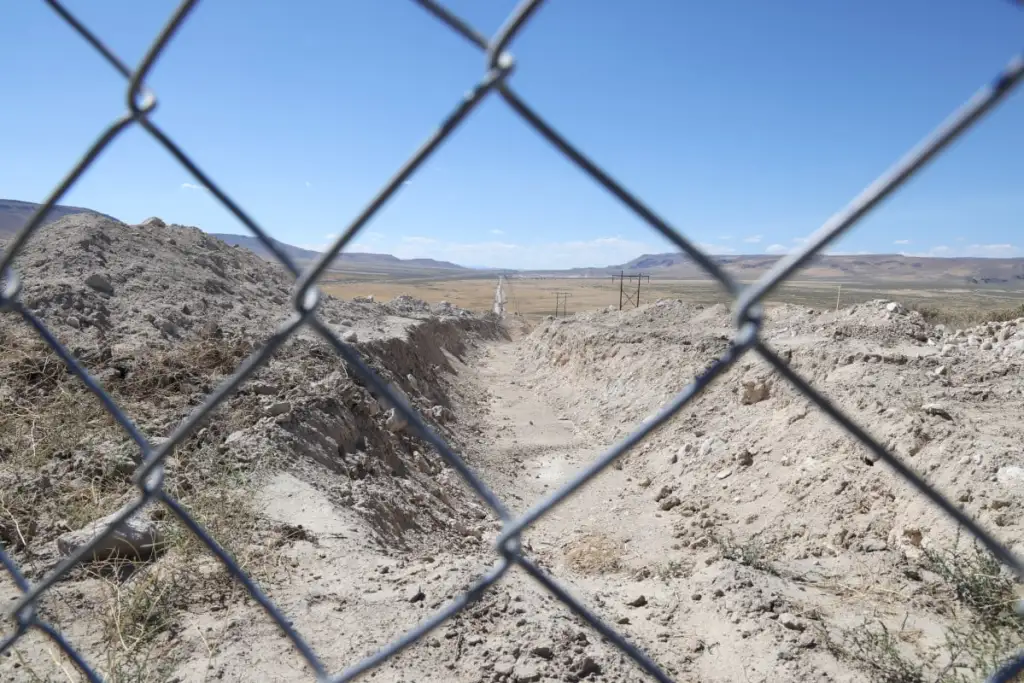
The Thacker Pass mine run by Lithium Americas is on track to become the second active lithium mine in the United States. The project in far northern Nevada may be indicative of what’s to come as more government-fueled mines pop up.
The lithium clay mine is under construction, with most Phase 1 construction costs covered by IRA support: General Motors is investing $650 million in exchange for the mine’s lithium. The U.S. Department of Energy provided a conditional $2.26 billion low-interest loan. Permitting came earlier, from President Trump’s administration. In 2028, the Thacker Pass mine is expected to reach full capacity production.
The DOE said the loan will provide General Motors with enough lithium for 800,000 electric vehicles a year and “reinforces the Biden-Harris Administration’s whole-of-government approach to strengthening America’s critical materials supply chain, which is essential to building America’s clean transportation future and enhancing our national and energy security.”
Lithium Americas plans to recycle and reuse withdrawn water an average of seven times. Its Phase 1 water consumption is estimated to be about 929 million gallons per year, equal to “around five alfalfa irrigation pivots,” according to the company’s blog.
Lithium Americas purchased existing agricultural water rights, so the operation won’t increase groundwater withdrawal, although existing groundwater withdrawal may still be unsustainable. It has also outlined plans for nearby habitat restoration. A post-mining reclamation plan is intended to reduce long-lived environmental impacts by refilling pits and restoring the surface.
But implementing and tracking mitigation strategies like these is left up to the companies.
“What I think is concerning is the proliferation of lots of voluntary governance mechanisms that companies don’t have to do,” says Riofrancos. “What’s important — and it sounds old-fashioned, maybe — is regulation that’s binding; that’s enforceable; that carries sanctions, fees, punishments, fines, whatever, if the regulations are not obeyed.”
Riofrancos believes such regulations, plus sustained protests against irresponsible mines, could get the mining industry to “do better.” She says the IRA-supported DOE loan program represents a missed opportunity to tie robust regulations to mining projects: “It’s very light on guardrails and requirements for loan recipients.”
It’s also unclear how much mitigation is realistically possible.
“There’s ways to tinker around the edges, but ultimately, there’s no mitigating an open-pit mine,” Donnelly, the Great Basin director of the Center for Biological Diversity, said in an interview. “(These mines) cause impacts to the water table, impacts to wildlife, impacts to local and Indigenous communities.”
He believes IRA loans and other federal subsidies help new mines get permitted in spite of environmental risks: “The DOE’s kind of waving a magic wand and saying, ‘This mine is okay to permit.’ ”
But the exact risks of each new lithium mine are tricky to measure. The three different types of mines can have different effects, depending on variables including location, says David Boutt, a hydrogeology researcher and professor at the University of Massachusetts-Amherst. Companies are often reluctant to share data that would help scientists evaluate impacts, he says.
“It’s hard to establish a number, like, ‘This one has like a 30% less environmental impact than the others,’ ” Boutt says. “We don’t see these numbers, because a lot of the impacts are local and hard to quantify.”
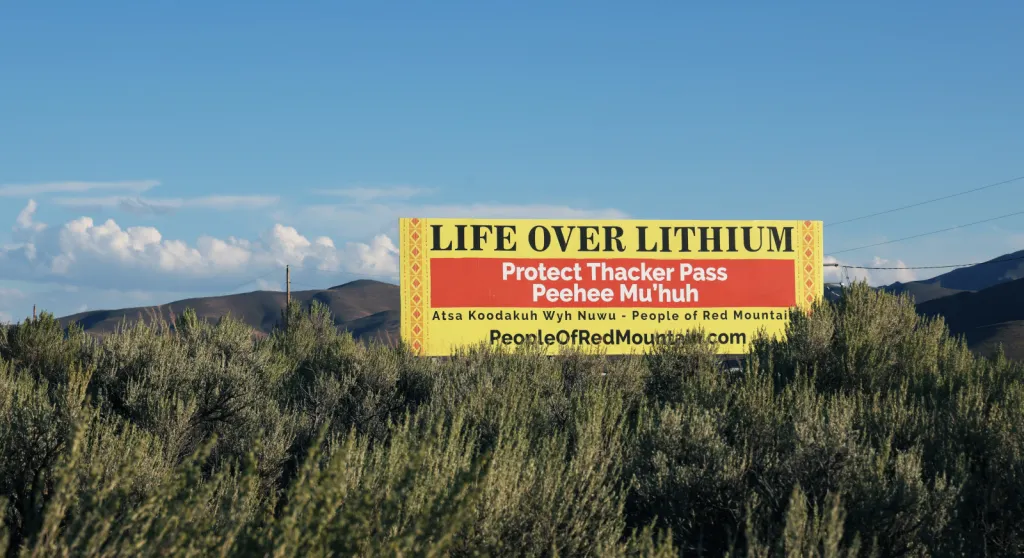
Yet for people living near mining sites, the risks can feel tangible. Dean Barlese, an elder from the Pyramid Lake Paiute Tribe, says he’s opposed to the Thacker Pass mine both because it’s at an Indigenous sacred site, and because his people’s lives are intertwined with the local ecosystem.
“A lot of people think it’s just a desert wasteland,” he says. “But the medicines we use are still out there. As Native people, we still gather our food, roots, berries — we’ve survived here for thousands of years.”
Barlese says he’d rather not see mining projects near Indigenous communities at all, regardless of community benefits agreements and environmental mitigation plans. “I would encourage the public to really look into the devastation that getting a bit of lithium does.”
Lithium demand could be reduced if investments were made in public transit and walkable communities, so fewer people were buying cars, Riofrancos says. Although the IRA includes investments in battery recycling, it doesn’t incentivize efforts to reduce surging lithium demand. Instead, it supports extraction to meet the demand, and helps ensure that the extracting companies can profit.
“ ‘Green energy’ is not green energy,” says Barlese. “Money speaks louder than anything else.”
Another possible solution to the mining debate would be an energy transition that uses less lithium.
“One way to reduce demand for lithium (or any battery metals) would be to make smaller batteries, or batteries that are more resource-efficient,” says Riofrancos. Two-thirds of current EV models are SUVs or large vehicles; small- and medium-sized EVs account for only a quarter of EV sales in the United States. Incentivizing smaller vehicles, which can use smaller batteries, could ultimately lead to fewer lithium mines.
Other battery chemistries are another option.
“Given the complexity of getting a permit, of getting the social license, of having everything in place, it’s going to take a long time (to open new mines),” says Boutt, the hydrogeologist. “And perhaps by the time we get to the point where we are developing those resources, we’ll have different battery technology where we’re not as reliant on lithium.”
Floodlight is a nonprofit newsroom that investigates the powerful interests stalling climate action.
EQUITY: Nearly half of Americans live in states that don’t bar electricity shutoffs during heatwaves, putting 45 million low-income Americans at risk of being unable to cool their homes when heat turns deadly. (The Guardian)
POLITICS:
GRID:
OIL & GAS:
WIND:
SOLAR:
ELECTRIC VEHICLES:
COMMENTARY: Two energy justice researchers warn the U.S. is experiencing an electricity disconnection crisis as utilities are allowed to shut off power to residents who can’t pay their bills even in deadly heat. (The Conversation)
CLIMATE: Washington state allocates $52 million from its carbon cap-and-invest program to help relocate Indigenous communities threatened by climate change and rising sea levels. (Associated Press)
ALSO:
SOLAR: A developer secures $1 billion in financing for its proposed 400 MW solar-plus-battery storage facility in eastern Utah. (Solar Industry)
OIL & GAS:
UTILITIES: NorthWestern Energy plans to begin operations at a contested natural gas plant along the Yellowstone River in Montana this month, even as courts continue to consider legal challenges. (Billings Gazette)
ELECTRIC VEHICLES: California officials say it is unlikely the state can meet its target of 1 million public electric vehicle chargers by the end of 2030 without substantial public and private investment, streamlined permitting and power grid upgrades. (CalMatters)
COAL: Wyoming’s congressional delegation calls on the Biden administration to abandon a proposal to end new federal coal leasing in the Powder River Basin, saying it would harm the state’s economy and grid reliability nationwide. (E&E News, subscription)
PUBLIC LANDS: Western oil and gas and mining groups file a lawsuit seeking to block the federal Bureau of Land Management’s new conservation-oriented public lands rule, saying it violates federal law. (E&E News, subscription)
GRID:
WIND: California regulators greenlight an offshore wind developer to conduct site surveys in Morro Bay on the state’s central coast. (Environment + Energy Leader)
A pair of upcoming decisions by Ohio’s top court could further empower local opponents to block clean energy in what is already one of the hardest states to site new renewable projects.
Two cases before the Ohio Supreme Court ask whether local opposition is enough for the Ohio Power Siting Board to conclude a project is not in the public interest when it otherwise meets all statutory criteria.
The decisions are expected to guide future regulatory rulings, and clean energy industry and environmental advocates have voiced concerns about the potential impact on energy development.
Most power plants, solar farms and wind farms in Ohio need approval from the Ohio Power Siting Board before they can be built and operated.
State law provides eight criteria for approving new electric generation. They include its impacts on the environment, water conservation, and agricultural land, as well as whether a facility “will serve the interests of electric system economy and reliability” and “the public interest, convenience, and necessity.”
Solar developers are appealing two recent siting board decisions in which they say regulators took a narrower view of “public interest” than they and courts previously did, effectively changing the legal standard and giving outsized weight to local opposition instead of considering the question with a state-level perspective, they say.
One case deals with the Ohio Power Siting Board’s denial of a permit to construct and operate Lightsource bp’s Birch Solar project roughly 10 miles southwest of Lima. In the other case, the board denied a permit for Vesper Energy to build and operate the Kingwood Solar project in Greene County.
The developers in both cases made changes to address specific concerns raised by siting board staff or other parties to the cases. In both cases, the board basically ruled that the projects satisfied all criteria except the public interest standard.
Lawyers for the Ohio Power Siting Board argued its rulings are entitled to a presumption of correctness on review. The board also claimed it used a “broad lens” to weigh the pros and cons of each project and make its factual findings.
Several local government groups and a local opponents’ group raised similar arguments in support of upholding the siting board decisions.
“The court should decline Kingwood’s invitation to wade into its own weighing of the evidence in this complex fact-intensive decision,” said one such brief, filed in the Kingwood Solar case by lawyers for the trustees of Miami, Cedarville and Xenia townships along with Jack Van Kley, a lawyer who represented an opponents’ group. Considering local opposition is also properly part of balancing multiple factors to determine the public interest, they wrote.
Developers for each project maintained the power siting board erred as a matter of law when it let local opposition override other factors in its determination of the public interest.
In Birch Solar, the board concluded there was “universal opposition from local governments and residents,” and it then held that opposition by local government bodies was “a determining component” of whether the project met the public interest criterion, the developer’s reply brief noted. That approach also violated Ohio’s statutory law and constitution by improperly delegating the board’s legal authority to local governments, the company argued.
The board also erred by focusing only on the amount of opposition. Rather, the board should have looked at evidence relating to opponents’ objections and considered how permit conditions could address them, the company’s lawyers wrote.
“[T]he Board never even assessed whether there would be any potential negative impacts to the public before deciding that the Project was not in the ‘public interest,’” said a separate brief by the Natural Resources Defense Council and a local chapter of the International Brotherhood of Electrical Workers. What matters is the evidence of a project’s impacts, not the quantity of opinions, their brief said.
In a similar vein, the power siting board unlawfully found the opposition of three adjoining townships was “controlling” in the Kingwood Solar case, the developer’s brief said. In other words, the board treated the opposition as determinative of the outcome.
“Public opinion is not public interest,” said Lindsey Workman, community affairs manager for Vesper Energy, the developer for Kingwood Solar. Ohio’s statute does not say local opposition trumps all other interests, such as economic benefits or enhanced reliability for Ohio’s energy infrastructure, she said. “That’s not how the law is written, and that’s not how the law should go.”
A 2021 law known as Senate Bill 52 did give counties the power to ban most new solar and wind projects from various areas. Among other things, the law also gives counties a chance to review new solar and wind projects that aren’t otherwise banned before they get to the power siting board. Both solar projects in the current Supreme Court cases are exempt from those parts of the law, however.
While SB 52 gave local governments “a chance to participate” in the power siting board process, the legal criteria for approval stayed the same, said Chris Tavenor, an attorney for the Ohio Environmental Council, which filed a brief in the Birch Solar case. Yet by treating local opposition as determinative, the board was “creating essentially a political process for those projects to be approved or denied, as opposed to a legal analysis,” he said.
Other briefs in the Birch Solar case underscored that opposition wasn’t universal. One brief came from a group of local solar supporters. Another explained that leaders for Auglaize County and Logan Township took no position on the project after they reached agreement with the developer on some issues.
In addition to the possibility that Vesper and Lightsource bp’s projects will be canceled, advocates are worried about the impact on future cases.
The Natural Resources Defense Counsel wrote in its brief that “allowing the Board’s unprecedented and unreasonable decision on Birch Solar to stand will prevent the development of other well-planned renewable energy projects in Ohio.” That would reinforce continued use of fossil fuel generation, which releases greenhouse gases that drive human-caused climate change, as well as other pollution.
The natural gas industry also has a stake in the outcome, because the cases could open the door for local opposition to block power plants, pipelines and other infrastructure.
The Ohio Independent Power Producers’ brief in each case said the power siting board’s ruling “erodes a fair and predictable permitting process upon which new investment in power generating facilities in Ohio relies.” The Ohio Chamber of Commerce’s briefs also voiced a fear that the boards’ rulings inject “undue uncertainty into Ohio’s historically stable and predictable regulatory framework for building in-state power generation.”
The Ohio Supreme Court has yet to schedule oral argument in each case. It would likely take several months after that for that court to issue its decisions.
OIL & GAS: The U.S. oil industry is booming, benefitting from cost-cutting and automation to produce record levels of crude from west Texas shale, generate more cash for shareholders, and disconcert clean energy advocates. (New York Times)
ALSO:
GRID:
SOLAR:
NUCLEAR: Georgia Power says one of its new units at nuclear Plant Vogtle has been down for a week after a valve malfunctioned. (Atlanta Journal-Constitution)
CLIMATE:
COMMENTARY:
CLEAN ENERGY: Michigan has added nearly 21,500 clean energy jobs over the past two years, serving as a national leader in clean energy development after adopting several supportive policies, according to a new report. (Michigan Advance)
ALSO: A Republican state senator in Iowa resigns from his elected position to become a policy adviser at a Minnesota-based clean energy advocacy group. (Globe Gazette)
GRID: Illinois Gov. JB Pritzker is among state leaders in PJM’s territory calling on the grid operator to speed up transmission expansion and comply with new federal regulatory orders. (Inside Climate News)
ENVIRONMENTAL JUSTICE: Minnesota regulators work to establish rules and guidelines for a state law that goes into effect in 2026 and attempts to curb pollution in urban environmental justice areas. (Sahan Journal)
EMISSIONS: A small northeastern Wisconsin utility plans to reverse its rising emissions by converting boilers at a coal plant to run on renewable fuel pellets made from industrial paper and plastic waste. (WPR)
PIPELINES:
CLIMATE: Unlike heating mandates, very few regulations exist that require landlords to provide air conditioning to renters, an increasingly dangerous public health problem as heat waves become more frequent and longer. (Vox)
EFFICIENCY:
POLITICS: U.S. Sen. JD Vance, who has been named Donald Trump’s vice presidential running mate, has grown increasingly critical of renewable energy and climate change as his home state of Ohio grows its solar industry. (Bloomberg, subscription)
SOLAR: The U.S. solar industry’s leading trade group issues standards for companies to follow to ensure ethical sales practices as state attorneys general claim companies use deceptive sales tactics to draw business. (E&E News, subscription)
GRID: A new academic paper warns the U.S. won’t be able to decarbonize the grid by 2050 if federal regulators don’t adopt significant grid reforms and implement a national transmission strategy. (Utility Dive)
ALSO:
POLITICS: Donald Trump’s vice presidential pick, Ohio Sen. J.D. Vance, acknowledged climate change and the need for a clean energy transition as recently as 2020, but has since become publicly skeptical of renewables and turned to boosting fossil fuels. (New York Times, E&E News)
ELECTRIC VEHICLES: Electric vehicle sales grew 11% in the second quarter compared to a year earlier, exceeding expectations and suggesting predictions of an industry decline were premature. (Forbes)
OIL & GAS: The U.S. oil industry is booming, benefitting from cost-cutting and automation to produce record levels of crude from west Texas shale, generate more cash for shareholders, and disconcert clean energy advocates. (New York Times)
HYDROGEN:
CLEAN ENERGY: Michigan has added nearly 21,500 clean energy jobs over the past two years, serving as a national leader in clean energy development after adopting several supportive policies, according to a new report. (Michigan Advance)
SOLAR: The U.S. solar industry’s leading trade group issues standards for companies to follow to ensure ethical sales practices as state attorneys general claim companies use deceptive sales tactics to draw business. (E&E News, subscription)
CLIMATE: Unlike heating mandates, very few regulations exist that require landlords to provide air conditioning to renters, an increasingly dangerous public health problem as heat waves become more frequent and longer. (Vox)
COMMENTARY: A journalist and an advocate argue that only phasing out fossil fuels will slash Permian Basin methane emissions, and that new pollution-detecting satellites and inadequate regulations will fall short. (Scientific American)


.svg)
