

 Back
Back
One year ago, President Donald Trump signed a massive bill into law and ripped away clean energy tax credits. Renewables have rolled with the punches.
One year ago, President Donald Trump got his Fourth-of-July wish. Republicans rammed a massive tax and spending bill through Congress before his preferred July 4 deadline, allowing Trump to sign it into law during a showy holiday ceremony at the White House.
Alongside huge cuts to Medicaid, food stamps, and other programs aiding America’s neediest residents, the One Big Beautiful Bill Act repealed large swaths of the Inflation Reduction Act — the only significant piece of climate legislation the U.S. has ever managed to adopt.
That law would have marshaled as much as $1.2 trillion to transition the U.S. economy away from fossil fuels and toward renewable energy, largely through tax credits that make it cheaper to build wind turbines and solar panels. But Trump’s big bill sunsetted those incentives; as of Saturday, they will no longer be accessible to clean energy developers unless they have already hit certain construction benchmarks.
Still, despite the tax credits’ looming demise, and the Trump administration’s myriad other attacks on clean energy, developers have continued building renewables at a stunning pace over the past year. More than 90% of the power plants brought online in America in 2025 were solar, wind, or battery farms, according to the U.S. Energy Information Administration. And the agency projects that these clean resources will account for 93% of new additions to the power grid this year.
There’s a simple reason for clean energy’s unstoppable rise: America needs more energy fast, and only renewables and batteries can deliver it.
After decades of staying flat, energy demand is surging. Big Tech firms are building new data centers that use as much electricity as small cities. Homeowners are switching to electric stoves and heating. People are swapping gas vehicles for electric ones.
Meeting this new demand requires building more supply: more power plants, batteries, poles, wires, and transformers that can produce, store, and transport more electrons. And as gas power faces yearslong supply-chain delays, clean energy is the only thing that can be built quickly and cheaply enough to keep up.
It’s not as if clean energy will escape unscathed from the One Big Beautiful Bill Act — or from the Trump administration’s continued clean energy onslaught.
Over the long term, the disappearance of tax credits will take its toll: One estimate suggests the U.S. will build less than half as much clean energy between 2025 and 2035 as it would have with the incentives in place, with the biggest hit happening in the latter years of that range.
In the near term, the Trump administration’s blockade on federal permitting for wind and solar projects, its payouts to cancel offshore wind leases, and other attacks are having a real negative impact.
This past year has proven that clean energy can roll with some punches — and also that the Trump administration is prepared to keep on taking swings at the industry.
Independence nay: The U.S. Supreme Court rules the president can fire regulators at independent federal agencies, including FERC and the Nuclear Regulatory Commission. (E&E News)
Another wind payoff: The Trump administration says it will pay Duke Energy $129 million to abandon its offshore wind project off North Carolina, which the utility says it will reinvest in gas and nuclear power projects. (New York Times)
Farming the sun: Solar opponents in Ohio have used alleged threats to agricultural land to derail projects, but a new report makes clear that arrays only take up a fraction of a percent of prime farmland both in the state and beyond. (Canary Media)
Permitting plateau: Trump administration policies holding back clean energy permitting are putting 92 GW of projects at risk, representing $121 billion in investments, a new Wood Mackenzie report finds. (Reuters)
Sunrise, sunset: Connecticut passed a law that authorizes the use of plug-in balcony solar panels, expands the state’s community solar program, and extends solar incentives, while also instituting new restrictions on solar development. (Canary Media)
Steel’s clean opportunity: It’s been a year since Japan’s Nippon Steel acquired U.S. Steel, but former steelworkers and other residents in Northern Indiana are still waiting to see if the acquisition turns into clean, job-creating investments. (Canary Media)
Grid funding disconnect: A Government Accountability Office audit finds Puerto Rico has only received about 25% of the $14 billion it was allocated for grid repairs and a solar and battery buildout after 2017’s Hurricane Maria destroyed much of the island’s energy system. (Associated Press)
A head-to-head matchup of electric and gasoline cargo trucks shows how rising fuel costs make EVs much cheaper to run. Now, can manufacturers lower up-front costs?
Electric cargo trucks have been getting more cost-competitive for years. But the fuel price spike triggered by the Iran war has made it clear just how much cheaper it can be to move freight with trucks that run on electricity instead of gasoline or diesel.
New data from electric-vehicle manufacturer Workhorse, which runs identical routes with both gasoline cargo trucks and electric cargo trucks for its Stables by Workhorse business, provides a case study of how elevated gasoline prices make EV options more appealing.
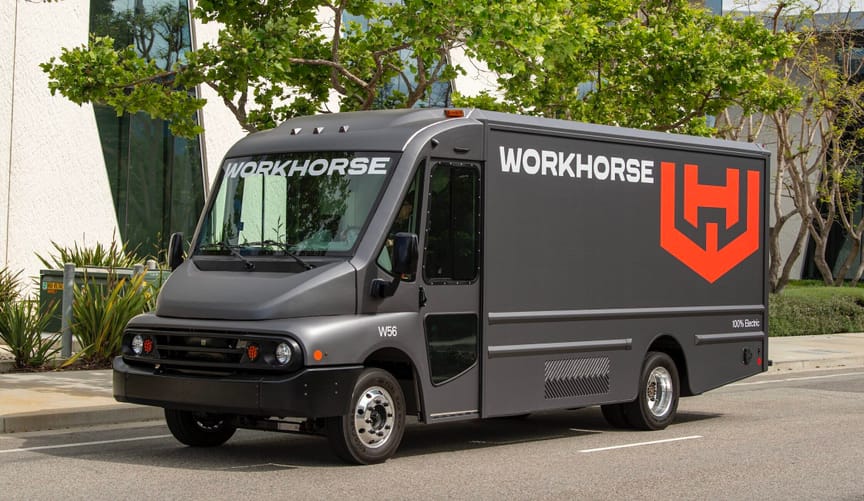
Stables delivers packages as an independent service provider for FedEx in Ohio. Its use of internal-combustion-engine and battery-electric trucks side by side has given it a rare “controlled, real-world comparison” of the two vehicle classes with “the same routes, the same drivers, and the same weather,” as explained in a presentation at the ACT Expo trucking industry show in May.
The electric trucks Workhorse builds and runs in its Stables fleet, a type known as step vans, were already cheaper to operate last year than their gasoline-fueled counterparts — saving about 42.5 cents per mile, based on electricity at 11 cents per kilowatt-hour and gasoline at $2.98 per gallon.
But by May 1, gasoline had spiked to an average of $4.83 per gallon in Ohio, pushing the savings advantage for electric trucks up to 73.6 cents per mile. With gas prices so high, a Workhorse step van driving about 50 miles per day can expect to save about $11,000 per year on fuel costs.
The operating-cost difference matters a lot when it comes to electrifying truck fleets. EV trucks cost 50% to 100% more than fossil-fueled versions, according to industry estimates, which means they need to provide enough savings on operations to make up for that higher sticker price.
In the past few months, Workhorse CEO Scott Griffith said customers have grown more interested in buying trucks from his company, which is a small-scale producer in the broader world of medium-duty truck manufacturing.
“The phone is certainly ringing, and the interest is high, and everyone’s doing the math,” he said. “What is the cost of electricity, what are the lease costs, what are the operations and maintenance costs? They’re coming in with a much more sophisticated approach.”
Workhorse’s experience is only one example of how EV trucks are growing more appealing to fleet operators, said Corey Cantor, research director at the Zero Emission Transportation Association trade group. He noted that other fleet operations have observed similarly high savings as gas and diesel prices have spiked in recent months. While those prices have declined slightly since a purported peace deal between the U.S. and Iran last month, they remain significantly higher than before the war began.
Diesel, which is the primary fuel for trucks around the world, has seen an even greater increase in cost than gasoline, putting pressure on fleet operators.
“When diesel is at such an elevated price — even if it may come down over the longer term — it spurs a conversation,” Cantor said.
While the recent gasoline and diesel price spikes are driving conversations about electrification, it’s not clear whether that’s resulting in more purchases or leases of EV trucks.
That’s mainly because the data hasn’t yet come in, said Jacob Richard, technical project manager at Calstart, a nonprofit group whose members include energy producers, carmakers, and other businesses.
There’s plenty of room for growth. Electric trucks made up less than half a percent of the total U.S. truck stock as of mid-2025, according to Calstart’s January report Zeroing in on Zero-Emission Trucks.
Of the 72,000 electric trucks deployed in the U.S. at the end of last year, the vast majority were so-called “last-mile” delivery vans. Cargo vans — the smallest type of commercial cargo vehicle — are an ideal electrification target because they run relatively short routes to and from central depots where they can recharge overnight using slower, less-expensive charging infrastructure, said Mike Roeth, executive director of the North American Council for Freight Efficiency.
The nonprofit research group has put vehicles through real-world tests in its “Run on Less” events and found that battery-electric trucks cost less to operate than fossil-fueled equivalents on the sub-100-mile daily routes that make up about half of all freight miles traveled in the U.S.
Griffith agreed that shorter-haul, “return-to-base” freight routes have been a good fit for Workhorse customers like Purolator and Gateway Fleets, both of which have placed orders for 100 of the company’s electric step vans this year.
“Many of them are running what we call lollipop routes — 90 miles out from the depot, and coming back and charging up,” Griffith said. He added that “a significant chunk of medium-duty trucks” are running such routes, “especially the large fleets.”
But electrifying medium-duty trucks is more complicated than electrifying cargo van fleets, Roeth noted. Medium-duty trucks range from step vans like the ubiquitous brown UPS delivery vehicles to box trucks that have different types of rectangular cargo containers mounted on separately built “cutaway” chassis. They tend to be built for a wider variety of custom markets in much lower quantities than cargo vans, which more closely resemble mass-market passenger vehicles in how they’re manufactured and marketed.
“The smaller and more automotive you are, the greater the scale of production, the lower the cost,” Roeth said. “As you move to a cutaway, where you have to work with a different manufacturer to get that box on, the cost challenges go up.” That’s true for both EV and internal-combustion vehicles in this class, he said.
Still, manufacturers of battery-electric trucks stand a good chance of making headway across market segments while fuel prices are high, Cantor said.
He highlighted Harbinger Motors, a startup that manufactures medium-duty electric-vehicle chassis that can be customized for different classes of vehicles. The California-based startup has raised about $360 million in venture financing, including a $160 million round in November co-led by FedEx, which also ordered 53 of the company’s medium-duty truck chassis.
Workhorse has taken a more circuitous route, Roeth said. He worked at the company back when it was an affiliate of Navistar International making chassis for internal-combustion-engine trucks. In 2013, Workhorse was acquired by startup AMP Electric Vehicles and shifted to making battery-electric chassis.
Last year, it merged with long-time electric-chassis startup Motiv, in what Roeth described as “a perfect marriage.” Even so, it’s not easy to break into established medium-duty truck markets: Workhorse reported widening losses in its first earnings report as a combined company in the first quarter of this year, despite increasing revenues.
Those losses were driven in part by higher investments in manufacturing, as Workhorse retools its factory in Union City, Indiana, for the latest generation of its all-electric chassis, featuring more efficient batteries, drivetrains, and power-control systems. That factory is capable of producing up to 5,000 vehicles per year.
“We’re not just sticking an electrified powertrain on what we currently sell,” said Griffith, who was CEO at Motiv before the merger. “You can get some efficiencies out of that. But you can’t capture the full benefits of a fully software-defined vehicle without going all the way.”
The primary barrier to fleet electrification is the up-front cost of electric trucks. Right now, “a standard rule of thumb is that these vehicles are going to cost two times more than the equivalent cost of a diesel or gasoline version,” Calstart’s Richard said.
But there’s a lot of variation. Commercial vehicle pricing data “is not as transparent and easy to access as [data on] passenger cars,” Cantor said. Many vehicles are custom-designed, and pricing varies greatly depending on factors such as bulk purchase orders and preexisting relationships with fleet operators.
In the case of Workhorse, Griffith estimated that the company’s electric step vans cost about 30% to 40% more than comparable fossil-fueled vehicles. In early April, Workhorse dropped the price of its standard-sized W56 battery-electric step vans by roughly $60,000 to bring them just under $200,000 apiece, about level with the highest-end gasoline- or diesel-fueled alternatives.
The payback time on an electric truck depends on a mix of things — the model, state incentives, fuel prices, and so on. In states like California and Washington, which have generous incentives, buyers can recoup the extra costs on Workhorse’s larger step-van model in three to five years depending on gas prices, according to the company’s chief communications officer, John Williams.
Whether these kinds of paybacks are fast enough will depend on the fleet operator.
In general, bigger operators can afford to take a risk and wait longer, according to Richard. But Calstart presumes that the majority of buyers need to see a payback in three years, which coincides with how they structure financing and resale planning for their internal-combustion fleet vehicles, he said.
Today, the vast majority of electric trucks are being bought by big corporations that have both the deep pockets and the sustainability goals to make the up-front costs worth absorbing, Griffith said.
“But this is a $23 billion-a-year industry,” he said, citing estimates of annual U.S. sales of medium-duty vehicles — and to meet the needs of the broader market, “we’ve got to get the price point down.”
In certain regions, government incentives can nearly close that price gap, Richard said. Though the Trump administration and Republicans in Congress erased many of the federal tax credits that incentivized EV purchases, some EV-friendly states still provide incentives and rebates, he noted. “It makes sense for fleets to capture those up-front incentives while they stand.”
But electric truck manufacturers can’t bank on government incentives, Griffith said. “Those dollars are disappearing in the coming years. The industry has to get to the point where [total cost of ownership] blows internal combustion out of the water — and the buying price of an EV has to be closer to a 10% premium.”
To be clear, electric trucks offer significant benefits beyond lower fueling costs, Roeth said. Companies participating in his organization’s Run on Less events have tracked financial benefits like significantly lower maintenance costs as well as perks like increased driver comfort. Plus electric trucks release much less carbon and local air pollution — an important improvement, as commercial trucks are responsible for a disproportionate amount of such emissions from the U.S. transportation sector.
“For good or for bad, these trucks are used in routes that are sitting and idling for long periods of time,” Griffith said. “They emit three or four times per mile the emissions and carbon you get out of a passenger car. And they’re on routes that tend to affect dense populations,” he said.
Ultimately, he said, “if we can improve the economics and emissions together, make everything better on that route, fleets are going to adopt it.”
New York City’s green building laws are pushing developers toward cleaner technologies — even as state policymakers backtrack on climate change targets.
NEW YORK CITY — Manhattan is teeming with skyscrapers that seem to reach into the clouds. But a gleaming commercial building near the Hudson River is more impressive for how it stretches down into the dirt.
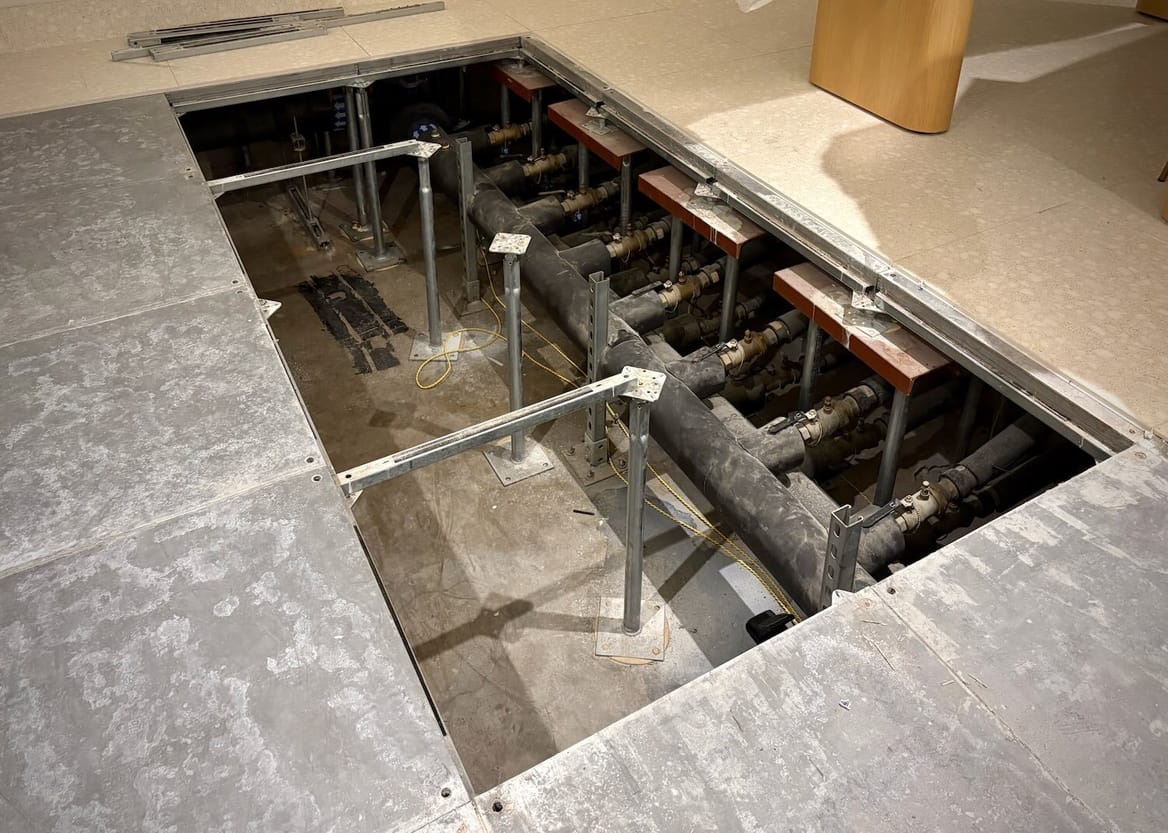
Beneath the floors of 555 Greenwich St. are 68 geothermal energy piles that run nearly 120 feet deep, dodging utility pipes and tunnels that crisscross the busy urban underground. During the sweltering summer, the long vertical piles collect heat from the 16-story building and dump it into the earth, cooling the offices above. In the chillier months, the equipment retrieves that warmth to keep the rooms cozy.
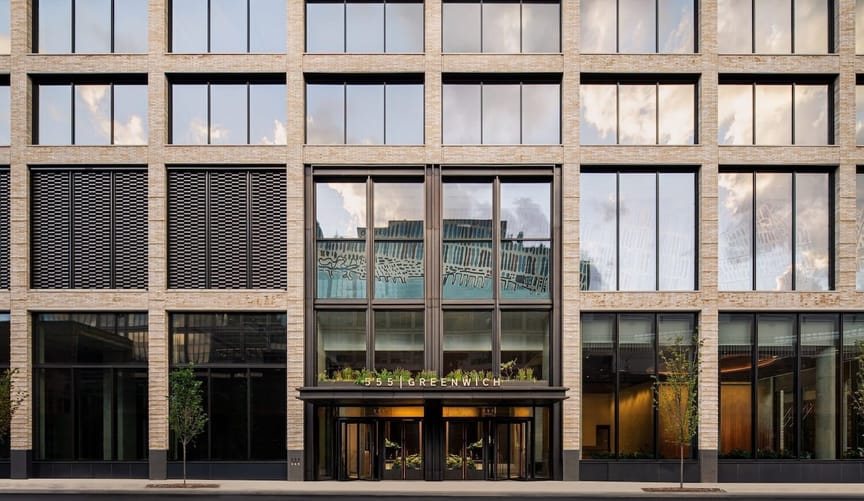
The geothermal system is a key reason why 555 Greenwich can operate without using fossil fuels, making it the city’s first commercial office building to hit that milestone. That’s according to the owner, Hudson Square Properties, which is a joint venture of the real estate company Hines, Trinity Church NYC, and the investment arm of Norway’s sovereign wealth fund.
The building, which finished construction in 2023, should be able to meet half of its heating and cooling needs from geothermal when fully occupied, said Jason Alderman, senior managing director and head of New York at Hines. The other half will be met primarily by the two enormous air-source heat pumps sitting on the rooftop, which overlooks the city’s most iconic towers and the green edges of Central Park.
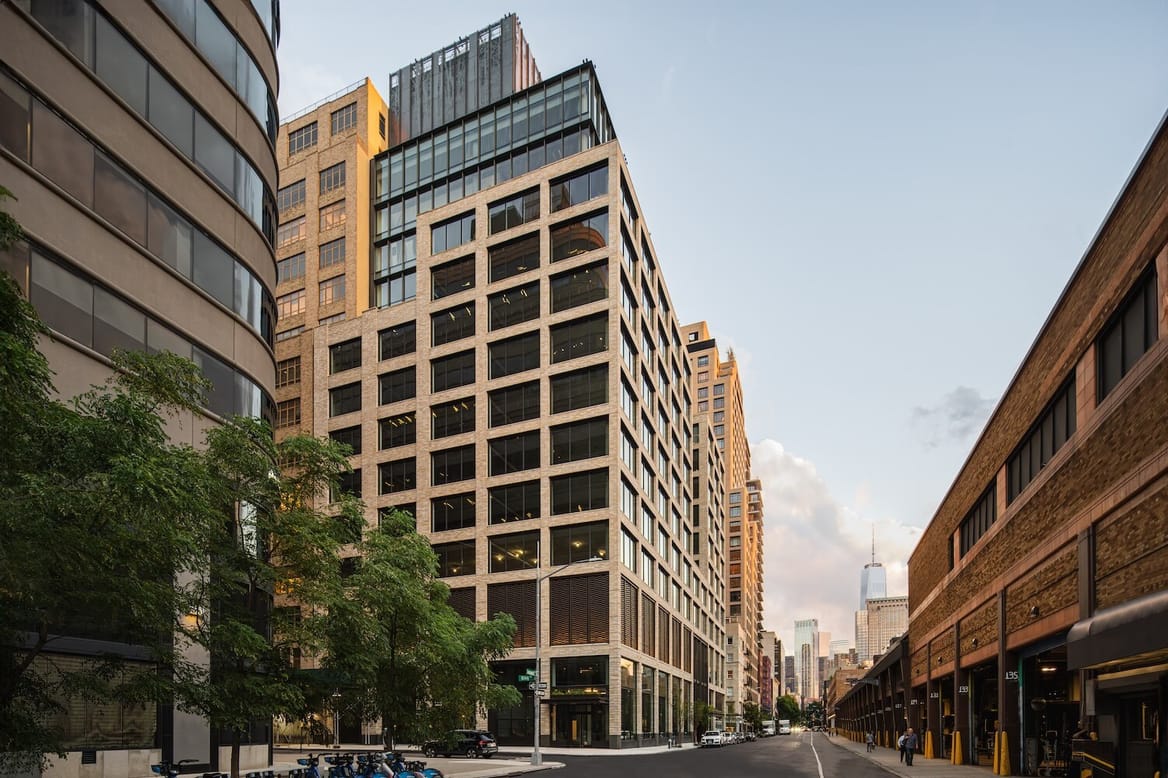
When I visited the 270,000-square-foot property in early June, Alderman explained that the fossil fuel–free building is a reflection of both New York City’s aggressive climate change policies and the partners’ own ambitions for a highly efficient, carbon-cutting design.
“We wanted to think outside of the box and help set the standard for what others can do,” he said.
We were standing beside the only visible part of the geothermal system: an array of small, dusty pipes peeking out from the partially finished floor of a forthcoming restaurant. In a nearby utility room, I saw control boxes managed by the company Endurant Energy, which monitors temperatures in the underground geothermal piles to determine whether it’s more efficient for the building to grab heat from the earth or run the heat pumps on the roof.
On days when the geothermal setup can produce more energy than needed, it pipes the excess heat directly into its sister property, a nearly century-old Art Deco edifice on 345 Hudson St. The developers recently renovated the older building and combined it with 555 Greenwich to make a single 1.2-million-square-foot office complex in lower Manhattan.
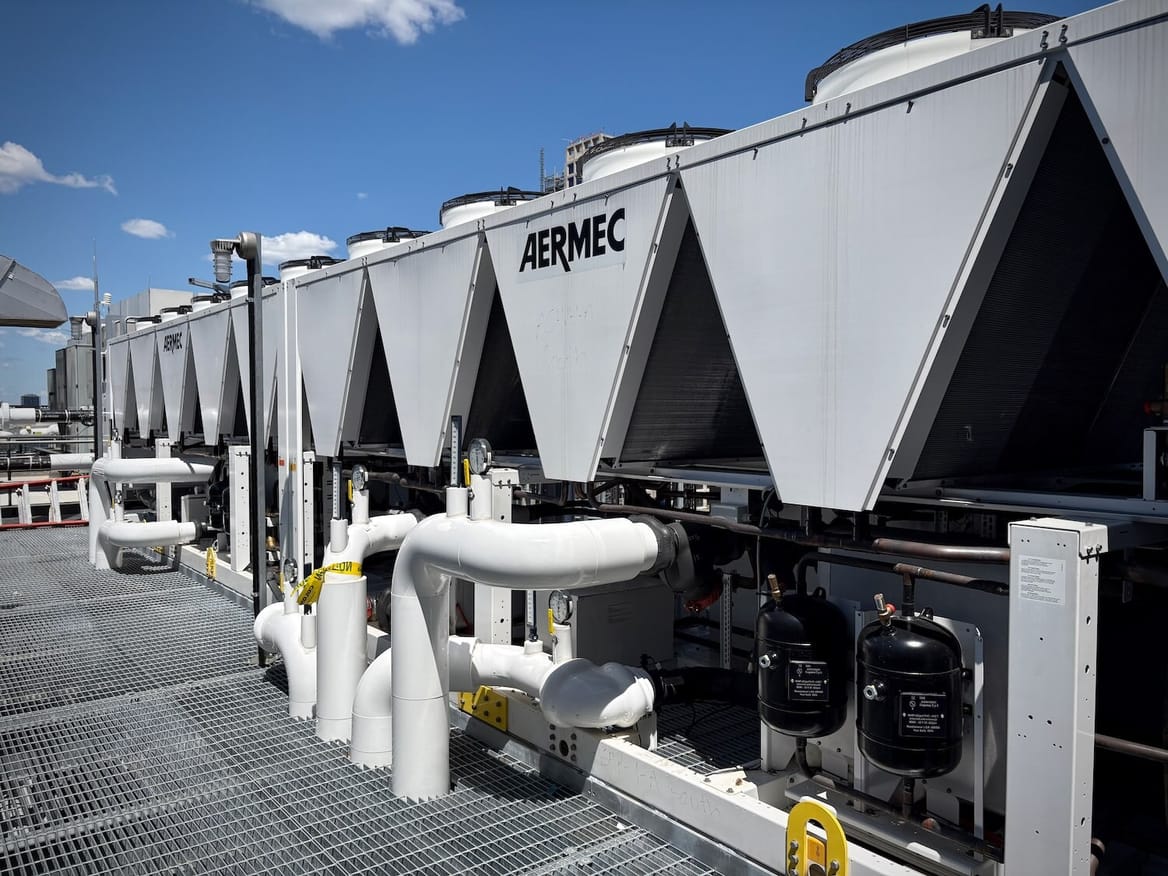
The newer property uses 40% less energy than typical top-quality office buildings and well exceeds New York City’s 2030 climate targets, according to its owners. The older property, which is still transitioning to an all-electric energy system, is on track to reduce its carbon emissions by 90% within the next decade.
Geothermal heating and cooling systems are steadily proliferating beneath the city’s newest buildings, despite the complex engineering challenges and expensive installation costs. Property owners are looking to not just comply with regulations but also to generate long-term energy savings by avoiding natural gas.
Buildings account for more than two-thirds of New York City’s greenhouse gas emissions. Since 2019, city leaders have adopted laws to rein in that planet-warming pollution.
Local Law 154 prohibits the use of fossil fuels in most new construction and will start applying to high-rise buildings in 2027. Local Law 97 requires most buildings over 25,000 square feet, whether new or old, to meet escalating energy-efficiency and emissions standards, with stricter limits set to take effect in 2030.
The city’s deadlines are approaching at a time when New York state is abandoning its most ambitious climate targets. In late May, Gov. Kathy Hochul, a Democrat, signed a budget bill that effectively vaporizes a 2030 mandate to curb statewide emissions by 40% from 1990 levels, replacing the target with a watered-down goal that critics fear will slow the state’s buildout of clean energy technologies.
The rollback at the state level is causing some doubt within the city’s real estate sector about whether the building-decarbonization timelines are really as firm as they seem, experts say.
“When there’s a lack of clarity, it makes it a challenge for building owners to pull the trigger” on efficiency and electrification projects, said Laura Bendayan, director of strategic partnerships at Entech. The NYC-based firm helps buildings optimize their existing boiler systems to reduce energy bills and lower emissions.
“We always recommend that [owners] be ahead of the game,” she added. “But there’s this sense of uncertainty that you can’t take away.”
Hudson Square Properties, for its part, says it’s pushing ahead with its no-fossil-fuels approach in both of its buildings.
During my visit, Alderman led me to the top of the newer building, showing me the controls for the radiant heating and cooling system, which circulates chilled or warm water through tubing beneath every floor. This technology provides a “baseline comfort level” and supplements the larger geothermal system, he said. Vents above our heads draw fresh outdoor air into the building, a step that helps lower the structure’s overall energy use by taking strain off the HVAC equipment.
From there, we walked through a heavy set of doors leading into the old building. The highest of 345 Hudson’s 17 floors is a cavernous empty room that originally housed massive printing presses, whose humming sounds and ink smells filled the neighborhood until the 1980s.
The developers are working floor by floor to phase out the existing gas-fueled heaters and boilers and replace them with a kind of thermal energy network. A labyrinth of pipes circulates water throughout the building; heat pumps can then tap into or reject heat from this system to keep occupants comfortable.
“You’re trying to reuse all of the energy that you’ve brought into the building, in the different places where it’s needed,” Alderman said. It’s the complete opposite of New York City’s district steam system, which gets rid of excess heat by piping clouds of vapor out onto the streets.
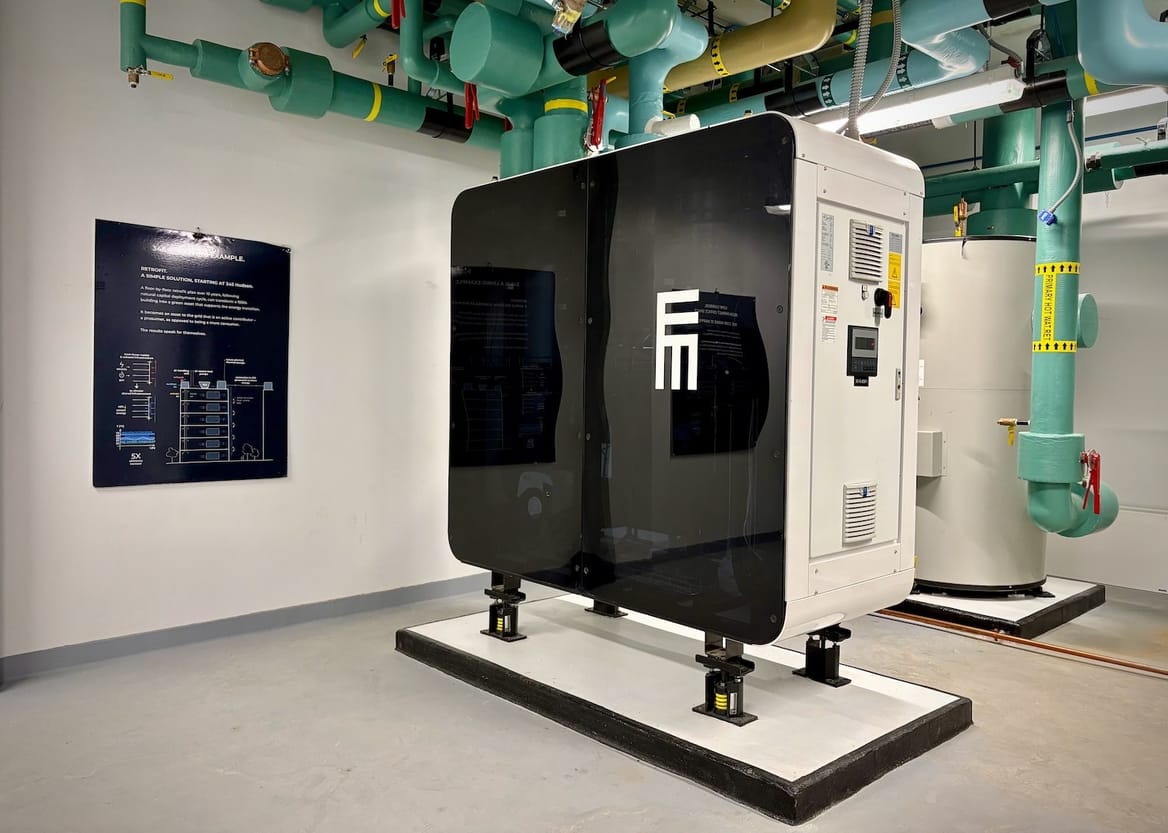
The 345 Hudson retrofit won a $5 million grant from the New York State Energy Research and Development Authority, as part of the Empire Building Challenge, which advances low-carbon retrofits in the state’s tallest buildings. The developers also raised more than $30 million in private funding for the project.
New York state’s retrenchment from ambitious climate policies might wind up undermining some of those efforts. As buildings shift toward using all-electric technologies, the level of emissions reductions they achieve will largely depend on how clean the electric grid is, said Kelly Dougherty, president of FirstService Energy, a New York–based firm that helps manage energy systems for residential buildings.
“If it’s rolled back any further, then we may have some issues,” Dougherty said about New York state’s landmark climate law. Still, “a lot of work has been done on reducing greenhouse gas emissions in the city,” she added. “I don’t think it’s going to go away.”
At the end of our tour, standing on an enviable rooftop patio, Alderman said he’ll be watching to see how the two buildings perform as they fill up with tenants and operate over time. As of now, his firm estimates that 555 Greenwich alone should save around $3 million over 15 years in avoided energy bills.
“I hope we can prove to ourselves and to others some of the long-term operating-cost savings — and that people will look to these as examples of what can be accomplished,” he said.
A nation-leading program that encourages superefficient manufactured homes is underway in Vermont, and will produce significant energy savings for residents.
Vermont just got its biggest delivery of superefficient manufactured homes — the latest example of how a pioneering state program can lower energy bills for residents of this type of affordable housing.
The all-electric, heat-pump-equipped homes slash energy use by more than half compared with new conventional manufactured homes. To achieve that feat, each meets the exacting specifications under the Advanced Manufactured Home program, which was created by the state’s energy-efficiency utility Efficiency Vermont in 2024.
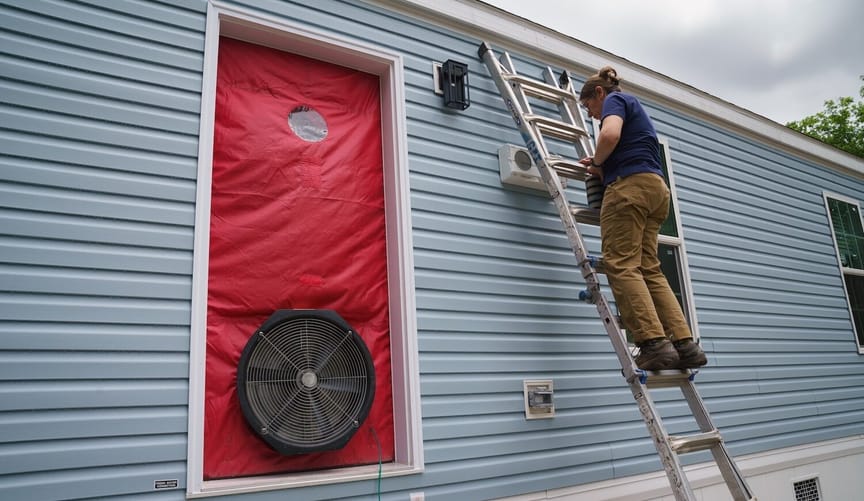
The standards aren’t mandatory; it’s up to the federal government to regulate the efficiency of manufactured homes. Instead, Vermont’s initiative certifies best-in-class options that will help the state meet its housing and climate goals — and offers a $3,000-per-unit incentive for the builders who opt in.
This month, manufacturer Titan Homes has been installing 18 of these prefabricated buildings at the largest manufactured-home park in Vermont, Tri-Park Cooperative Housing in Brattleboro. Residents who live in the floodplain and have suffered home damage in past storms will become the new occupants.
Including this latest batch, Titan Homes, based in New York, and Clayton Lewistown in Pennsylvania, have together built more than 30 units that have been installed around the state. Any Vermonter can purchase an Advanced Manufactured Home and work with Efficiency Vermont to get one.
When residents move in, they’ll enjoy much lower utility bills. Older manufactured homes are notoriously inefficient, and those of any vintage are difficult to weatherize after leaving the factory. In Vermont, the structures are typically heated with costly and polluting fuel oil or propane, driving average energy bills to about $4,000 annually, according to Efficiency Vermont.
Though they cost more up front, certified Advanced homes can save residents about $2,700 per year on energy bills over existing manufactured homes on average, and more than $1,300 over new manufactured homes built to the U.S. Department of Housing and Urban Development’s current standards, according to Peter Schneider, principal engineering consultant at VEIC, the nonprofit that operates Efficiency Vermont.
That’s a significant difference. While the median income for occupants of site-built single-family homes is $85,000, it’s $40,000 for manufactured home dwellers, said Mark Kresowik, senior policy director at the American Council for an Energy-Efficient Economy, a nonprofit research organization.
“These families are facing some of the most acute stresses and pain of making decisions about whether to pay their energy bill or their home loan or put food on the table or buy medicine,” he said. “Their energy bills shouldn’t put them back in the streets or back into a rental.”
Vermont’s Advanced homes “are setting a benchmark for the rest of the country,” Kresowik said.
The utility’s program pushes some of the most energy-efficient manufactured homes in the country, going beyond a comparable definition set at the federal level.
Once called mobile or trailer homes, manufactured homes make up 7% of new housing. On average, they sell for about a third of the price of site-built homes, or $123,000, according to federal data.
Under the Biden administration, the Department of Energy developed standards to certify what it called “Zero Energy Ready Homes,” including one for manufactured homes. (The program under the Trump DOE is now called “Efficient New Homes.”) This rubric requires a slew of efficiency measures, but also allows for gas furnaces and water heaters, which take two to four times the energy required by their heat-pump counterparts. Homes that meet or exceed these standards allowed the builder to qualify for the up to $5,000-per-unit New Energy Efficient Home Credit, or 45L, although that incentive expires tomorrow.
Kresowik isn’t aware of any other standard outside of Efficiency Vermont’s that outdoes the DOE’s, he said.
Soon, however, the entire nation may have stricter requirements for manufactured homes — if not as stringent as those in Vermont.
Last week, U.S. lawmakers passed a sweeping bipartisan housing bill that President Donald Trump then abruptly announced he wouldn’t sign until the passage of a voting reform bill. As of Monday, the legislation remained in limbo.
If the 21st Century ROAD to Housing Act becomes law, it will change regulations around manufactured homes in two big ways. First, by ditching a requirement that they be built on a permanent steel chassis, a 10- to 12-inch-deep metal frame that’s used for transport. And second, by making them more energy efficient. The bill would require HUD to set a new efficiency standard within a year of the bill being signed into law, and at least every three years thereafter. The agency set the current standard more than three decades ago.
Efficiency Vermont’s Advanced homes come with a smorgasbord of efficiency improvements over conventional options: more insulation in the floors, the walls, and ceiling; ultraefficient windows and doors; programmable thermostats; tighter air seals and ductwork under the floors in the structure’s belly; Energy Star appliances; a cold-climate ducted heat-pump system that heats, cools, and dehumidifies; a heat-pump water heater; a solar-ready roof; and continuous fresh air via an energy recovery ventilator.
These features add up to a residence that dramatically reduces indoor air pollution and is more comfortable and resilient than those with fossil fuel heating, Schneider points out.
Manufactured homes meeting the standard do cost more, though: about $21,000 over an average new HUD-baseline unit. Still, assuming a 6% interest rate on a 30-year mortgage and including utility bills, the total cost of owning an Advanced home is about the same as owning a much less efficient one that relies on fossil fuels, Schneider calculates.
Moreover, “that’s at today’s energy costs,” he said. Schneider expects fossil fuel prices to continue to grow at a much faster pace than electricity prices, enabling the energy savings in an Advanced home to further offset the higher monthly mortgage payments.
Plus, most of today’s premium stems from the fact that manufacturers are installing the heat pumps and energy recovery ventilators on-site rather than at the factory. “As the market transforms and in-factory heat pump installation becomes more common, that will significantly lower the cost of an all-electric manufactured home,” Schneider said.
Like much of the country, Vermont is in a housing crunch. The Green Mountain State is likely to need roughly 30,000 new homes by 2029. Meanwhile, the pace of construction has been slow and the costs high.
Manufactured homes could help relieve some of the pent-up pressure for new housing. To give them a boost, the state has several programs, such as the Rapid Response Mobile Home Infill Program and the new initiative Move-In Vermont.
“We’re seeing investments in affordable housing funding going to manufactured housing programs more than we ever have,” said Schneider, who’s working with administrators to incorporate the Advanced Manufactured Homes standard. “I feel like that’s just going to grow.”
With the federal 21st Century ROAD to Housing Act, HUD has a chance to make the same opportunity available across the country.
“The question is simply: Is HUD going to do that? Are [HUD’s new] standards going to ensure that people moving into these homes can actually afford their energy bills?” said Kresowik with the American Council for an Energy-Efficient Economy. “Vermont is showing it can be done.”
Northwest Indiana residents say Nippon Steel’s acquisition of U.S. Steel could bring jobs and growth. But they’re still waiting on Nippon to deliver.
A year ago this month, Japan’s Nippon Steel acquired U.S. Steel, promising to plow $14 billion into America’s legendary but long-declining steel industry.
The hard-fought deal was controversial and highly politicized. But for residents in historic steel communities, like those in northwest Indiana, the foreign investment has come to represent a major opportunity.
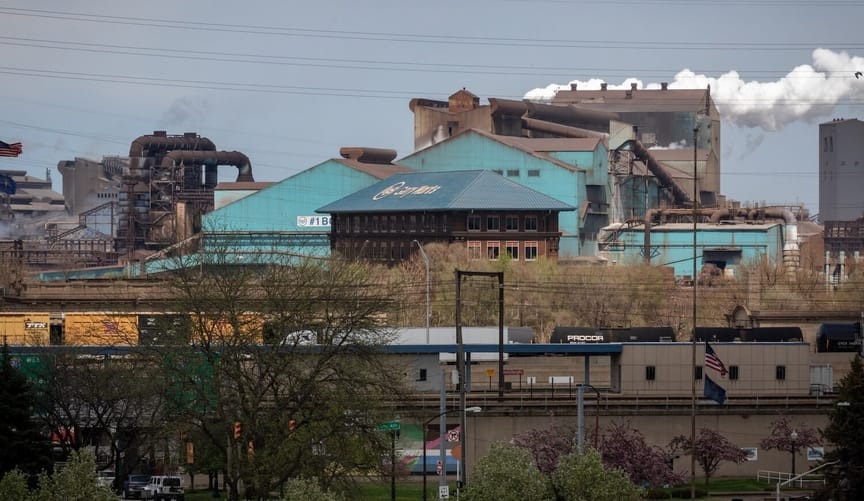
Steel mills in the region make the metal that’s used to build the nation’s cars, skyscrapers, appliances, and naval ships. For over a century, the hulking facilities have driven the region’s economy and employed many thousands of workers — while also spewing toxins and planet-warming gases from their coal-fueled furnaces. Today, the jobs are declining even as the pollution continues.
The U.S. Steel buyout and other developments could provide funding needed to not only clean up but also reinvigorate Indiana’s mills, experts say.
Here are four takeaways of where that transformation stands a year into the acquisition.
When Nippon Steel bought U.S. Steel in June 2025, the Japanese firm pledged to build new metalmaking capacity and to modernize the Pittsburgh company’s aging infrastructure, including Gary Works in Indiana, which has been running since 1908.
Nippon Steel isn’t the only foreign manufacturer investing in the U.S. The Korean steelmaker Posco is also in talks to partner with America’s second-largest steel company, Cleveland-Cliffs, which owns the other two mills in northwest Indiana: Burns Harbor Works and Indiana Harbor Works. Posco is separately investing in the nearly $6 billion lower-carbon steel plant that Korean industrial giant Hyundai is building in south Louisiana.
The Trump administration’s high tariffs on steel imports are a key reason why the conglomerates are expanding their presence stateside.
But they’re also looking to capitalize on America’s rising demand for high-value steel that meets the exacting standards for vehicles and electrical equipment, and which represents a more attractive market than the commodity steel that’s flowing out of China.
“The U.S. market is now becoming a proxy battle between three of Asia’s largest steelmakers,” said Roger Smith, a Japan-based expert at the nonprofit advocacy group SteelWatch. He spoke during an April panel that Canary Media convened at the Society of Environmental Journalists’ annual conference, held this year in Chicago.
“This is unprecedented,” Smith added. “The future of the industry may well be decided in Seoul and Tokyo.”
Northwest Indiana’s steel mills certainly need the infusion of funding.
The region’s industry has gradually dwindled over decades because of rising overseas competition, increased automation, and the growth of steel-recycling mills in other parts of the country. At its peak in the 1970s, some 65,000 people worked in the state’s mills. Today, it’s closer to 9,000 people, and the workforce is expected to keep shrinking without further investment, according to an April report by Indiana University.
U.S. Steel and Cleveland-Cliffs have both seen their revenues decline in recent years, and much of the companies’ coal-based capacity is in need of expensive repairs and upgrades.
For activists like Jack Weinberg, the foreign funding represents a chance to rebuild the local industry using modern, lower-carbon methods.
Weinberg is a former steelworker and the green-steel lead for Gary Advocates for Responsible Development in Indiana. He said during the Chicago panel that transitioning away from coal is crucial not only for improving people’s health and addressing climate change — but also for ensuring Indiana’s steel industry can continue operating in a rapidly transforming market.

Today, northwest Indiana is the country’s top producer of high-performance flat-rolled steel.
The region’s “integrated” mills operate in two stages: first, iron ore is heated in coal-fueled blast furnaces to make virgin iron, then the molten metal is processed in a separate furnace to produce steel. The ironmaking step is the main driver of carbon dioxide emissions across the global industry, which accounts for about 9 percent of total annual CO2 emissions.
By making virgin iron, the Gary, Burns Harbor, and Indiana Harbor mills have long held an edge over America’s 150-plus mills that melt down recycled steel scrap in giant electric arc furnaces. While steel recycling is comparatively less carbon-intensive, those facilities’ products haven’t traditionally met the performance standards required by the auto, military, and certain other industries.
Yet the long-standing lines between integrated and steel-recycling mills are starting to blur, in ways that don’t necessarily bode well for northwest Indiana, Weinberg said.
Consider, for example, U.S. Steel’s Big River Steel Works in Arkansas. The sprawling site includes four electric arc furnaces, which use a mix of scrap metal and virgin iron to produce auto-grade steel. For now, that iron comes from Indiana’s Gary Works plant. But in late April, U.S. Steel said it was building a $1.9 billion plant to make iron on-site at Big River Steel, an investment made possible by parent company Nippon Steel.
The Arkansas facility will use natural gas to convert iron ore into iron pellets through the “direct reduction” process. Gas-fueled direct reduction plants can emit about half the CO2 emissions of coal-based blast furnaces. However, companies could produce nearly zero-emission iron if they instead used green hydrogen — which is made with renewable electricity and water — though the concept has been slow to scale up globally.
In Louisiana, Hyundai’s steel mill will include a direct reduction plant that feeds iron into two electric arc furnaces, similar to the setup in traditional integrated mills. The Korean manufacturer initially plans to use natural gas to make iron for its automotive steel but has said it intends to, at some point down the road, switch to green hydrogen.
Weinberg and other northwest Indiana residents hope that the Asian steelmakers will similarly invest in modernizing the region’s aging furnaces. Otherwise, the mills risk becoming uncompetitive and closing down by the 2040s, Gary Advocates for Responsible Development said in a January report. (U.S. Steel, for its part, criticized the group’s findings in statements to the Chicago Tribune.)
“People put up with all the health problems associated with coal-based blast furnaces because they needed the steel and didn’t have any alternative,” Weinberg said. “How long is the country going to put up with this when a cleaner way is available to do the same thing?”
Lisa Vallee, who lives in Whiting near the Indiana Harbor steel mill, said during the panel that shifting to cleaner steel production would be “life-changing” for the region.
Replacing coal-based blast furnaces would curb air and water pollution, while building renewable energy projects, producing green hydrogen, and modernizing steel plants could deliver an economic boost, said Vallee, who is an organizing director for the grassroots group Just Transition Northwest Indiana.
“We have the [steel] facilities, we have a workforce, we have the lake — we have everything we need in northwestern Indiana to create green steel,” she said. “It’s just the investment we need to actually make it happen.”
The 1-GWh battery project in Ohio will help suppress power prices and reduce grid strain from a nearby data center hub. The region could use a lot more systems like it.
Just northeast of Columbus, Ohio, the leafy Main Street of New Albany gives way to lush green fields and agrarian ponds — but soon the countryside transitions into mile after mile of enormous white boxes that emit a low hum. This patch of former farmland has become one of the densest clusters of AI computing in the nation, recently joined by Intel, which is constructing a $28 billion computer-chip factory at the northern end of the industrial bloc.
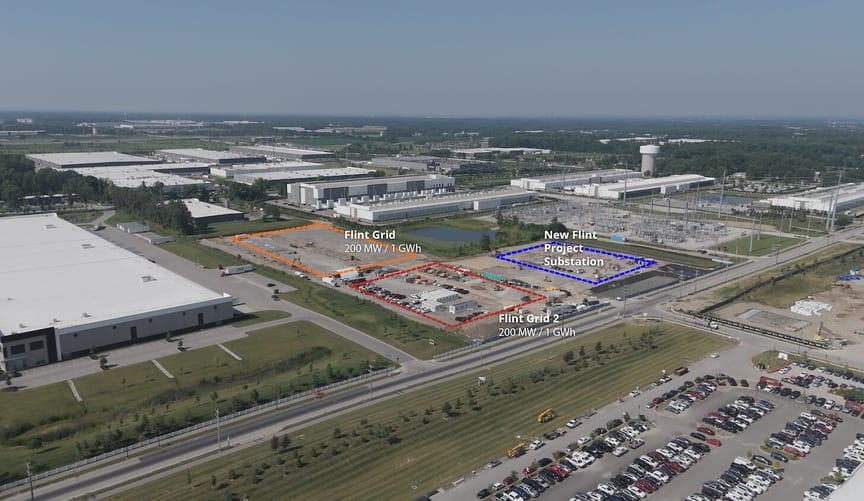
All of this requires a tremendous amount of electricity, but the area falls within the multistate market managed by PJM Interconnection, which has consistently struggled to bring new power plants online even as demand booms. The resulting power price spike has drawn the ire of both Republican and Democratic governors, who are demanding that PJM and tech giants figure out how to stop data centers from driving up costs for everybody around them. No less than the White House is pushing AI companies to “build, bring, or buy new power supply.”
A huge battery that just began construction in the heart of the New Albany computing cluster could model a way to accomplish that task.
Developer Eolian announced on Wednesday that it’s broken ground on its Flint Grid battery project. The first phase is due online by June of 2027, and will be able to inject 200 megawatts for up to five hours straight into an electrical substation that serves the computing hub. With 1 gigawatt-hour of storage capacity, this battery won’t just be the biggest on the 13-state PJM market; it’ll be the biggest battery east of the Mississippi.
The system will help lower electricity prices by charging up when energy is cheap and abundant and dispatching that stored power onto the grid at times of peak demand — exactly what big batteries have been doing for years in places like California and Texas.
“There are things that have been in progress for a long time, designed to solve these very problems,” said Eolian CEO Aaron Zubaty, in response to the “snowballing narrative” that the grid can’t keep up with demand.
Batteries have set new installation records in the U.S. year after year, swiftly becoming the nation’s top pick for on-demand capacity and beating out new gas plant construction. But construction has clustered in the West, and developers have struggled to make inroads in the Midwest or the densely populated Eastern Seaboard. However, now that those areas face tremendous AI data center growth, they could use the instantaneous power that massive batteries provide.
Eolian can deliver that in New Albany because the firm got started a decade ago, taking calculated risks that seem to have paid off.
“This isn’t just some random 200 megawatts,” Zubaty said. “This is 200 megawatts at the epicenter of one of the largest industrial buildouts ever seen in our country, and by putting it at this spot, it will actually allow more stuff to get built.”
Zubaty didn’t originally have Ohio top of mind for his clean energy ambitions. By the early 2010s, northern Virginia led the nation in data center density, and Zubaty wanted to develop solar farms near those major energy consumers. But he ran into obstacles finding enough land. Solar development had to contend with northern Virginia’s horse farms and suburban subdivisions, and further west from Dulles airport, you hit the Appalachian Mountains.
“Where do the mountains end? A little bit east of Columbus,” Zubaty said.
Central Ohio was already growing in population and economic vitality, Zubaty noted, anchored by a skilled workforce and The Ohio State University. And it had a lot of open space that could accommodate new growth if the titans of the internet wanted to branch out from northern Virginia.
“We started doing land research, looking at where we could build solar in proximity to the Columbus metro area,” Zubaty recalled. “Lo and behold, we stumbled upon a couple obscurely named LLCs that were buying up a bunch of land at substations, and it was Amazon.”
Amazon Web Services opened its first data center outside New Albany in 2016. That kicked off a frenzy of tech companies buying the larger parcels of land nearby. One smaller tract — with an old house, lots of foliage, and a small pond — got left behind in the land race as data center companies bought all the property around it. The owners agreed to sell to Eolian, which considered the acreage well suited for a battery plant.
Today, that house is gone, and the once-peaceful parcel is fully surrounded by looming warehouses filled with servers. Crucially, it abuts a substation owned by utility AEP that receives power from a high-voltage transmission line and feeds it to a lower-voltage line that loops through the data center region. That potent grid backbone is what makes it possible for the area to host so much computing — and gives the battery a means of charging up.

After securing the land, Eolian got to work on permits, interconnection to the grid, and approval from the Ohio Power Siting Board. At the time, PJM’s power prices were quite low, offering little incentive for companies to build new power plants, even as “we were watching this massive amount of data center development unfold at a really epic scale,” Zubaty said.
By 2025, Eolian was ordering transformers and other long-lead-time equipment, even though it lacked a deal to sell power to one of the many corporate customers operating nearby. In December, Zubaty had sufficient confidence in the project to bid it into PJM’s capacity auction, which would award contracts for power delivered for one year starting on June 1, 2027. The auction hit the maximum possible price, signalling that long-simmering demand had unquestionably outstripped supply in PJM.
That win started a clock ticking to build out the site, because “there’s a massive financial penalty to bidding and then not showing up,” Zubaty said. (Eolian also plans to add a second phase of the same size by 2029.)
Typically, power plant investors want to see decades of revenue commitments in order to finance construction. PJM, though, only offers one year of certainty for that capacity payment.
Eolian took the risk of building in the hopes that further contracts will materialize.
Now, it looks increasingly likely that one of the many hyperscalers in the area could sign a deal that lets it take credit for the battery project’s contributions to PJM capacity. This could offset that customer’s need to buy power at sky-high market rates, but it also may become necessary to operate at all.
Tech giants are under tremendous political pressure to figure out how to meet their electricity needs without burdening the power system overall, especially in PJM territory. The White House’s Ratepayer Protection Pledge has pushed leading AI companies to say they will cover their own energy costs. New York state recently froze data center construction for a year, giving itself time to make rules to prevent the development from driving up electricity costs, and other liberal states are considering similar measures.
Should hyperscalers look for a well-situated battery to help meet their needs, they won’t find many. PJM can’t wind back the clock and ask for more developers to have applied for grid connection and secured land near future AI hubs eight years ago. Nor is there any indication PJM will soon refine its rules to allow the kind of flourishing of batteries seen in Texas’ competitive wholesale market.
But once one developer shows it’s both possible and valuable to build big batteries in the region, the sheer pressure to meet the AI moment may carry more batteries through the impasse.
State lawmakers must decide whether to unlock $194M to fix aging school HVAC and plumbing systems or return it to utilities for a few dollars off monthly bills.
Should California spend nearly $200 million helping public schools install healthier and more efficient heating, ventilation, air-conditioning, and plumbing systems? Or should it send the money back to the state’s biggest utilities so their customers can pay roughly a dollar less on their monthly bills over the course of a single year?
That’s the choice that California lawmakers must make in the coming months.
The funds at stake are part of the California Schools Healthy Air, Plumbing, and Efficiency program, or CalSHAPE, which funds schools’ HVAC and plumbing repairs and upgrades. The state required its three big utilities — Pacific Gas & Electric, Southern California Edison, and San Diego Gas & Electric — to fill the initiative’s coffers with about $1 billion in fees collected from customers between 2020 and 2023.
Although much of that total has already been doled out, $194 million in CalSHAPE funds has been frozen since 2024 as state leaders debate ways to curb skyrocketing energy bills. Because current law sunsets CalSHAPE at the start of 2027, the leftover money will revert to utilities by year’s end without legislative action.
Clean energy and community advocates are pressing lawmakers to prevent that from happening.
They want leaders to leverage a sprawling budget-negotiating document, known as a budget trailer bill, to extend the looming deadline and to direct the California Energy Commission, which administers CalSHAPE, to disburse the money to schools — many of which have already identified projects they want to pursue. That includes replacing old AC equipment to keep students comfortable as climate change fuels extreme heat, improving air-filtration systems, and swapping fossil-fueled heaters for all-electric heat pumps that can both warm and cool buildings.
“The $200 million or so that’s sitting unused would help about 120,000 students in California electrify their schools, which would reduce their air pollution and give them access to air conditioning,” said Leah Stokes, an associate professor of environmental politics at the University of California, Santa Barbara. That work, she added, is “not optional — it’s to protect kids from extreme weather events, from climate change, from fires, from heat waves.”
Nine members of the state Assembly have signed a letter asking lawmakers who chair key budget committees to extend the CalSHAPE funds. Unless legislation is introduced to alter the current state of affairs, the final decision on whether the $194 million will remain available for schools or be returned to the utilities on Dec. 1 will be made in budget negotiations between lawmakers and Democratic Gov. Gavin Newsom. While a final budget package must be settled by July 1, budget trailer bills that modify state law to implement a broader budget agreement have until Aug. 31, the end of this year’s legislative session, to be completed.
CalSHAPE was created by a law passed in 2020 that aimed to make schools — especially those in underserved areas and “fenceline” communities near polluting facilities — more energy efficient, healthy, and resilient. It has since given out nearly $800 million to more than 1,000 projects, according to a 2025 report from the California Energy Commission.
But the agency abruptly closed further grant applications in mid-2024.
It said it closed the program to ensure that schools had enough time to fully spend their awards before the program’s sunset. But according to a March analysis from a state Senate budget subcommittee, the funding was frozen “in part because legislation and other departmental reports focusing on energy affordability proposed to revert CalSHAPE funds to ratepayers.”
That statement refers to Assembly Bill 3121, introduced in mid-2024 by Assemblymember Cottie Petrie-Norris (D), who chairs the chamber’s Utilities and Energy Committee, in consultation with the Newsom administration. The bill proposed clawing back CalSHAPE funding, along with grants for solar on low-income multifamily buildings and batteries for medically vulnerable households, in an effort to curb the state’s fast-rising electricity rates.
Critics of that plan pointed out that pushing that money back to utilities was likely to yield only $30 to $50 in one-time rebates for customers — an amount they said was too little to validate axing the programs. Those arguments won the day, with AB 3121 failing to advance.
Yet the CalSHAPE funding has remained frozen, and Newsom has continued trying to return the funds to utilities. That’s left schools stuck in limbo. Of the nearly 5,000 schools that received grants to conduct initial assessments — nearly half of which are in underserved communities — only 172 have secured follow-on funding to complete recommended HVAC work, according to the pro-CalSHAPE coalition.
“We’ve been working for two years to try to get this funding revived,” said Keith Butler, deputy superintendent of Torrance Unified School District, in Southern California. His district used $1.6 million in first-phase CalSHAPE funding to deploy carbon dioxide–detecting thermostats and to hire an engineering firm to identify about 300 buildings, serving about 6,000 students, that need to replace decades-old air-conditioning units, he said.
“We were ready to push the button on round 2,” he said — a $6 million investment in replacing those AC units with modern equipment — “and then the plug got pulled.”
The California Energy Commission told Canary Media in an email that it is working with schools to process the nearly $800 million in previously allocated funds, but that “unallocated funding is anticipated to be returned to ratepayers.” The agency declined to comment on pending legislative discussions. Petrie-Norris’ office did not respond to multiple requests for comment.
Returning the unspent $194 million wouldn’t make much of a dent in utility rates. According to the March Senate budget subcommittee analysis, redirecting the funds back to customers “would result in savings of $2 per month for one year for San Diego Gas & Electric ratepayers, $1.25 per month for one year for SoCal Edison ratepayers, and $0.20 per month for one year for Pacific Gas & Electric ratepayers.”
Utilities aren’t obligated to use any unspent money to reduce rates under the law that authorized CalSHAPE, Stokes added. “My fear is that utilities will just do their creative accounting and shuffle things around and take that as profit,” she said.
California isn’t the only state looking to curb energy-efficiency spending to offer short-term utility bill relief. Democratic lawmakers in Maryland, Massachusetts, and Rhode Island, for example, have recently proposed cutting back on energy-efficiency programs to reduce fees on utility customers’ bills. Experts warn that such rollbacks are shortsighted, since lowering energy use through efficiency helps customers save money on their bills and drives down utility costs in the long run.
Efficiency upgrades can also help states meet their climate goals. The California Energy Commission forecasts that the projects funded by CalSHAPE so far will reduce greenhouse gas emissions by 3,300 metric tons, equivalent to taking 770 gasoline-fueled cars off the road for a year.
For example, the Santa Paula Unified School District, in Ventura County, is using $3.9 million in CalSHAPE funds to replace fossil gas–fueled condensers and furnaces at an elementary school with all-electric heat pumps and air-conditioning systems, said Douglas Henning, the district’s facilities and construction manager. “Everything we’re replacing, gas is going away,” he said.
These retrofits have significant health and wellness impacts too, Stokes noted. Students often struggle to concentrate in classrooms that are too hot or cold, and older HVAC systems may not properly filter air pollutants, such as vehicle exhaust or wildfire smoke. Richard Bruns, a scientist at Johns Hopkins University, found that the long-term benefits of school HVAC upgrades — which come in the form of improved health and educational outcomes — outweigh the costs by a factor of 30.
HVAC retrofits can also reduce the burden that schools put on the power grid. Some California school districts are piloting advanced AC control systems to shift when they draw electricity to avoid increasing peak loads on grids during heat waves.
Reducing that strain could lower costs for everyone by reducing the amount of money that utilities have to spend to upgrade their power grids. “Ratepayers will benefit from lower peak demand and lower environmental drag from using less electricity,” the Torrance district’s Butler said.
In an interesting twist, the ongoing dispute over CalSHAPE funding intersects with another controversial energy issue before the California legislature: what to do with the state’s biggest virtual power plant program.
Lawmakers are now haggling over whether to extend funding for that Demand Side Grid Support program or whether to close it down and redirect the funds to utility-managed VPP programs, which have been far less effective at delivering grid relief at an equivalent cost. The Newsom administration has proposed shifting roughly $70 million in interest generated by the CalSHAPE funds to the utility-run programs.
Stokes is among the advocates pushing to redirect that $70 million to the Demand Side Grid Support program, even as she works to retain the $194 million for school retrofits.
In both cases, Stokes said, the choices are to spend money as lawmakers originally intended or to give it back to the state’s politically powerful utilities. “The idea that we would rob from schoolkids to hand another blank check to utilities is to me unacceptable,” she said.
California, Massachusetts, and several other states are home to robust charging networks and strong consumer incentives that make it easy to go electric.
America’s EV industry has suffered a series of bad breaks over the last year and a half.
The end of federal tax credits for electric vehicles sent sales of new EVs off a cliff last fall. A nationwide buildout of chargers has been slow to get rolling. And the Trump administration has been dismantling air pollution regulations that were nudging the country away from gas cars.
But in the absence of a federal push for EVs, several states have been picking up the slack by building strong charging networks, introducing consumer incentives, and adopting other policies that make going electric a sweeter prospect.
A new analysis from the Brookings Institution dives deep on what makes a state an EV oasis, and scores states based on how far they’ve gone to promote vehicle electrification. At the top of its ranking? It’s a tie between California and Massachusetts, both of which scored 11 out of 13 possible points for overall EV readiness.

Massachusetts, New York, and Connecticut, meanwhile, have three major incentives to encourage average drivers to buy EVs: purchase rebates or tax credits, benefits like toll credits or parking perks, and no annual EV registration fees.
What about charging? Massachusetts and New York are the winners here, as they both have robust public charging networks, rebates that help people install chargers, and special utility rates for charging.
And yet Massachusetts still has room for improvement, according to Brookings. For one, EV manufacturers aren’t allowed to service vehicles in the state, which also lacks a plan for building out EV-charging infrastructure. As for California, the state’s annual registration fee for EV owners and lack of special utility rates for charging are weak spots.
At the other end of the spectrum, six states — Indiana, Louisiana, Montana, Ohio, Nebraska, and South Dakota — don’t have a single policy in place that’s getting them ready for an EV future, according to Brookings. Nineteen more have just a few EV-boosting policies on the books. Clearly state action alone won’t be enough to propel the entire U.S. toward a cleaner driving future.
Coal plants forced to stay open aren’t producing much power
The Trump administration has effectively stopped fossil fuel power plants from retiring on its watch, despite the strategy providing little benefit to the power grid and racking up hefty costs.
Six power plants, five burning coal and one burning oil and gas, had been slated to retire by the end of 2025, but were instead ordered to stay running to prevent what the administration called an “energy emergency.” At least one of those coal plants hasn’t operated at all under the emergency order, and another ran for only about two weeks, according to federal data reviewed by Utility Dive.
Altogether, the five coal plants produced just 1.5 million megawatt-hours of power during the first quarter of 2026, down 65% from what they generated during the same period last year. At the same time, the plants have racked up hundreds of millions of dollars in costs that could end up coming out of utility customers’ pockets.
Hyundai is building a massive steel mill in Louisiana. Will its neighbors benefit?
Hyundai’s plans to build a steel and iron plant in Louisiana could drive a clean revolution — or add yet another polluting factory to an area already known as “Cancer Alley.”
Canary Media’s Maria Gallucci recently visited the rural stretch between New Orleans and Baton Rouge where Hyundai is building a massive facility that will produce steel for automaking. At first, the plant will use natural gas to melt iron into steel — already a lower-carbon alternative than the coal that powers aging steel mills in the Midwest. But Hyundai has said it may later power its furnaces with hydrogen made from renewable electricity.
In the nearby city of Donaldsonville, residents and local leaders told Maria they’re skeptical Hyundai will actually follow through. They’re already surrounded by petrochemical facilities and oil refineries, and worry this latest factory won’t be any better for residents’ health or job prospects.
Read Maria’s thorough take on a complex story to learn more about the perils and promises of Hyundai’s green steel plans.
Nuclear ball out: The Trump administration announces $17.5 billion in loans to spur the development of 10 large nuclear reactors, with aims to begin construction by 2030 and get plants up and running in the next decade. (Associated Press)
Pumped-up home sales: A new report finds that installing an all-electric heat-pump heating and cooling system can increase a home’s resale value — as long as the appliance is mentioned in the real estate listing. (Canary Media)
Raising the roof: Warehouse roofs could be the perfect place to build solar arrays that can bring low-cost clean power to communities that can’t install their own panels, but states and utilities first need to do more to promote these community solar projects. (Canary Media)
Slated for takeoff: Jeff Bezos–backed EV startup Slate Auto says it has more than 180,000 reservations for its low-cost, bare-bones electric pickup, and customers now have a chance to preorder a vehicle with a $300 deposit. (Axios)
A data center surprise: The House Energy and Commerce Committee’s top Democrat, Rep. Frank Pallone, unexpectedly calls for a nationwide moratorium on data center development as Congress crafts legislation to protect household utility bills from spiking because of data centers’ massive power demands. (E&E News)
For years, heat pumps have outsold gas furnaces in the U.S. — and now the superefficient appliances are coming for conventional ACs, too.
Summer is officially here — and more Americans than ever are cooling their homes with heat pumps.
A decade ago, two conventional air-conditioning systems were sold for every one heat pump. Now, heat pumps are on the verge of outselling standard ACs.
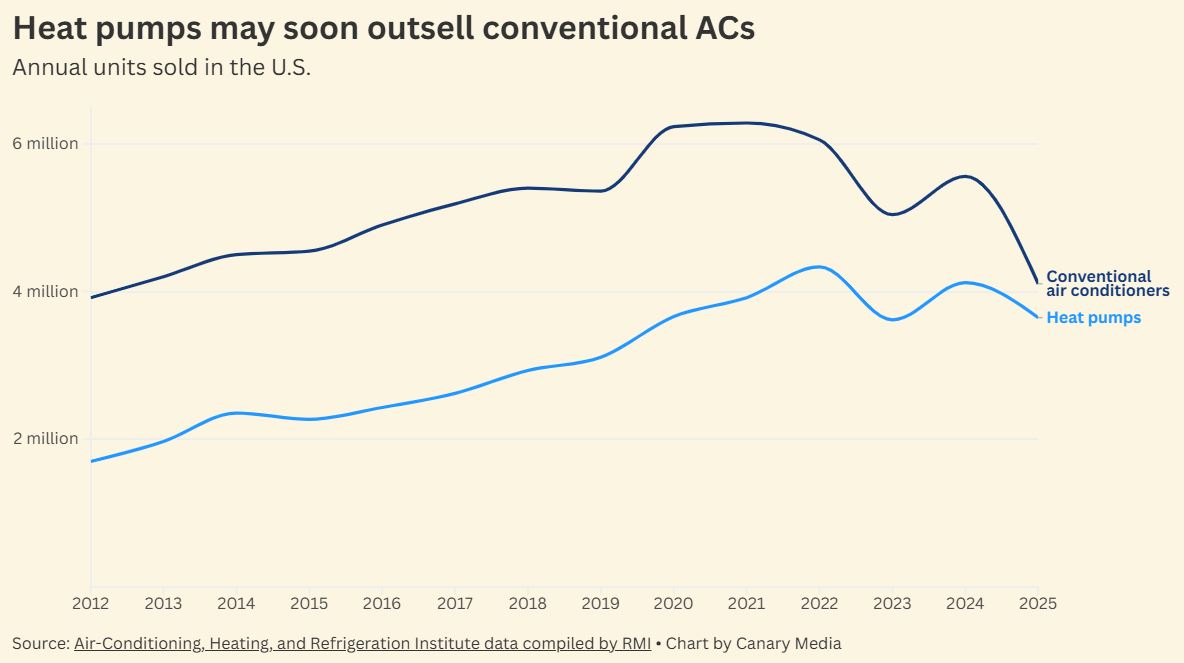
In 2025, sales of the appliances were basically tied — and heat pumps even beat air conditioners in September, a first. Through April of this year, the already-slim gap has narrowed further. Compared with the same period last year, heat pump sales are up by about 1%, while AC sales are down by nearly 8%, according to data from the Air-Conditioning, Heating, and Refrigeration Institute, a trade group.
Heat pumps are essentially reversible ACs: The same unit both heats and cools a space. They’ve long been popular in more moderate climates, like the U.S. South, but in recent years their cold-weather performance has improved, and they’ve caught on in more frigid regions, too. Heat pumps have outsold gas furnaces for four years now.
It’s a big deal that more buildings are being outfitted with heat pumps. Heating is one of the largest sources of carbon emissions in the country, and heat pumps, which are two to four times more efficient than fossil-fueled systems, offer a much cleaner way to keep a space warm. The fact that they also cool homes is a climate benefit in its own right, as extreme heat makes air-conditioning a necessity rather than a luxury.
Many states, municipalities, and utilities have incentivized the adoption of the energy-efficient, zero-emissions technology.
Sometimes these incentives come in the form of direct rebates. Other times they manifest in wonkier places, like pro-electric building codes or preferential electricity rates for homes with heat pumps. Some states, like cold and snowy Maine, have even set — and exceeded — explicit adoption targets. (For a few years, the federal government offered incentives for the appliances, too, but President Donald Trump and congressional Republicans repealed those last year.)
All of this goes to explain why the gap is closing between conventional ACs and heat pumps — and why, soon, the efficient two-way tech will overtake the old-school systems.
Earlier this year, the House proposed $1B in cuts to the state’s nation-leading efficiency program. The Senate rejected that idea in a sweeping new energy bill.
The Massachusetts Senate on Wednesday unveiled its long-awaited energy legislation, a wide-ranging bill that touches on dozens of topics from plug-in solar to renewable energy procurement. Sponsors say the measures could save consumers some $14 billion over the next 10 years.
Perhaps most notable, however, is what isn’t in the 150-page bill: The Senate left out an extremely controversial $1 billion cut to the state’s nation-leading energy-efficiency programming found in the House version.
“It’s huge,” said Larry Chretien, executive director of Green Energy Consumers Alliance, an advocacy group in Massachusetts and Rhode Island. “We were very upset when the House did it, and we are equally as happy now that it’s not in the Senate bill.”
The House’s proposed $1 billion cut represents about 22% of the three-year, $4.5 billion budget for Mass Save, the state’s energy-efficiency program, which provides rebates and incentives for insulation, weatherization, and efficient appliances. But the impact would be more severe than those numbers suggest: By the time the bill was implemented, the current energy efficiency plan would be nearly two-thirds complete. The cuts would come almost entirely from the final year’s programming, essentially bringing it to a standstill, advocates said.
Proponents of the cuts argue they are necessary because they offer a direct way to reduce utility bills in Massachusetts, which has some of the highest energy costs in the nation. But climate, consumer, and housing advocates said the cuts would offer only minimal relief to consumers in the short term.
Money spent on Mass Save now yields significant benefits down the road. From 2016 to 2024, Mass Save’s investment of about $8 billion in energy efficiency prevented some $16 billion in increased energy costs, according to an analysis from climate nonprofit Acadia Center. That’s even before public health and environmental benefits are considered.
“This is a program that is cost-effective, and it saves ratepayers money, even if they’ve never used the program,” said Kyle Murray, Acadia Center’s director of state program implementation.
There’s still no guarantee that funding will be preserved. The full Senate is set to debate the bill on July 1. The House and Senate will then have to hammer out the differences between their versions, leaving room for cuts to make it into the final proposal.
However, Democratic Sen. Michael Barrett, chair of the Joint Committee on Telecommunications, Utilities and Energy, and a major voice on climate and energy issues in the legislature, said there is little appetite for any Mass Save cuts among his colleagues.
“The Senate doesn’t want any of it gone,” he told Canary Media. “We think our constituents can tell the difference between a cost and an investment.”
The bill also proposes a range of measures intended to chip away at the thorny problems driving up energy costs in the state.
“This is a process where $100 million here and a $100 million there adds up after a while,” Barrett said. “You have to go after all the sources of overspending and overcharging in these big complex systems.”
One provision would allow individual cities and towns to ban competitive electric suppliers, companies that have often used questionable means to sign up customers for expensive contracts they don’t fully understand. Other measures would authorize the use of plug-in solar systems, allow money from the Regional Greenhouse Gas Initiative’s cap-and-trade auctions to be used for EV incentives, and stop utilities from passing on certain promotional and lobbying costs to customers.
The bill would also phase out the Gas System Enhancement Program, an initiative that allows natural gas companies to recover their costs more quickly for repairing aging and leak-prone gas pipes. These expenses are passed on to consumers over fewer years, which means higher fees on each bill, an approach that doesn’t make sense anymore, Barrett said.
“We don’t think we should have to pay bonuses forever to a system that is supposed to keep us safe for the regular prices,” he said.
This latest bill has its origins in legislation that Democratic Gov. Maura Healey proposed in May 2025. Her package, which she contended would save residents some $10 billion over 10 years, had a hearing in June that year, but went no further.
Many of the ideas it included were revived in the fall, in a bill sponsored by Democratic Rep. Mark Cusack. His bill echoed many of Healey’s proposals but also included provisions he said were needed to rein in soaring energy costs. He proposed reinstating rebates for natural gas heating systems, making the state’s 2030 emissions-reduction target nonbinding, and slashing energy-efficiency spending by $330 million through the end of 2027.
Climate and consumer advocates immediately and adamantly opposed the measure, saying a cut of that size would eviscerate Mass Save without offering consumers any meaningful savings, now or in the future. Still, the bill advanced to the House Ways and Means Committee, where the proposed cut to efficiency programming was tripled in a proposal released in February, much to the dismay of opponents.
The new Senate version, supporters said, takes a deeper dive into some of the less obvious cost drivers, rather than looking for a big, simple answer.
“Everyone wishes there was a switch they could flip to make energy prices get cheap,” Acadia Center’s Murray said. “That’s not how it works.”


.svg)
