

 Back
Back
In the late 20th century, a handful of countries — led by Brazil and the United States — turned to liquid biofuels to reduce their dependence on foreign oil markets, producing transport fuels from cheap crops instead.
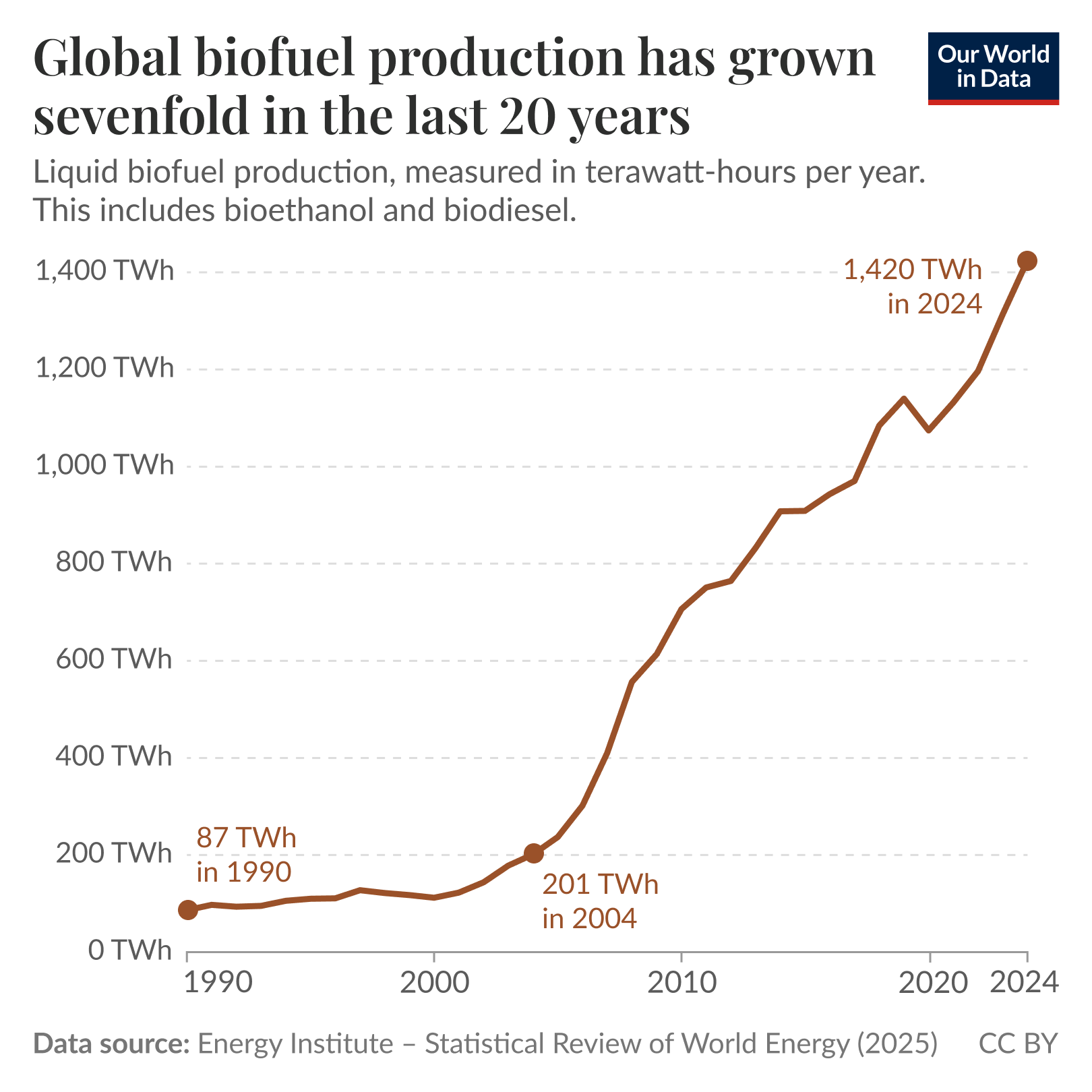
In the early 2000s, interest in biofuels ramped up sharply, and not just in the Americas. They came to be seen as a leading method to decarbonize road transport. This was because today’s alternative to the combustion engine, the electric car, was still far too expensive.
Over the last two decades, global liquid biofuel production has grown sevenfold, as the chart shows.
Electric vehicles are now far cheaper and, in some places, cost-competitive with petrol cars, so biofuels are no longer seen as the central answer to low-carbon transport.
Yet, the world produces more of them than ever, and this is expected to grow over the coming decade, largely due to fuel standards and national policies that have promoted them.


.svg)
