

 Back
Back
WESTERN MACEDONIA, Greece — For more than a decade, Lefteris Ioannidis had been saying what no one wanted to hear: Coal is dying, and it’s time to prepare for what comes next.
He could see the writing on the wall while serving as mayor of Kozani, the largest city in Western Macedonia, even as other local politicians wanted to build new power plants and dig more coal from the region’s sprawling mines. The president of the coal workers’ union said Ioannidis was dead wrong.
But coal production had been sagging since the early 2000s. The power plants were getting too costly to run, thanks to new pollution rules. And extracting and burning the fossil fuel — which in Western Macedonia is mined in vast open pits that over the decades have destroyed homes, entire villages, and lives — was clearly incompatible with the European Union’s vision for a green future.
Still, even Ioannidis didn’t believe Greece would abandon coal so soon.
Just over a decade ago, more than half the country’s electricity was produced by burning through mountains of lignite, the lowest-grade form of coal. Now, if all goes according to plan, Greece aims to shutter its last two coal-fired power plants next year and stop producing coal from most of its mines, including one that is among the largest in Europe. In coal’s place, the country is building clean energy — mostly solar — at a feverish pace.
Western Macedonia, a landlocked and sparsely populated region far north of Athens and the iconic whitewashed buildings of the Cyclades islands, is at the center of this rapid transition.
The region sits atop the biggest lignite deposits in Greece. Over the course of six decades, the once state-owned PPC Group pulled hundreds of millions of metric tons of coal from the area’s soil, producing thousands of jobs and eventually most of Greece’s electricity — along with devastating environmental and health consequences.
Today, things are changing. Blue-black lakes of solar panels shimmer across the valley floor, busily converting the bountiful Greek sun into clean energy, while others wait to be plugged into the grid. The installations stretch to the edges of quiet mines and surround idled power plants. Lonely plumes of steam escape from the cooling towers of the few coal units that remain online, wavering in the wind like white flags of surrender.
Soon, PPC will complete the construction of 2.1 gigawatts of solar in Western Macedonia, erected mostly on top of remediated coal lands. It will be the largest cluster of solar panels in Europe. Most of it was built within the last 12 months.
The success of the region’s energy transition is undeniable. But so too is the failure to build an economy for the post-coal era. Even though Greece announced back in 2019 that it would eliminate coal, uncertainty reigns over Western Macedonia’s future, and the region remains wracked by poverty and unemployment.
“We had an economy dominated just from coal, and everybody knew that the coal would have to end,” said Ioannidis. “But nobody did anything to prevent the disaster. It’s like the Titanic — everybody dancing on board, but the disaster is coming.”
Most of PPC Group's massive solar cluster in Western Macedonia was built recently, as is visible when comparing satellite imagery from October 2024 to April 2025.
The situation underscores an urgent question as 17 other European nations work to eliminate coal over the coming years: How can a country do what’s right for the planet without wronging the people who depend on fossil fuels for jobs?
The European Union is searching for answers: In 2021 it created a €17.5 billion fund “to ensure no one is left behind on the road to a greener economy.”
The following year, Greece became the first country to have a just-transition plan approved by this fund. But to date, only a sliver of the nearly €1 billion allocated specifically to Western Macedonia has trickled into the impacted communities. There’s not yet a large-scale flagship project in operation — something to demonstrate what a world without coal might look like.
Ioannidis says the lack of progress is unacceptable, the result of a top-down, Athens-led approach that has left little room for the locals to shape their own destiny.
“The main path is to create a bottom-up strategy,” he said. “But I’m not optimistic. I’m not waiting for anything from the government. For them, Western Macedonia is only a very small part of Greece. … Anything outside Athens, it’s not a priority.”
This sense of fatalism hangs over the region like smog. Frustrated by the lack of progress, many residents are leaving in search of better prospects.
It’s a devastating feedback loop: Every working-age resident who pursues a job in Athens or Thessaloniki, every young person who goes off to university and never returns, is one less person to help wrest Western Macedonia from the quicksand of its dirty past. The task of inventing the future becomes harder with each departure — and the sense that it is possible to do so becomes that much more remote.
On a warm Sunday evening in September, every bench in Plateia Nikis, Kozani’s main plaza, was full.
Conversation rose from the tavernas that line the west side of the plaza. Groups of teenagers roamed the pedestrian-only street that feeds into the plaza from the south, pushing one another around and giggling their way into one of several nearby arcades. A child kicked a soccer ball in the plaza’s center and suddenly 10 more appeared; a game began. Another cut across the match, running not after the ball but to hug her grandmother, whom she had spotted from across the way. An elderly couple sat next to me on a bench, and the man offered me a cigarette. I declined politely in Greek, and together we watched silently as the fading sun painted the Kozani clock tower gold.
Just blocks away, the atmosphere was far less vibrant. As I walked away from Plateia Nikis, the bustling shops and cafés gave way to empty storefronts, their smudged windows covered in white paper signs with big red letters that read “ΕΝΟΙΚΙΑΖΕΤΑΙ” — “for rent.”
Outside a bar on one of these side streets, I met up with Sokratis Moutidis, the longtime editor-in-chief of Chronos Kozanis, Western Macedonia’s oldest newspaper. He and two other residents who sat with us explained that these quiet streets were once home to nice shops.
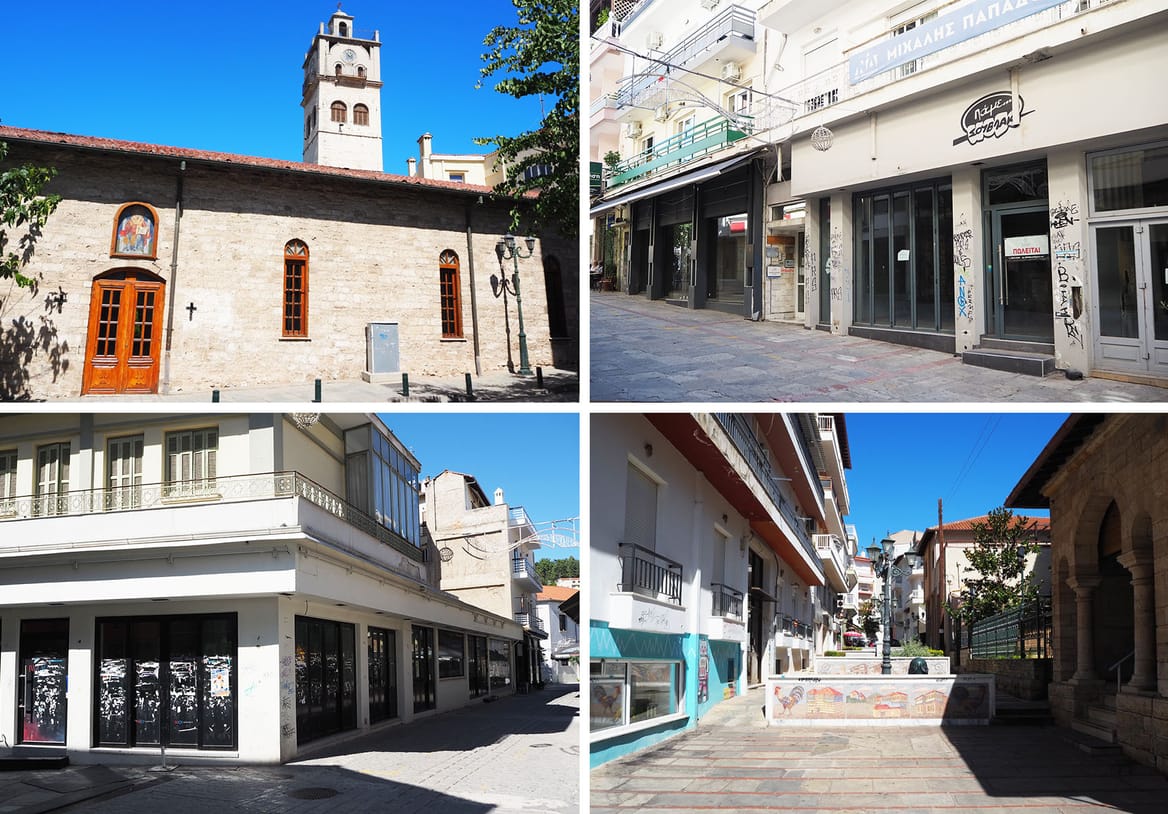
The contrast illustrates how Western Macedonia is struggling to adapt to the end of coal, its core industry for over half a century.
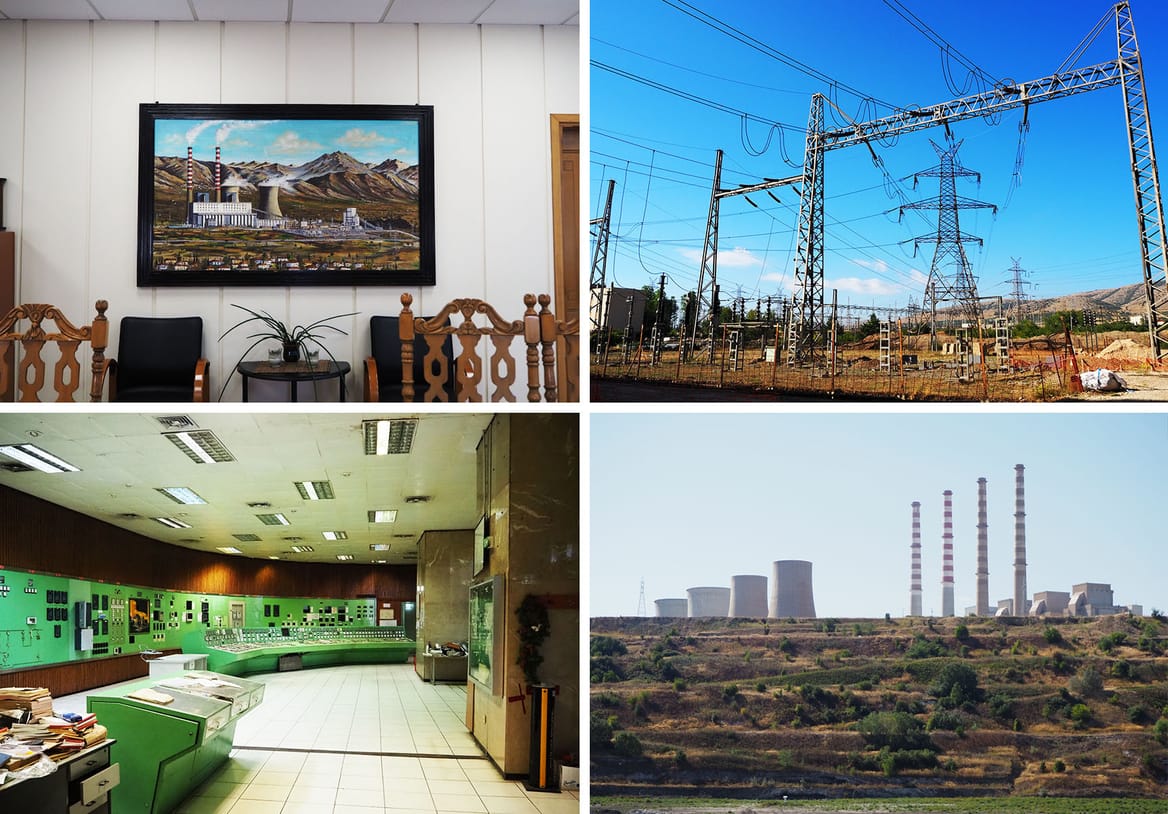
Then entirely state-owned and known as the Public Power Corporation, PPC opened its first major lignite power plant in 1959, perched on the edge of a coalfield located about 15 miles north of Kozani. Its smokestack jutted from the valley floor, a symbol of Greece’s rapid modernization; it was the tallest structure in the nation upon completion.
In the decades that followed, PPC built a total of 15 coal-fired units across the region, which provided over 70% of Greece’s electricity at its high-water mark. (The newest one, Ptolemaida 5, was brought online in 2023 — four years after the country decided to eliminate coal — at a cost of nearly €2 billion. PPC will convert it to gas by 2028.) Western Macedonia’s mines swelled in step with its coal fleet, and by the early 2000s Greece was the world’s fourth-largest producer of lignite.
Coal created not just jobs for miners and engineers but also a bustling secondary economy of mechanics, truck drivers, and lunch-spot proprietors. As much as 20% of the working population was employed directly or indirectly by the sector, according to a 2020 World Bank study. Lignite generated a whopping 42% of Western Macedonia’s gross domestic product.
But as soon as world leaders signed the Kyoto Protocol in 1997, awakening at last to the reality of climate change, the clock started ticking, Ioannidis said. It became inevitable that someday time would run out for coal — in Western Macedonia and beyond.
The only question was when.
As mayor of Kozani from 2014 to 2019, Ioannidis was not content to wait around for an answer. In 2016, he organized the city’s first public discussion about life after lignite. He also convinced the World Bank to visit the region in order to create a road map for how it could move beyond coal.
But by the time the World Bank recommendations came out in 2020, the post-lignite era was already hurtling toward Western Macedonia. The year before, just months into his first term, Greek Prime Minister Kyriakos Mitsotakis had stood before the United Nations Climate Action Summit and pronounced that Greece would “close all lignite power plants, the latest by 2028,” an inspired target for a country in which the industry was so deeply entrenched. That timeline has since been accelerated to 2026.
“We lost many decades to understand the problem, to realize the problem,” said Ioannidis. “Now we don’t have time.”
Though Mitsotakis’ announcement was couched in soaring rhetoric about the imperative to deal with climate change, it was ultimately long-simmering regulatory and economic forces that brought lignite to its knees.
In 2005, the EU launched the Emissions Trading System, a cap-and-trade program that puts a price on carbon dioxide emissions. The scheme hit lignite especially hard because it emits more than other forms of coal do. Five years later, the EU clamped down on air pollution from industrial sources. Meanwhile, the cost of natural gas, wind, and solar power began to plummet. These trends converged, and as the region’s carbon price slowly crept up, the profitability of PPC’s lignite plants went down.
Still, the phaseout came as a surprise.
“In Greek, when we want to say we are in shock, we say ‘Our legs were cut,’” said Ioannis Fasidis, a 44-year-old coal miner and power plant worker who is now president of Spartakos, a major union of PPC workers, via Moutidis, who translated. “It was a shock.”
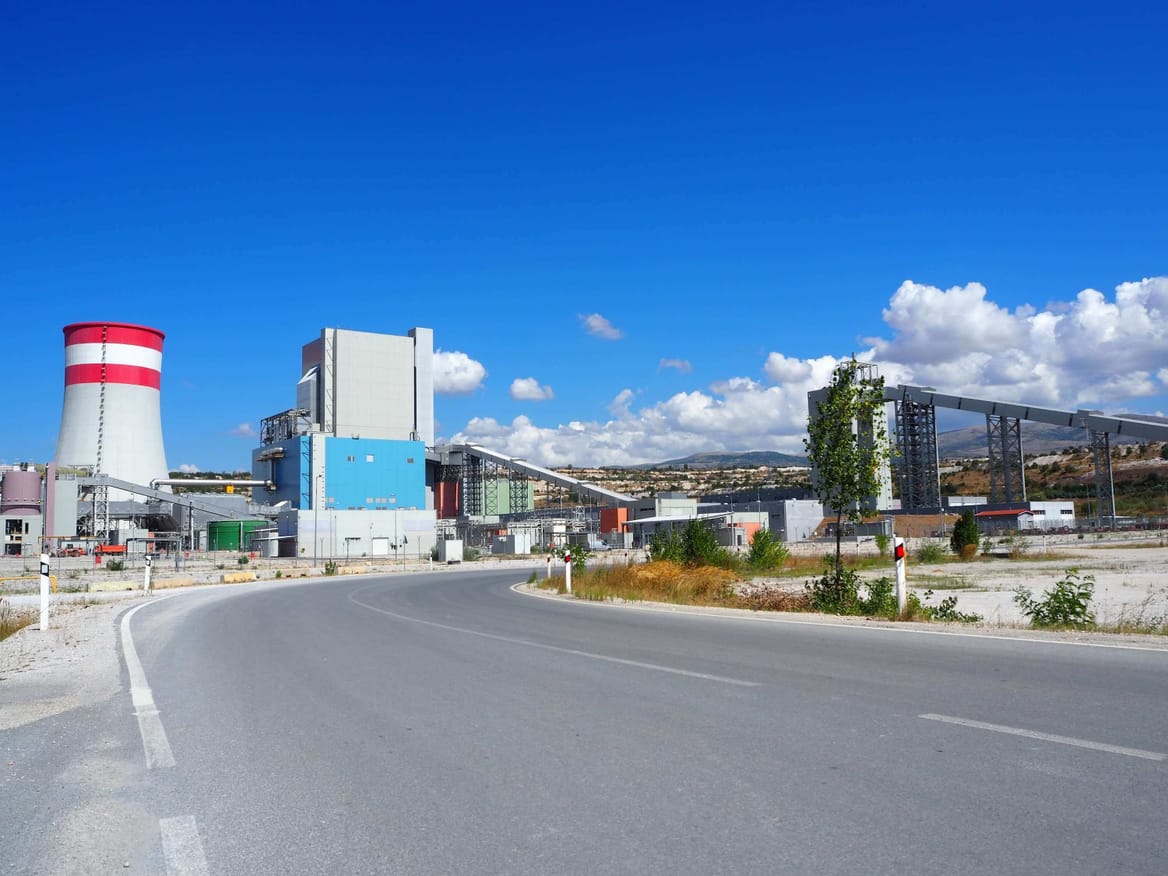
That shock is still reverberating throughout Western Macedonia.
No region in Greece, itself a shrinking nation, is losing people faster. Between 2011 and 2021, the year of the most recent census, Western Macedonia lost 10.3% of its population. It has one of the highest youth unemployment rates in Europe: In 2023, more than one-third of young people there were out of work, compared with nearly 22% nationwide and 11% across the EU.
The future of Western Macedonia, it feels, is slipping away — even as the region drives the increasingly ambitious Greek energy transition forward.
In April, Mitsotakis and PPC Chairman and CEO Georgios Stassis stood outside the decommissioned Kardia power plant and unveiled a €5.75 billion “green” vision for Western Macedonia.
Some of that plan is already underway — namely PPC’s colossal solar installations and the company’s work restoring already inactive mine lands. But it also included more aspirational proposals, like turning two lignite mines into pumped hydroelectric facilities and converting Ptolemaida 5 to a hydrogen-ready gas-burning facility. In total, PPC says the plan could create up to 20,000 construction jobs and 2,000 permanent jobs.
“If we wanted to be very fast in phasing out coal and developing renewable energy — and mostly solar — we had to leverage all of the weapons in our armory. There, we owned the land, we had space. We owned the grid connections,” explained Elena Giannakopolou, the chief strategy officer of PPC. “That’s why Western Macedonia was such a special place for us. It was our vehicle to the new day.”
I could see that new day dawning when I visited PPC’s expansive Western Macedonia facilities in September.
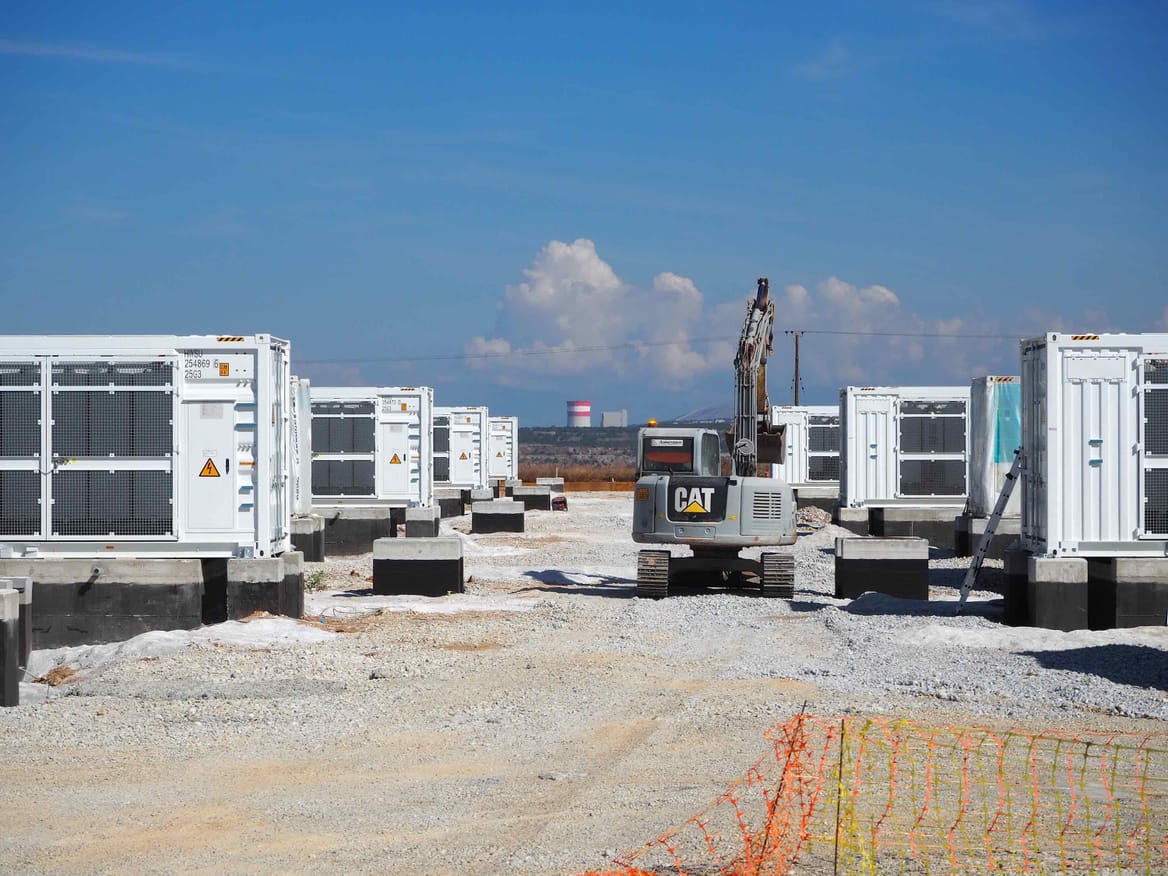
Immediately outside the silent turbine hall of the former Kardia power plant, whose four units were shut down between 2019 and 2021, electric boilers now sit to help heat Kozani’s buildings during the city’s chilly winters — a job previously done by the lignite plants. Across the street, construction was newly underway on a gas-fired thermal plant that will also help with heating. Five minutes up the road, PPC’s first-ever grid battery facility was being built. The red-and-white cooling tower of Ptolemaida 5 stood in the distance.
A short drive away was the Kardia mine, which once fed piles of lignite to the units of the power plant that shares its name. From within the mine, some PPC engineers explained how the great crater will gradually fill with rain and groundwater and be repurposed as a pumped-hydro station, an old-school form of energy storage that harnesses gravity to squirrel away electricity. Already, a deep blue pond sat on the mine floor as if to suggest the future.
Past the Kardia complex, fields of solar panels stretched so far that when I looked out from among them, I could see only the region’s most striking features in the distance: the occasional coal excavator rising like a skyscraper; the towers of the half-dead, half-alive Agios Dimitrios coal-fired plant; and the mountain peaks that ensconce the Ptolemaida basin, the physical delimiters of a region whose fate was determined by geological machinations long ago.
PPC’s rapid transformation from a lignite giant to a “powertech” firm that develops clean energy and gas is a microcosm of Greece’s energy transition more broadly.
Earlier this year, the country increased its renewable energy targets under its EU-mandated National Energy and Climate Plan. Previously, Greece aimed to get 66% of its electricity from renewables by 2030 — a figure it flirted with this spring. Now it’s targeting 76%, and the virtual elimination of fossil fuels from its grid by 2035. (PPC, meanwhile, says it will see its emissions plummet by a staggering 85% between 2019 and 2028.) Mitsotakis, whose country was once singled out as a laggard on clean energy, is now taking to the Financial Times’ op-ed pages to lecture other nations on “golden rules” for the green transition.
Made with Flourish • Create a chart
For all the progress on renewables, however, fossil fuels are not yet in the country’s past.
Natural gas, that pesky “bridge fuel,” is on the rise in Greece. Once a comparatively small part of the Greek grid, it provided nearly 40% of the country’s power across 2024. The nation has opened major import infrastructure for liquefied natural gas, positioning itself as a hub for Europe, and is proudly courting Chevron and Exxon Mobil to explore for the fossil fuel off the coast of Crete.
Some influential groups are also pushing to keep burning coal.
One prominent example is the coal workers’ union led by Fasidis. We met at a shady café on a hot afternoon in Kozani, and Moutidis, the local journalist, translated. A serious but not unfriendly man, Fasidis brought his two preteen daughters along, who chimed in occasionally when Moutidis was stuck searching for a word.
Fasidis is in active negotiations with PPC about the future of his roughly 1,800 mine and power plant workers. Though he welcomes the company’s new investment plan, he was clear on what the union really wants.
“Our main goal is for lignite, coal, to be alive,” he said. “This is the main demand of the union.”
He clarified that it is “not an economical point of view” but rather one based on energy security concerns. Greece imports all the natural gas it consumes; lignite remains its core domestic fossil fuel. This fact offered Fasidis and his workers a brief reprieve three years ago, after Russia invaded Ukraine and spurred the worst European energy crisis since the 1970s oil shock that pushed Greece to embrace lignite to begin with.
“But it’s not realistic today to talk about lignite,” said Ioannidis, who later pulled up a chair and joined the conversation with Fasidis — a man he had clashed with as the mayor soothsaying the end of coal.
“Lignite is a dead man,” Ioannidis concluded.
That reality was hard to forget even when I stopped by the Agios Dimitrios power plant during my tour of PPC’s energy complex.
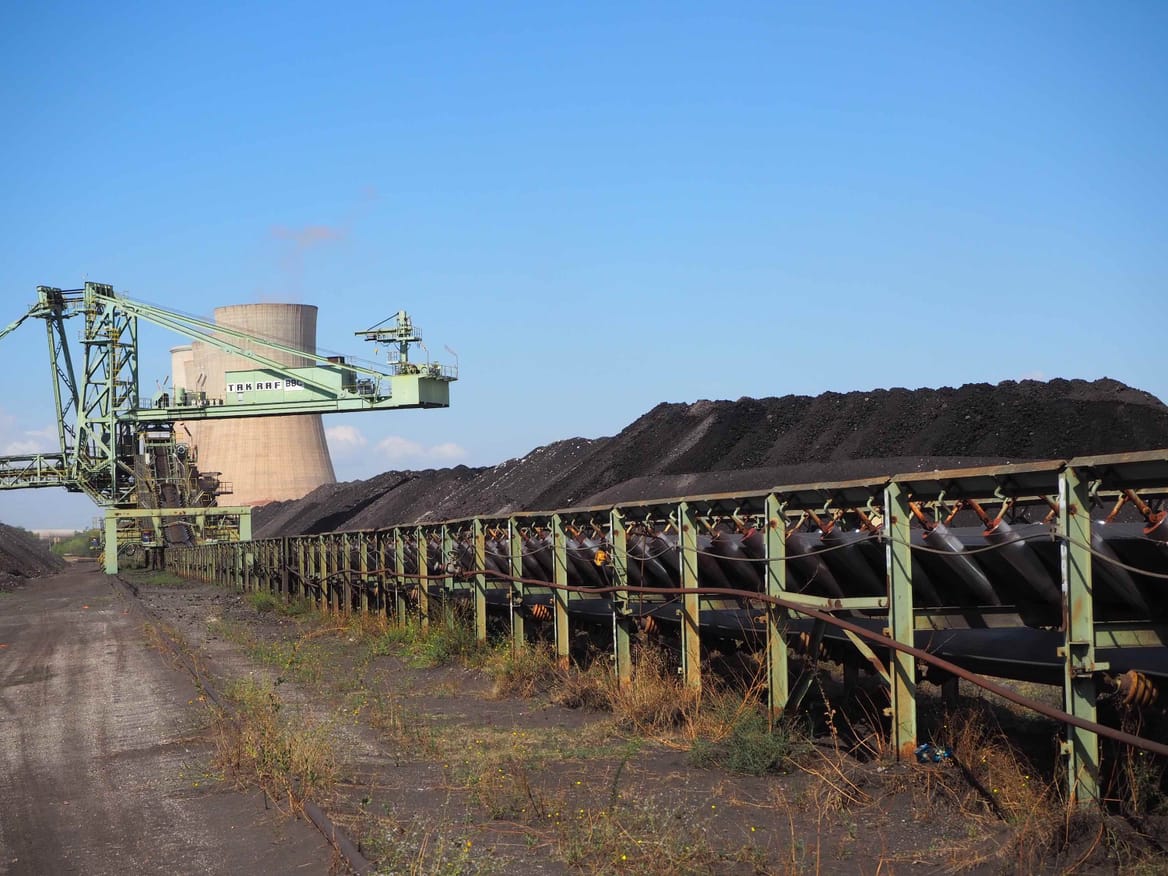
In the hulking facility’s coal yard, I was surrounded by screeching conveyor belts carrying lignite, and my eyes watered and nostrils stung from the caustic swirls of coal dust. But I could also see some telling graffiti spray-painted on one of the power plant’s cooling towers. A decade ago, activists had climbed the steel structure and left behind a message: “GO SOLAR” — a message that now, with all the challenges it brings, the region is heeding.
But for all the clean energy being built in Western Macedonia, the boom is creating little wealth for the people who live there.
Konstantinos Siampanopoulos, a 34-year-old resident of Kozani, is a case in point.
Siampanopoulos is a restless entrepreneur. Details of venture after venture dribbled out as we spoke over meze at a Kozani taverna. There’s the fur clothing brand he founded, the accounting firm he runs, and, most recently, a facility where locals can play the squash-like racquet sport padel.
Siampanopoulos is also a longtime investor in renewable energy, one of the few locals who managed to get in early on the region’s solar boom. In 2010, he and his father developed their first solar installations. In partnership with other investors, their portfolio grew to 16 megawatts, including some small hydropower projects. But as the country has become awash in solar, he told me, what was once a prescient and profitable bet has soured.
Holding up a phone displaying the real-time market dashboard from Greece’s grid operator, he showed me the problem for small investors. “Tomorrow, the price is zero. It’s zero for many hours,” he said. “We signed the contract that if the price is zero for more than two hours, we are not paid.”
Put simply: Greece often has more solar power than it can use. Plans to build energy storage will help alleviate this problem, but that’s small comfort for investors like Siampanopoulos right now. Under the current conditions, he and his coinvestors were hardly able to keep up with the loan payments on their installations, let alone earn an attractive profit. They sold 10.8 MW of their portfolio in August.
These price dynamics, among other challenges, have made it difficult for locals to profit from the energy transition.
Overall, at least 95% of the operational or licensed renewable projects in Western Macedonia are owned by large investors, per April 2024 data from Greece’s transmission and distribution grid operators shared by Siampanopoulos; he obtained and analyzed the data in his capacity as a member of the Kozani Chamber of Commerce and president of the local photovoltaic investors’ group. That means only a fraction of the wealth is going directly to residents.
“I characterize this as an air bridge, by which income is transferred from Western Macedonia to somewhere else,” said Lefteris Topaloglou, a professor who runs the Energy Transition and Developmental Transformation Laboratory at the University of Western Macedonia.

In one sense, this is nothing new. Although majority owned by Greece until 2021, PPC was still a single large entity — headquartered elsewhere, in Athens — that controlled the energy infrastructure in Western Macedonia.
But the coal-fired power plants made up for this centralized ownership with jobs. Solar provides neither significant revenue nor employment to residents. PPC declined to disclose the exact number of permanent jobs that its solar installations have created in Western Macedonia to date.
In some ways, this is a good thing. Solar results in so few jobs once installed because it requires no fuel and little maintenance. That’s one reason it is the cheapest form of energy, and that affordability is itself why solar is growing at blazing speed worldwide — giving humanity a chance to kick our self-destructive habit of burning fossil fuels like lignite.
Coal, by contrast, creates jobs because it is extractive. Humans must pilot excavators that disfigure the Earth to produce coal, which then must be transported by humans to power plants, where yet more humans oversee operations. Its economic benefits are a direct function of its pollution, of its destruction; its jobs are paid for with the health of workers and nearby residents and that of the planet.
But the point remains for the people of Western Macedonia: Solar isn’t bringing them jobs.
“This is the employment paradox of the green energy boom,” said Topaloglou.
On a brisk and sunny morning in early October, the marble sidewalks of Athens slick from the previous day’s uncharacteristic downpour, I met Alexandra Mavrogonatou in her office near the Hellenic Parliament.
She offered me an espresso, a comfortable seat, and a history lesson. In June 2022, she explained, Greece became the first country to receive European Commission approval for its €1.63 billion just-transition plan. Most of the money comes from the EU’s broader Just Transition Fund, which supports 96 regions across the bloc.
Mavrogonatou is the head of the directorate of strategic planning and coordination of funds for Greece’s Just Transition Special Authority. That means she oversees the implementation of the country’s just-transition program, from which Western Macedonia was allocated about €994 million. The rest is split between the country’s other main lignite area, Megalopolis, and then among the islands and other mainland regions.
To date, her agency has made some progress: It has approved projects amounting to 50% of the funds and inked contracts with awardees for almost 35% of the funds, she said. But through September, she told me, less than 5% of the money had actually been given to the beneficiaries.
“This percentage may seem low, but we need to take into consideration that we are a newly established program,” Mavrogonatou said. “We’ve had no projects coming from a previous programming period, so we started from scratch — from zero.”
Most of the funding approved by Mavrogonatou’s office so far is for projects in Western Macedonia, she said.
Entrepreneurship has been a main focus, and the office to date has greenlit more than 500 such investments for the region, she said. It funded the creation of a coworking space and a startup incubator in Kozani. The 22-person accounting firm Siampanopoulos manages received approval for funding, and he’s working on securing money for his padel hub, too. The agency has also funded regional support offices in Kozani and the city of Florina — “one-stop shops” for entrepreneurs, she said — as well as a skills development and employment center in Kozani.
But during my five days in Western Macedonia, locals dismissed these sorts of programs as not enough. They are not unwelcome, necessarily, but viewed as insufficient. Ioannidis called them “very, very soft actions.”
“We are full of soft actions and programs,” he told me, weeks before my conversation with Mavrogonatou, while on a break from his job managing a 40-person health clinic in town. As we spoke at his favorite café, the former mayor fielded a steady stream of greetings. Some passersby pulled up a chair, Ioannidis poured them a glass of beer, and they sat and chatted before continuing on their way.
“That’s enough with soft actions, trips, discussions, studies,” he said. “We need jobs. We need something concrete.”
Ioannidis’ frustration is shared by many in the region: Even though it’s been six years since Mitsotakis’ fateful announcement, there’s been no large-scale job creation, and there’s not a clear and broadly understood vision for how to change that.
Above all, the residents I spoke to feel that they’ve had no chance to participate in planning for what comes next.
When I brought up these criticisms to Mavrogonatou in Athens, she said she “totally” disagrees with the notion that locals have had no voice. She pointed to working groups in Western Macedonia, which are staffed by representatives from the local university and municipalities and which are under the supervision of the region’s governor. The idea, she said, is to provide a way for one unified stream of feedback to flow to Athens.
Be that as it may, the perception that the transition is being mismanaged is real — and that perception is eroding trust in the entire process. Ongoing field research from Fenia Pliatsika, a doctoral student in Topaloglou’s lab, found a high level of concern that the transition is suffering because of a lack of trust and “tokenistic participation,” echoing similar peer-reviewed findings published by Topaloglou and Ioannidis in 2022.
Perceived inconsistencies in the government’s stance on clean energy threaten to wash away what little confidence remains.
Again and again, throughout my time in Western Macedonia, residents called out two projects as confusing and unfair.
First, there’s the waste-to-energy facility. Under an EU regulation, Greece needs to rapidly decrease the amount of trash it puts into landfills. Its proposed solution is to construct six incinerators around the country that will burn garbage for energy. That includes a facility PPC intends to build at the site of Ptolemaida 5, to which waste would be trucked in from as far as the island of Corfu. Opposition runs deep. Fasidis singled it out as the only proposed new investment the union is against. As I returned from touring PPC’s energy complex, a protest against the plant was winding down, the shouts of opposition still ringing through Kozani’s narrow streets.
Then, there is the lignite mine in the village of Achlada, near Florina. The facility, which is not owned by PPC, ships its coal across the border to North Macedonia, home to one of the most polluting power plants in Europe. The mine has a contract in place until 2028.

Locals make the point that the government is all but eliminating the industry that has anchored their economy for decades in the name of a green energy transition while embarking on two projects that undermine that very effort. In their view, the government is still allowing dirty activities — but only the ones it finds convenient.
Back in Athens, Mavrogonatou urged patience. She stressed that her agency has had only a few years to achieve something difficult — the wholesale transformation of a regional economy — and that results will take time. The projects approved so far will create 2,500 permanent jobs in Western Macedonia, she said. Her team has until 2030 to spend the money.
“We’re trying to do the best we can for the area,” she said. “We’re not perfect. No one is perfect in this world, but I am pretty sure that very soon, especially during 2026, the area will start seeing the first results of our effort.”
The microchip factory her office approved for funding in 2024 is one example. Greek telecoms firm Intracom plans to break ground soon on a €45 million facility and complete construction by 2027. It will create at least 150 skilled jobs.
She also pointed to her agency’s plan to build an “innovation zone” at the University of Western Macedonia’s main campus. It’s a sweeping idea that includes everything from a green hydrogen hub to a supercomputer, as well as mechanisms for university researchers to commercialize their work via startups. Funding for the project has been approved, but construction has not yet begun.

The projects are all part of the nebulous plan to turn the energy-rich region into something of a tech hub for Greece.
Perhaps the most promising venture on this front is one that Mavrogonatou’s office has nothing to do with: a huge data center proposed by PPC as part of its April investment plan.
The €2.3 billion, 300-megawatt facility would replace the lignite field outside the Agios Dimitrios plant. PPC says it can have the data center online by 2027, a potentially appealing timeline for tech firms that are struggling to swiftly secure energy to power their artificial intelligence strategies.
“Time to market is one of the most critical, if not the most critical, points in this decision,” said Giannakopolou of PPC. “Building the building is not difficult. What’s difficult is to have grid connections, to have electricity to power the data center.”
If the demand is there, PPC says it can scale the facility to 1,000 megawatts — a move that would make it among the largest data centers in Europe and also spur the company to outfit Ptolemaida 5 with a 500 MW combined-cycle gas turbine. The facility would, in theory, help propel the area’s startup ecosystem by attracting young, tech-savvy professionals. PPC declined to disclose exactly how many jobs the data center or its related gas-turbine upgrades would generate.
But these visions of a high-tech economy are tentative at best. PPC has to convince a major tech company to set up a data center in Western Macedonia — and that’s just the first step. PPC said that negotiations are active but declined to provide further detail.
Marquee projects promised to the region have fallen apart before. A €1.4 billion lithium-ion battery manufacturing facility was supposed to bring more than 2,000 permanent jobs; it was abandoned late last year. An €8 billion green-hydrogen complex that pledged an audacious 18,000 direct jobs fizzled out after failing to secure European Commission funding.
Amid these false starts, the pleas for patience from Athens have worn thin. As the journalist Moutidis put it in a message after I spoke with Mavrogonatou, “Since 2019, they’ve been saying, ‘Next year things will be better — just be patient.’”
The hope, of course, is that the cynicism is wrong. That the big ideas do work out — that, very specifically, the data center gets built. The residents I spoke to want the region to see a large-scale project that isn’t coal, not only for the much-needed jobs it will bring but also for the symbolic weight — for the suggestion that it’s possible for Western Macedonia to reinvent itself.
“The first buildings, the beginning of the construction — it will be a good signal,” said Ioannidis. “We need a good signal here. We need a flagship investment. This is the main problem: The people here don’t see a good signal and lose their belief in this process.”
“This is not political,” he clarified, before pausing, searching for the word in English. “It’s psychological.”


.svg)
